

Mekabu is the root of wakame seaweed, and it is a genuinely interesting cosmetic ingredient with almost no clinical evidence behind it as a shampoo. This review separates the two: what the ingredient list does mechanically, and what the marketing implies it does biologically.
Medically reviewed by Dr. A. Collins, MDBoard Certified Internist · Updated 26 October 2026
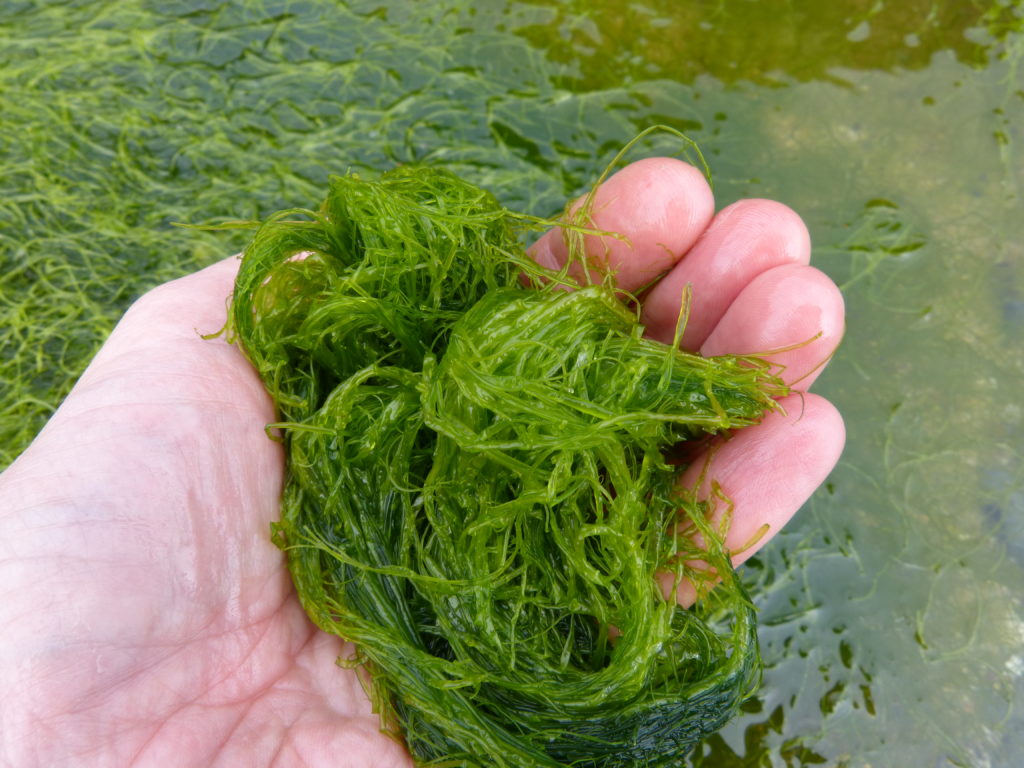
Mekabu is the frilly base of Undaria pinnatifida, the seaweed sold as wakame. It is prized in Japanese cooking for its slippery mucilage, and that mucilage — a mix of polysaccharides including fucoidan — is what the cosmetic industry bottles.
As a food, mekabu is fine and unremarkable. As a shampoo ingredient, it behaves as a film-forming humectant: it coats the hair shaft and holds water. That is a real, measurable cosmetic effect. It is not the same as repairing hair, and it is nowhere near the same as growing it.
The ingredient list, decoded
Shampoo is a surfactant system with extras, and reading the list in order tells you most of what a product will do. Order matters: ingredients appear by concentration until you reach 1%, after which order is discretionary.
The solvent — typically 60-80% of the bottle.
Base
A mild anionic surfactant derived from coconut fatty acid. Cleans effectively with less protein denaturation than the harsher sulfates, which is the real reason it is used — not because seaweed needs it.
Good choice
An amphoteric co-surfactant that reduces irritation from the primary surfactant and improves foam. Standard, effective, low-risk.
Good choice
The marketing ingredient. Functions as a humectant and film-former; delivers polysaccharides to the surface of the shaft. Does not penetrate to the follicle.
Cosmetic only
The most reliable humectant in haircare, cheap and well understood. Most of the “hydration” a shampoo delivers comes from this, not the seaweed.
Does the work
Penetrates the hair shaft and improves moisture retention and shine. One of the few cosmetic actives with reasonable evidence.
Evidence-backed
The most common cause of contact dermatitis in haircare. Not a health risk for most people; a real one for some.
Watch if sensitive
Necessary in any water-based product. The alternative — an unpreserved shampoo — is a microbial culture.
Necessary
Read that list again and notice where the seaweed sits. It is below the co-surfactant, and the hydration the product actually delivers is mostly glycerin and panthenol. That is not a criticism of the formulation — it is a well-built mild shampoo — but it does mean the price premium is being justified by an ingredient doing secondary work.
What seaweed can and cannot do for hair
There is one genuinely interesting study in this space. A comparison of a Saccharina japonica–Undaria pinnatifida mixture against minoxidil found hair growth effects in the seaweed group (Park, 2016).
Read that carefully before getting excited. It tested a seaweed mixture — not mekabu extract — and crucially it was not a trial of a shampoo. Whatever effect was observed was from consuming or applying the extract at a defined dose, not from washing your hair with a 1%-or-less rinse-off product that remains on the scalp for ninety seconds.
Sulfates, and why the claim matters less than you think
“Sulfate-free” has become the headline claim in haircare, and the science is more nuanced than the marketing. Sulfates are effective cleansers that can strip lipids and denature protein in the hair shaft, particularly with repeated washing and higher concentrations.
What that means practically: harsh surfactant systems do damage hair over time, which shows up as roughness, colour loss and breakage (Zhang, 2016). Hair is dead tissue, so “repair” means cosmetic smoothing, not biological restoration — the lipid composition of hair is fixed once it leaves the follicle (Csuka, 2023).
- Milder surfactants are a real improvement for dry, colour-treated or damaged hair — and this product uses them.
- Sulfate-free is a formulation choice, not a health claim. Some sulfate-free shampoos are gentler; some simply use different surfactants that are equally stripping.
- Oils and pretreatments reduce damage measurably — argan oil before oxidative stress (Sharifi, 2022) and coconut-based oil by porosity (Kaushik, 2022) both show benefit, and these are cheap interventions.
- Assessment is measurable rather than mystical — single-fibre techniques can distinguish treatments objectively (Kaushik, 2021).
What actually improves hair
If the goal is better hair rather than a better wash, the levers with evidence are elsewhere.
- Correct a deficiency, do not guess at one. Iron, zinc, vitamin D and B12 all matter where they are low and do nothing where they are not (Almohanna, 2019) — see the vitamins guide and vitamin D deficiency.
- Androgenetic alopecia has real treatments. Topical minoxidil and oral options have trial evidence and dosing that matters (Nestor, 2021), and female-pattern loss has its own updated approach (Müller Ramos, 2023).
- Reduce mechanical and chemical damage. Less heat, less bleaching, gentler cleansing. This is the highest-yield and least expensive intervention.
- Accept the biology. Hair grows roughly a centimetre a month. Nothing in a bottle changes that rate, and anything claiming to is selling. Nutrition supports it at the margins — see anti-inflammatory foods.
Algae do have a legitimate place in cosmetics — as polysaccharide-rich humectants and film-formers, which is exactly the role mekabu plays here (Saini, 2024). That is a modest, honest description of the ingredient.
The product in the photo
The second image shows the product as sold: a hydrating shampoo built on mild surfactants with mekabu extract, glycerin and panthenol. As a mild daily shampoo for dry or colour-treated hair, that is a sensible formulation.
Whether it is worth the price depends on what you are buying it for. If you want a gentle, well-formulated shampoo that will not strip your hair, this does that job. If you want thicker hair, no shampoo will deliver it, and the money is better spent on a treatment with trial evidence.
A Mekabu hydrating shampoo of this type sits in the premium mild-shampoo category.
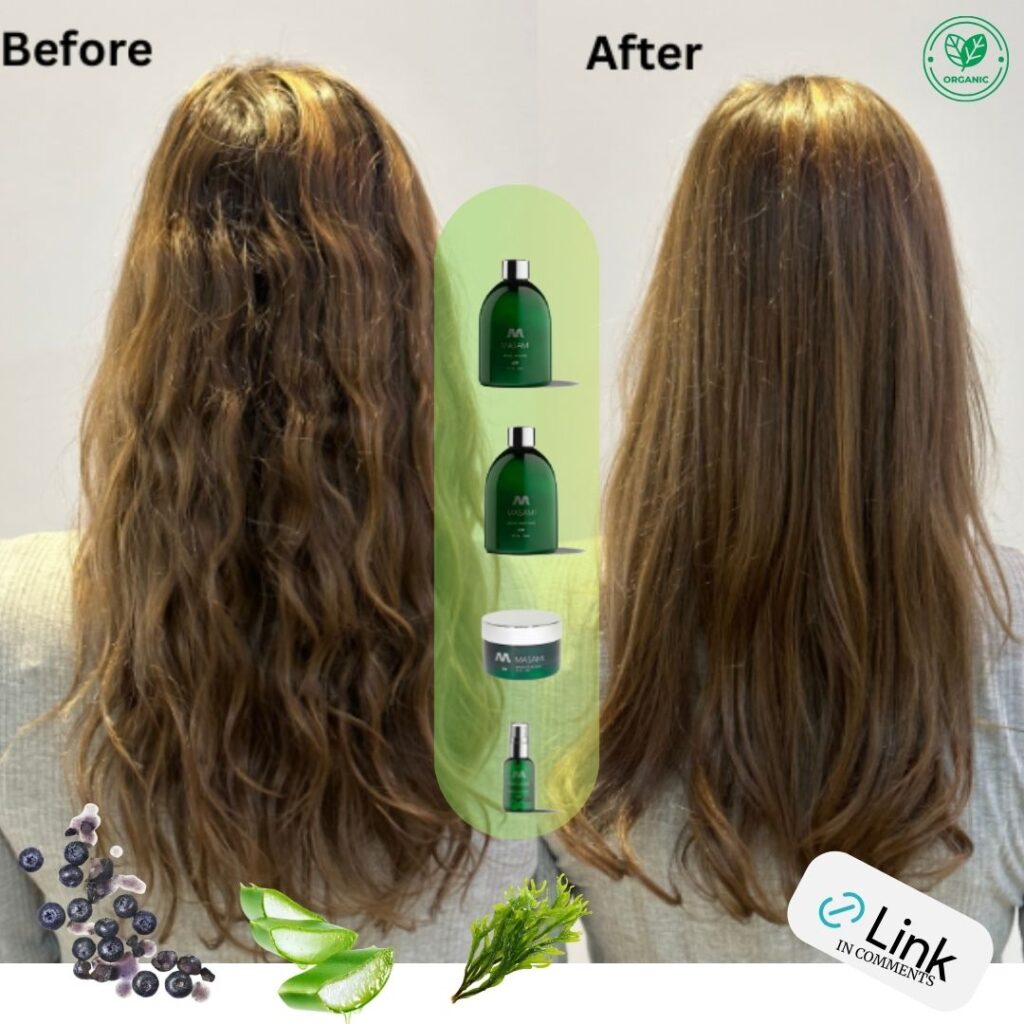
Some links in this article are affiliate links. If you buy through them we may earn a commission at no extra cost to you. We have not lab-tested this product and this does not change the assessment above.
The verdict
- As a shampoo: good. Mild surfactants, glycerin, panthenol, no harsh sulfates. That is a sensible formulation for dry or treated hair.
- As a seaweed treatment: cosmetic only. It coats and hydrates the shaft; it does not reach the follicle.
- As a hair-growth product: no. Rinse-off contact time makes that structurally implausible, and the one relevant seaweed study did not test a shampoo.
- Price: you are paying premium for a well-built mild shampoo with a marketing ingredient. That may be a fair trade for you; it is not a health intervention.
- Cheaper equivalent: a sulfate-free pharmacy shampoo with glycerin and panthenol does the same mechanical job. Compare labels, not stories — see how label reading works in practice.
Surfactant types, compared
The cleansing system is the part of a shampoo that actually changes your hair over time. This is the comparison worth understanding, because it predicts more than the marketing ingredient list does.
| Type | Examples | Behaviour | Best for |
|---|---|---|---|
| Harsh anionic | Sodium lauryl sulfate | Strong cleansing, highest protein denaturation and lipid stripping | Very oily scalp; occasional clarifying |
| Milder anionic | Sodium laureth sulfate, sodium methyl cocoyl taurate | Good cleansing with less damage; the common compromise | Most people, most of the time |
| Amphoteric | Cocamidopropyl betaine | Co-surfactant; reduces irritation, improves foam | Almost always used alongside another surfactant |
| Non-ionic | Decyl glucoside, coco-glucoside | Very gentle, lower foam, weaker on oil | Dry, sensitive or colour-treated hair |
| Amino acid-based | Sodium cocoyl glycinate | Gentle, pleasant feel, higher cost | Damaged or fine hair; premium formulations |
A shampoo built on the second, third and fifth rows — which this one is — will treat hair gently. That is the honest reason a premium mild shampoo costs more: the surfactants are more expensive and less aggressive. It has nothing to do with seaweed.
Who this suits, and who should skip it
- Good fit: dry, colour-treated, bleached or heat-styled hair; anyone whose scalp feels tight after washing; fine hair that tangles easily.
- Good fit: someone who wants a well-formulated daily shampoo and is willing to pay for mild surfactants rather than for a growth claim.
- Poor fit: very oily scalps that need stronger cleansing, where a mild formula may not keep up.
- Poor fit: anyone buying it expecting thicker hair. No shampoo changes follicle behaviour, and the honest alternatives are covered in the biotin review.
- Patch test if sensitive: fragrance is the leading cause of contact dermatitis in haircare, and this formula contains it.
Paired with a simple routine, the marginal gains come from reducing damage rather than adding products — the same principle as the six-step skincare routine. If you are also reviewing supplements, the label discipline in the sea moss review and cactus water applies equally, and nutritional status is covered in the vitamins guide and collagen supplements.
Common questions about Mekabu shampoo
Does Mekabu shampoo help hair grow?
No. Shampoo is rinsed off within a minute or two, so contact time rules out a follicular effect. The one relevant seaweed study used an extract mixture, not a shampoo.
Is it good for dry or damaged hair?
Yes, as a mild shampoo. The gentler surfactants plus glycerin and panthenol reduce stripping and improve feel. That is a cosmetic benefit and a real one.
Is sulfate-free better?
Usually gentler, but not automatically. Some sulfate-free systems are equally stripping. The primary surfactant matters more than the absence of the word sulfate.
Can a shampoo repair hair?
Hair is dead tissue, so “repair” means cosmetic smoothing of a damaged surface rather than biological restoration. Products can make it feel and look better; they cannot restore structure.
What actually helps thinning hair?
Correcting deficiencies where present, and evidence-based treatment for androgenetic alopecia — topical minoxidil being the best established. Shampoo is not in that category.
How often should I wash?
As often as your scalp needs. Daily washing with a mild surfactant is fine for most people; the damage comes from harsh systems and heat, not frequency alone.
Sources
- Park KS, et al. Comparison of Saccharina japonica-Undaria pinnatifida mixture and minoxidil on hair growth. Arch Plast Surg. 2016. PMID 27896178
- Zhang G, et al. Investigation of hair dye deposition, hair color loss and hair damage. J Cosmet Sci. 2016. PMID 27319056
- Csuka DA, et al. A systematic review on the lipid composition of human hair. Int J Dermatol. 2023. PMID 35218566
- Kaushik V, et al. Single hair fiber assessment techniques to discriminate between mineral oil and coconut oil. J Cosmet Dermatol. 2021. PMID 32949101
- Sharifi N, et al. Argan oil as a pretreatment of human hair before exposure to oxidative damage. J Cosmet Dermatol. 2022. PMID 35226791
- Kaushik V, et al. Benefit of coconut-based hair oil via hair porosity quantification. Int J Cosmet Sci. 2022. PMID 35377477
- Almohanna HM, et al. The role of vitamins and minerals in hair loss: a review. Dermatol Ther (Heidelb). 2019. PMID 30547302
- Nestor MS, et al. Treatment options for androgenetic alopecia. J Cosmet Dermatol. 2021. PMID 34741573
- Müller Ramos P, et al. Female-pattern hair loss: therapeutic update. An Bras Dermatol. 2023. PMID 37003900
- Saini KC, et al. Algae a potential source in cosmetics: current status, challenges and economics. Indian J Microbiol. 2024. PMID 39678953