

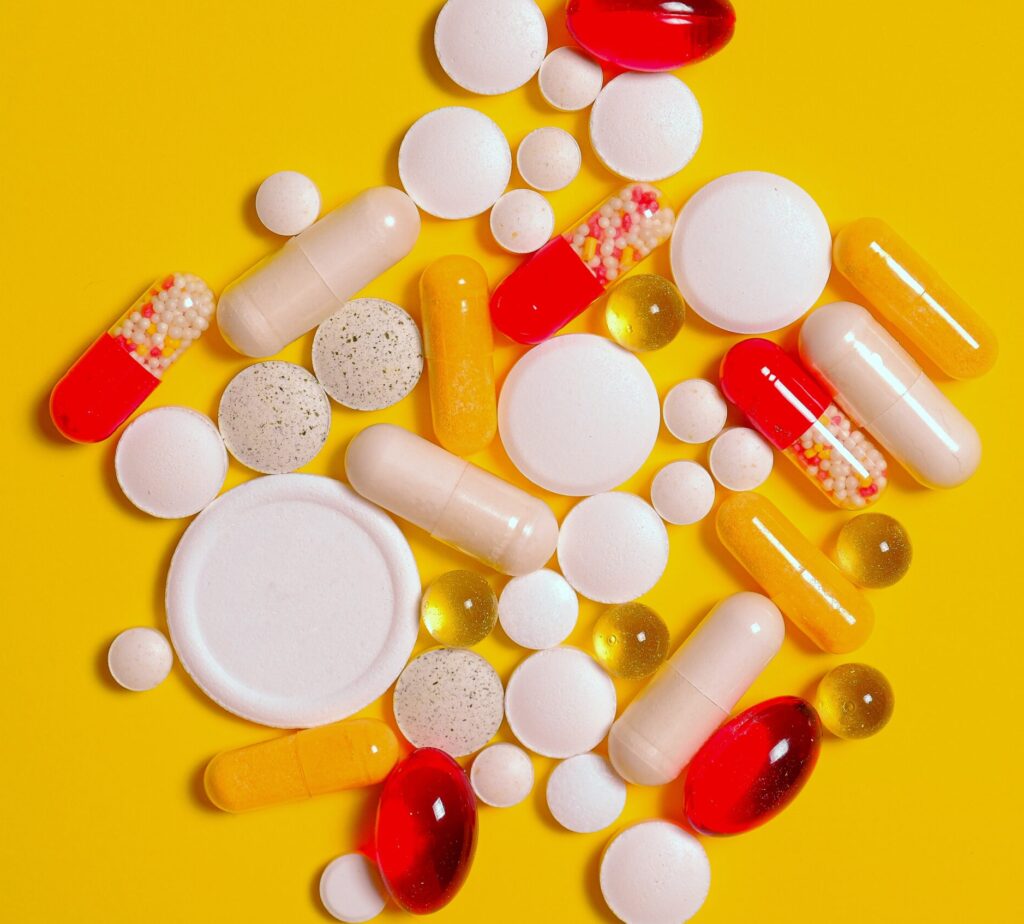
First Day Vitamins is a multivitamin line, including gummy formats for adults and children. As a product it is competently packaged and easy to take. As a health intervention, it sits inside a category with a genuinely mixed evidence base — no mortality benefit, no cardiovascular prevention, a modest cancer signal in one large trial, and emerging cognitive findings in older adults. Here is the honest version.
What is the honest verdict?

The strongest recent synthesis on this comes from the U.S. Preventive Services Task Force evidence review, which examined vitamin and mineral supplementation for the primary prevention of cardiovascular disease and cancer. Its conclusion was that the evidence is insufficient to recommend multivitamins for these outcomes in generally healthy adults, and it specifically recommended against beta-carotene supplementation because of an increased lung cancer risk in smokers (O’Connor, 2022).
A meta-analysis of randomised trials on multivitamin-multimineral supplementation and mortality found no reduction in all-cause mortality (Macpherson, 2013). A more recent rapid review of meta-analyses reached a broadly similar position: benefits are modest, outcome-specific, and concentrated in particular populations rather than general (Wang, 2026).
None of that makes the product bad. It makes it a low-stakes purchase with a low expected benefit for most people — which is a different thing from the marketing.
What First Day Vitamins actually is
It is a multivitamin product line covering adult and children’s formats, including gummy versions. The appeal is obvious and legitimate: swallowing one sweet gummy is easier than changing your diet, and for people who genuinely will not eat a varied diet, some coverage is better than none.


One structural point worth knowing about gummy formats specifically: they are harder to formulate than tablets, because many minerals do not taste acceptable in a gummy, so gummies often contain less calcium, iron, magnesium and zinc than a tablet of the same brand. That is not a criticism of this product in particular — it is a category limitation. If you are taking a multivitamin specifically for mineral coverage, read the supplement facts panel rather than the front of the bottle.
What multivitamins do and do not do
| Outcome | What the trials show | Verdict |
|---|---|---|
| All-cause mortality | No reduction in pooled randomised trials (Macpherson, 2013) | No benefit |
| Cardiovascular disease | Insufficient evidence for primary prevention; beta-carotene increases lung cancer risk in smokers (O’Connor, 2022) | No benefit |
| Cancer (men) | A large randomised trial found a modest reduction in total cancer incidence in men, not women, and not a mortality benefit (Gaziano, 2012) | Weak signal |
| Cognition in older adults | Randomised trials found small improvements in memory and global cognition in older adults (Yeung, 2023), (Vyas, 2024) | Emerging |
| Correcting a diagnosed deficiency | Effective — this is what supplementation is genuinely for | Yes |
| Filling a diet with a known gap | Reasonable, pragmatic use case | Yes |
That table is the whole argument in one place. The two rows at the bottom are real. The three rows above them are the ones the marketing leans on, and they range from weak to absent.
The claims, graded
Product copy for multivitamins tends to make the same handful of claims. Here is what each is actually worth.
- “Boosts energy.” Only true if you are deficient in something required for energy metabolism — B12, iron, or folate, typically. If your levels are normal, a multivitamin does not add energy. Fatigue with normal bloods has a different cause; see vitamins for energy for the specific cases where this holds.
- “Supports immunity.” Vitamin C and zinc matter for immune function, but supplementing above requirement does not further improve it in well-nourished people. The evidence for the immune benefits of a multivitamin is weak, and the more useful question is in which supplements have real evidence.
- “Nutritional insurance.” This is the most defensible framing, provided it is understood as insurance and not as a policy that pays out when you skip vegetables. A multivitamin covers some micronutrient gaps; it does not replace fibre, protein, phytonutrients or the satiety that whole food provides.
- “Metabolism support.” B vitamins are cofactors in energy metabolism, which is not the same as increasing metabolic rate. The claim borrows credibility from a real biochemical fact and overstates what it means.
- “Formulated for morning energy.” There is no chronobiology in which a multivitamin is meaningfully more effective in the morning. Taking it with breakfast is sensible for absorption and tolerance, not for a boost.
What to check on the label
If you are comparing this product against another, these are the things that actually matter — and none of them are on the front of the bottle.
- Vitamin D dose. Often the single most useful component for people in northern latitudes; check it is a meaningful amount, not a token 5 mcg. Background is in vitamin D deficiency.
- Iron. Many multivitamins omit it entirely, which is right for men and postmenopausal women but wrong for menstruating women with low ferritin — see iron deficiency in women.
- Magnesium form and dose. Often low, and the form determines absorption and tolerance — the comparison is in magnesium types.
- B12, especially if plant-based. Genuinely necessary on a vegan diet, and one of the clearest cases where a supplement is not optional.
- Beta-carotene. If you smoke, check for it and avoid it. This is the one ingredient with a documented harm signal (O’Connor, 2022).
- Sugar and gummy load. Gummies contain sugar or sugar alcohols; it is usually small per dose but not zero, and it matters if you take several.
It is worth saying plainly that the supplement aisle is not regulated the way medicines are. Products are not required to demonstrate efficacy before sale, and independent testing has repeatedly found that labelled contents do not always match actual contents — particularly for botanical products, less so for mainstream multivitamins from established brands.
That is an argument for buying from a reputable manufacturer and for not paying a premium for claims that no regulator has verified. The most expensive multivitamin is not the most effective one; the evidence does not support a price-quality gradient in this category.

Who actually benefits
- People with a diagnosed deficiency, who need targeted replacement rather than a general multivitamin — but who often start here.
- People on restricted diets: vegans need B12 reliably, and often iodine, zinc and omega-3.
- Pregnancy, where folic acid and specific micronutrients have clear evidence — though this should be a prenatal formulation, not a general one.
- Older adults with reduced appetite or absorption, where the emerging cognitive findings are most relevant (Vyas, 2024).
- People with genuinely chaotic diets who are not going to change them this month. Some coverage beats none.
Who does not need it
If you eat a varied diet with vegetables, protein, dairy or alternatives, and some fruit, and your bloods are normal, a multivitamin is unlikely to change anything measurable. That is not a reason to feel bad about taking one — it is a reason not to expect anything from it, and not to pay a premium.
Two specific cautions. First, more is not better: megadose formulations can push fat-soluble vitamins into ranges where harm is possible, and iron overload is a real risk for people with haemochromatosis. Second, if you take medication, check interactions — calcium and iron in particular affect absorption of several common drugs, including thyroid medication and some antibiotics.
How it compares to the alternatives

The useful comparison is not “which brand” but “which approach”. A broad multivitamin, a targeted single nutrient, and food-first changes solve different problems, and confusing them is where most supplement money is wasted.
A multivitamin gives you a small amount of many things. That is appropriate when the goal is broad coverage of an imperfect diet. It is the wrong tool when the goal is correcting a specific deficiency, because the dose of any one nutrient in a multivitamin is usually well below what treatment requires.
If a blood test shows low ferritin, low vitamin D or low B12, you need a therapeutic dose of that one thing — not a multivitamin with a token amount of it.
| Approach | Best for | Limitation |
|---|---|---|
| Broad multivitamin | Covering a diet with a known gap; restricted diets; poor intake | Doses too low to treat a diagnosed deficiency |
| Targeted single nutrient | Confirmed deficiency on bloods; pregnancy folate; vegan B12 | Requires testing and a reason; easy to overdo |
| Food-first changes | Everyone, always | Requires behaviour change, which is the actual difficulty |
| No supplement | People with varied diets and normal bloods | Nothing — this is a legitimate choice |
There is a reasonable case for testing before buying. A basic panel covering vitamin D, B12, ferritin and a metabolic screen costs less than a year of premium multivitamins in most markets, and it tells you whether you have a problem worth solving. Without it, you are buying insurance against a risk you have not measured.
The cognitive evidence is the most interesting recent development here, and it is worth representing accurately. Randomised trials in older adults found small improvements in memory and global cognition with multivitamin use (Yeung, 2023), (Baker, 2023), and the COSMOS trial reported similar findings (Vyas, 2024). Small effects, measured in cognitive testing rather than in dementia prevention — but real, and concentrated in older adults rather than the general population (Wang, 2026).
One practical note on consistency: the trials that showed benefits used daily supplementation over years. If you take a multivitamin three times a week and stop after a month, you are not running the experiment those trials ran.
Pros and cons, honestly
| Pros | Cons |
|---|---|
| Convenient, easy to take consistently, including for children | No mortality or cardiovascular benefit in trials |
| Covers genuine gaps for restricted diets and poor intake | Cannot replace fibre, protein or phytonutrients from food |
| Cheap relative to most health interventions | Gummy formats often carry fewer minerals than tablets |
| Emerging cognitive signal in older adults | Marketing claims outrun the evidence substantially |
| Low risk for most healthy adults | Beta-carotene is harmful in smokers; iron is a risk in overload |
If you want a broader view of which supplements are worth the money, the 2026 comparison covers the category, and the daily vitamins guide covers the individual nutrients. For omega-3 specifically, the omega-3 guide covers what to look for, and biotin has its own evidence summary in the biotin review.
Common questions about First Day Vitamins
Will these give me more energy?
Only if you are deficient in something involved in energy metabolism — typically B12, iron or folate. If your levels are normal, no. Persistent fatigue with normal bloods needs a different investigation, not a stronger multivitamin.
Are gummy vitamins as good as tablets?
Usually not for minerals. Calcium, iron, magnesium and zinc are hard to formulate into a palatable gummy, so gummies often contain less of them or omit them. For vitamins, the difference is smaller. Check the supplement facts panel rather than assuming.
Can I take these on an empty stomach?
Some people get nausea, particularly with iron or zinc. Taking it with breakfast improves tolerance and absorption of fat-soluble vitamins. That is a practical reason for the “morning” recommendation, not a metabolic one.
Do kids need a multivitamin?
Most children eating a varied diet do not. Vitamin D is the exception in many climates, and iron matters in some age groups. A paediatrician is the right person to answer this for your child, not a product page.
Is it safe to take with other supplements?
Usually, but watch for duplicated ingredients — taking a multivitamin plus a separate B-complex plus a vitamin D supplement can stack into unnecessary doses. Fat-soluble vitamins (A, D, E, K) and iron are the ones where over-supplementation carries real risk.
Should I take it if my diet is already good?
You can, and it is unlikely to harm you. Just do not expect a measurable benefit, and do not let it displace the things that do have evidence — fibre, protein, vegetables, sleep and exercise.
Sources
- O’Connor EA, et al. Vitamin and mineral supplements for the primary prevention of cardiovascular disease and cancer: updated evidence report and systematic review for the USPSTF. JAMA. 2022. PMID 35727272
- Macpherson H, et al. Multivitamin-multimineral supplementation and mortality: a meta-analysis of randomized controlled trials. Am J Clin Nutr. 2013. PMID 23255568
- Gaziano JM, et al. Multivitamins in the prevention of cancer in men: the Physicians’ Health Study II randomized controlled trial. JAMA. 2012. PMID 23162860
- Wang W, et al. Multivitamin and mineral use: a rapid review of meta-analyses on health outcomes. Ageing Res Rev. 2026. PMID 41308839
- Vyas CM, et al. Effect of multivitamin-mineral supplementation versus placebo on cognitive function: COSMOS. Am J Clin Nutr. 2024. PMID 38244989
- Yeung LK, et al. Multivitamin supplementation improves memory in older adults: a randomized clinical trial. Am J Clin Nutr. 2023. PMID 37244291
- Baker LD, et al. Effects of cocoa extract and a multivitamin on cognitive function: a randomized clinical trial. Alzheimers Dement. 2023. PMID 36102337