

Irish sea moss is a red seaweed whose main distinguishing component is carrageenan, a gelling polysaccharide also used as a food thickener. The mineral and thyroid claims made for it are largely marketing, the iodine content varies wildly between products, and the one genuine risk is iodine excess — which matters most for people with thyroid disease.
Medically reviewed by Dr. A. Collins, MDBoard Certified Internist · Updated 26 October 2026
What Irish sea moss actually is
Despite the name, Irish moss is not a moss. It is Chondrus crispus, a red algae harvested from rocky Atlantic coastlines, historically used as a thickening agent and a famine food in coastal Ireland. The dried seaweed is boiled to extract carrageenan, which sets into the gel that most supplements now sell.
That history is worth knowing because it explains the product: what you are buying is a source of carrageenan plus whatever minerals the seaweed absorbed from the water it grew in. The mineral content is not standardised, not guaranteed, and not listed on the label in any meaningful way.
The health claims, graded
Sea moss is sold on a long list of promises. Almost none of them rest on human trials of sea moss itself, which is the central problem: the marketing borrows from studies of iodine, of seaweed generally, or of carrageenan in a laboratory dish, and then attributes the result to a gel in a jar.
| Claim | What the evidence actually supports | Grade |
|---|---|---|
| Supports thyroid function | Only indirectly, via iodine — and unpredictable iodine is a risk rather than a benefit in thyroid disease | Weak / risky |
| Boosts immunity | No human trials of sea moss. General nutrient sufficiency matters; a gel does not demonstrably change immune function | Unsupported |
| Improves digestion | Carrageenan is a soluble fibre, so it behaves like one. No trials show symptom improvement in healthy people | Plausible, unproven |
| Supports skin and hair | No trial evidence. Claims rest on mineral content that is not quantified on the label | Unsupported |
| Aids weight loss | No evidence. Fibre can modestly affect satiety; that is not a weight-loss effect from sea moss | Unsupported |
| Improves libido and fertility | No human evidence at all. This claim appears to originate in marketing, not research | Unsupported |
| Contains 92 minerals | Seaweed does contain many trace elements, but quantity and presence are not the same thing, and levels vary by harvest site | Misleading framing |
The “92 minerals” claim is worth pausing on, because it is the most persuasive-sounding and the least meaningful. A food can contain detectable traces of dozens of elements without any of them being present in a useful amount. Seaweed composition varies with species, season and the water it grew in — which is documented rather than speculative (Cmikova, 2024).
The iodine problem — the one that actually matters
Excess iodine is not a hypothetical concern. It can trigger thyroid dysfunction in both directions — hypothyroidism in some people, hyperthyroidism in others, particularly those with pre-existing autoimmune thyroid disease or nodules (Farebrother, 2019), (Sohn, 2024).
This creates an uncomfortable situation for anyone taking sea moss for their thyroid. Without a measured iodine content on the label — and most products do not provide one — you cannot know whether you are correcting a deficiency or creating an excess. If you have Hashimoto’s, Graves’ disease, a thyroid nodule, or you are pregnant, that uncertainty is a reason not to take it rather than a reason to take a smaller amount.
The iodine question also interacts with supplementation generally. If you already take a multivitamin containing iodine, or eat seaweed regularly, adding sea moss stacks the intake in a way no label will tell you about. The broader context is in the vitamins guide and vitamin D deficiency.
Carrageenan: the controversy, fairly stated
Carrageenan is the reason sea moss gels, and it is also the ingredient that generates the most argument. It is approved as a food additive, and it is genuinely controversial in the research literature rather than only on the internet.
Reviews of its digestive fate point out that food-grade carrageenan is a large molecule that is mostly not absorbed, and argue that much of the alarm comes from studies of degraded carrageenan — a different substance, not permitted in food — or from very high doses (David, 2018). That is a fair defence of the additive as used.
Against it, a review of the mechanistic evidence sets out plausible pathways by which carrageenan could affect the intestinal lining, and animal work has shown colitis-like changes at high intakes (Guo, 2023). The honest summary is that human evidence of harm at dietary doses is not established, and the mechanistic signal is real enough that people with inflammatory bowel disease may reasonably choose to limit it.
For sea moss specifically, the dose matters more than the debate: a spoonful of gel is a small amount of carrageenan compared with the additive load in a diet full of processed food. If carrageenan is your concern, the thickeners in packaged foods are the larger exposure, not the jar.
Contamination and product quality
Seaweed takes up whatever is in the water, including metals you do not want. Analyses of edible seaweeds have documented measurable arsenic, cadmium, lead and mercury, with concentrations varying by species and harvest location (Squadrone, 2018).
- Look for a measured iodine figure. A serious product states iodine per serving. Absence of that number is the single most useful red flag.
- Look for third-party contaminant testing. Heavy metal testing by an named laboratory is meaningfully different from a claim of purity.
- Prefer a named species and harvest region. “Sea moss” is not a species. Chondrus crispus or Gracilaria tells you what you have.
- Treat “92 minerals” and “wildcrafted” as marketing. Neither is a quality standard, and wildcrafted seaweed from an unmonitored site is not automatically safer.
- Check whether it is a gel, powder or capsule. Dose per serving differs enormously, and gels are often mostly water.
The product in the photo
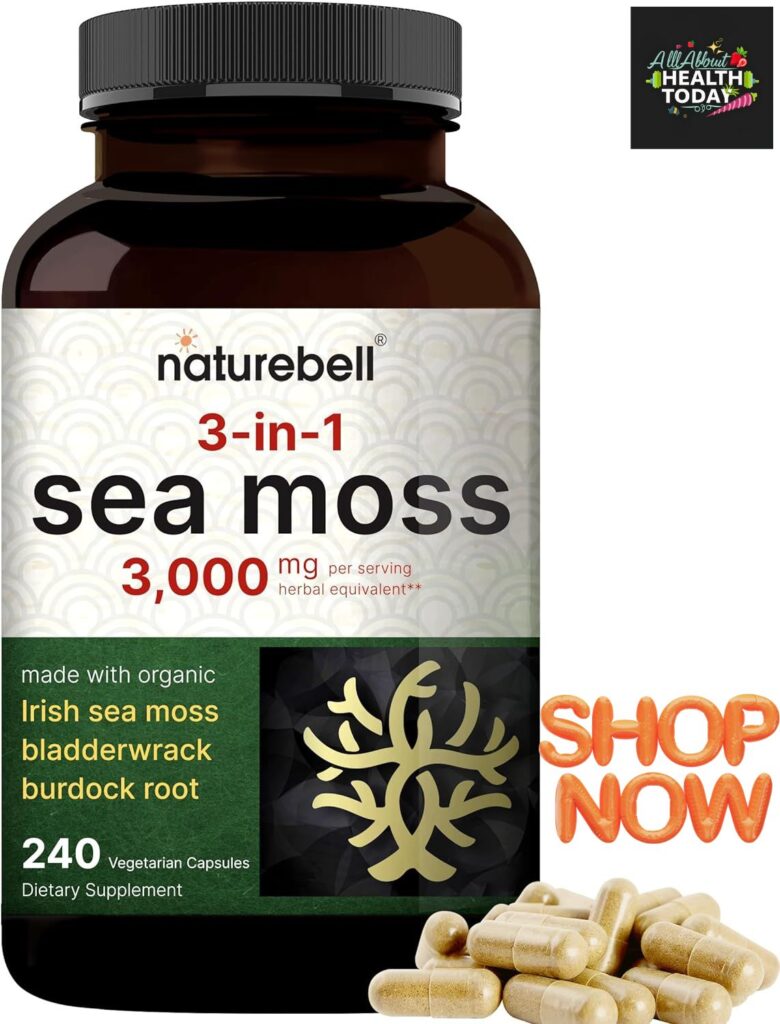
The images in this review show a typical commercial sea moss product of the kind sold widely online: a gelled preparation in a jar, sold on the usual claims about minerals, thyroid support and general vitality.
I have not lab-tested this product and cannot verify its iodine content or contaminant profile, which is the honest limit of any review written without a laboratory. What can be said is that the label shown follows the pattern described above: a species name, a serving size, and no measured iodine figure.
If you want to buy it anyway, the sensible approach is to treat it as a fibre-containing food rather than a supplement with a dose, keep the serving small, and stop if you notice any change in energy, weight, heart rate or neck swelling that could indicate a thyroid effect. A sea moss gel of this type is what the category generally looks like.

Some links in this article are affiliate links. If you buy through them we may earn a commission at no extra cost to you. We have not lab-tested this product and this does not change the assessment above.
Reading the label
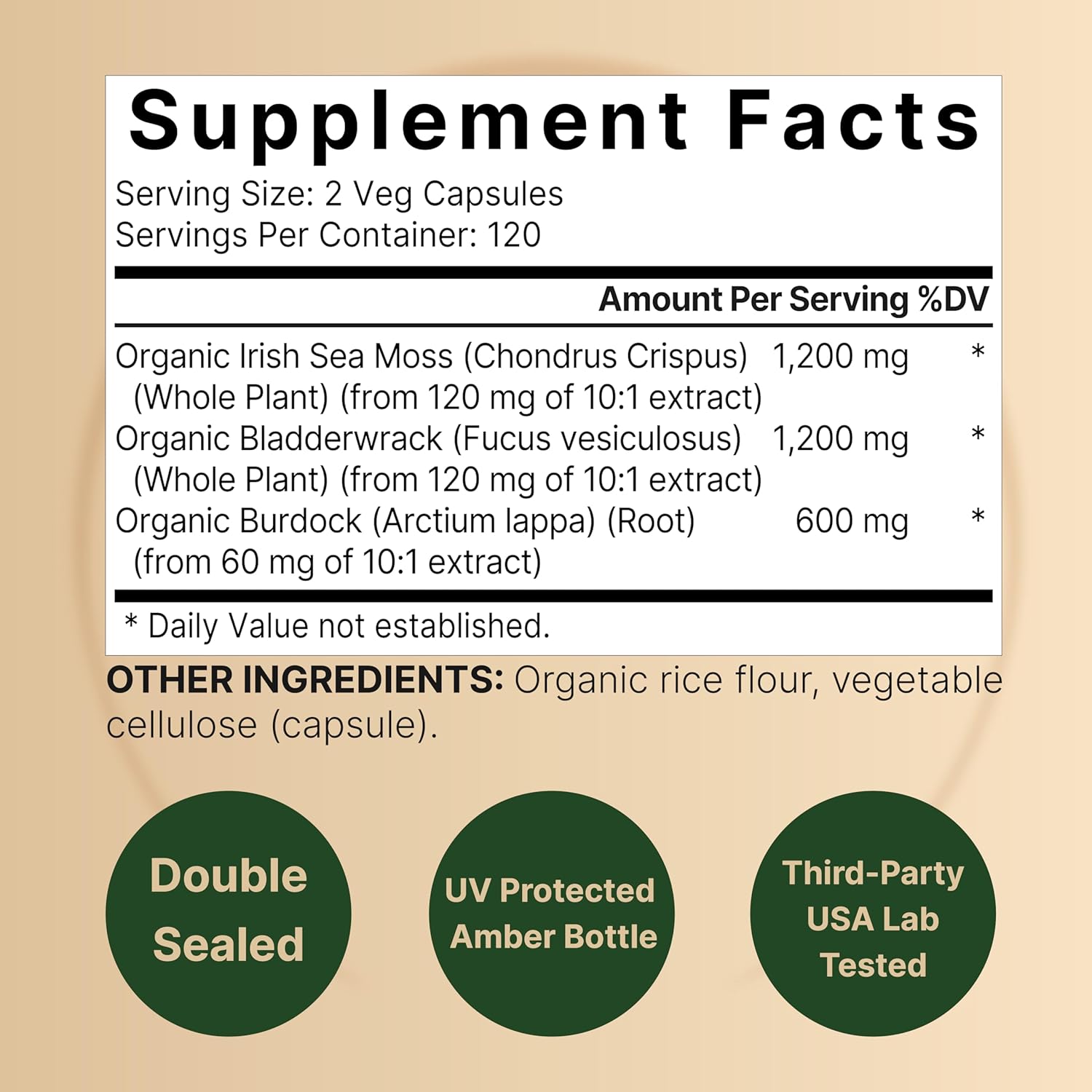
A nutrition panel is designed for formulated foods with stable composition. Seaweed is not that. Harvest variability means the panel can be accurate for the batch tested and wrong for the jar you receive, which is why the absence of a measured iodine value is more informative than the presence of a mineral list.
What to actually check, in order: iodine per serving, species, harvest region, third-party testing, and whether the serving size is a spoon or a capsule. Everything else on the label is decoration.
Who should avoid it
- Anyone with thyroid disease — Hashimoto’s, Graves’, nodules, or a history of thyroid surgery. Unmeasured iodine is the specific hazard.
- Pregnant and breastfeeding women — iodine requirements rise, but so does the risk of excess and of contaminants. Use a regulated supplement with a stated dose instead.
- People taking levothyroxine — iodine load can destabilise control, and the interaction is worth discussing with the prescriber.
- Anyone with inflammatory bowel disease — not because harm is proven, but because the carrageenan question is unresolved and the downside is a flare.
- Children — no established dose, and iodine excess is more consequential in a developing thyroid.
The verdict
If you are looking for supplements with actual outcome evidence behind them, the comparison is unflattering: omega-3 for people who do not eat fish, covered in the omega-3 guide, vitamin D where deficiency is documented, and magnesium where intake is low, covered in magnesium types compared. Immune claims generally are covered in the immune supplement guide and vitamins for energy. The fibre and gut angle connects to the gut-skin axis, the fermented foods guide and SIBO explained. For a comparison of supplement categories, see the First Day vitamins review and anti-inflammatory foods.
Common questions about sea moss
Does sea moss really contain 92 minerals?
Seaweed contains many trace elements, but “contains” is not “contains a useful amount”, and levels vary by species, season and harvest site. The number is a marketing device, not a quality measure.
Is sea moss safe for thyroid problems?
That is the group most at risk. Iodine content is unmeasured in most products, and excess iodine can worsen both underactive and overactive thyroid conditions. If you have thyroid disease, avoid it unless a clinician has specifically approved the product and the dose.
How much iodine does sea moss have?
It varies enormously between products — analyses have found differences of orders of magnitude. That variability is precisely why the product is hard to use safely.
Is carrageenan bad for you?
Human evidence of harm at dietary doses is not established, and much of the alarm comes from a different, non-food substance (degraded carrageenan) or from very high doses in animals. People with inflammatory bowel disease may reasonably limit it.
Can sea moss help with weight loss or fertility?
No. There is no human trial evidence for either claim. Both appear to originate in marketing rather than research.
What should I look for if I still want to buy it?
A stated iodine value per serving, a named species, a named harvest region, and third-party heavy metal testing. If the label omits iodine, treat the rest of the claims with proportionally more scepticism.
Sources
- Teas J, et al. Variability of iodine content in common commercially available edible seaweeds. Thyroid. 2004. PMID 15588380
- Aakre I, et al. Commercially available kelp and seaweed products: valuable iodine source or risk of excess intake? Food Nutr Res. 2021. PMID 33889064
- Farebrother J, et al. Excess iodine intake: sources, assessment, and effects on thyroid function. Ann N Y Acad Sci. 2019. PMID 30891786
- Sohn SY, et al. Risks of iodine excess. Endocr Rev. 2024. PMID 38870258
- David S, et al. Revisiting the carrageenan controversy: do we really understand the digestive fate and safety of carrageenan in our foods? Food Funct. 2018. PMID 29469913
- Guo J, et al. How does carrageenan cause colitis? A review. Carbohydr Polym. 2023. PMID 36604052
- Squadrone S, et al. Trace metal occurrence in Mediterranean seaweeds. Environ Sci Pollut Res. 2018. PMID 29368198
- Cmikova N, et al. Seaweed nutritional value and bioactive properties. Life (Basel). 2024. PMID 39598320