

A skincare routine works through three or four ingredients that have real evidence, applied consistently. It does not work because it has six steps, a toner, or a product for each hour of the day. Here is what the evidence supports, what to skip, and how to build a routine around your actual skin type.
Medically reviewed by Dr. A. Collins, MDBoard Certified Internist · Updated 26 October 2026
What a routine actually needs

Two interventions have the strongest evidence for how skin ages. Daily sunscreen prevents photoaging, and that has been demonstrated in a randomised trial rather than inferred from mechanism (Hughes, 2013). Topical retinoids improve existing photoaging, with tretinoin the best-studied of the group (Sitohang, 2022).
A gentle cleanser and a moisturiser are not glamorous, but they maintain the barrier that everything else depends on. A damaged barrier makes every active ingredient sting and makes skin look worse regardless of what else you apply.
Beyond those four, the evidence thins quickly. That is not the same as saying nothing else works — it means the marginal return per pound spent drops sharply.
First, identify your skin type
Most routine failures are mismatches: harsh products on dry skin, heavy creams on oily skin, or a dozen actives on sensitive skin. A simple assessment:
- Dry: feels tight after cleansing, rarely shiny, flaky patches in winter.
- Oily: shine within a few hours of washing, visible pores, fewer fine lines.
- Combination: oily T-zone with drier cheeks. This is the most common pattern.
- Sensitive: stings, flushes or reacts to new products easily.
- Acne-prone: recurrent breakouts beyond occasional spots. If it is persistent, see the adult acne guide rather than treating it as a routine problem.
Your type can change with season, age and hormones. A routine that worked at 25 may be too harsh at 40, particularly around menopause.
The six steps
Step 1: Cleanser
A gentle, non-foaming or low-foaming cleanser. The goal is removing oil, sweat and sunscreen without stripping the barrier. Harsh foaming cleansers feel “cleaner” and are usually worse for dry or sensitive skin.
What matters: pH-balanced, fragrance-free where possible. A hydrating cleanser is a reasonable default for most skin types.
What does not: cleansing brushes, daily exfoliating scrubs, and anything that leaves skin tight.
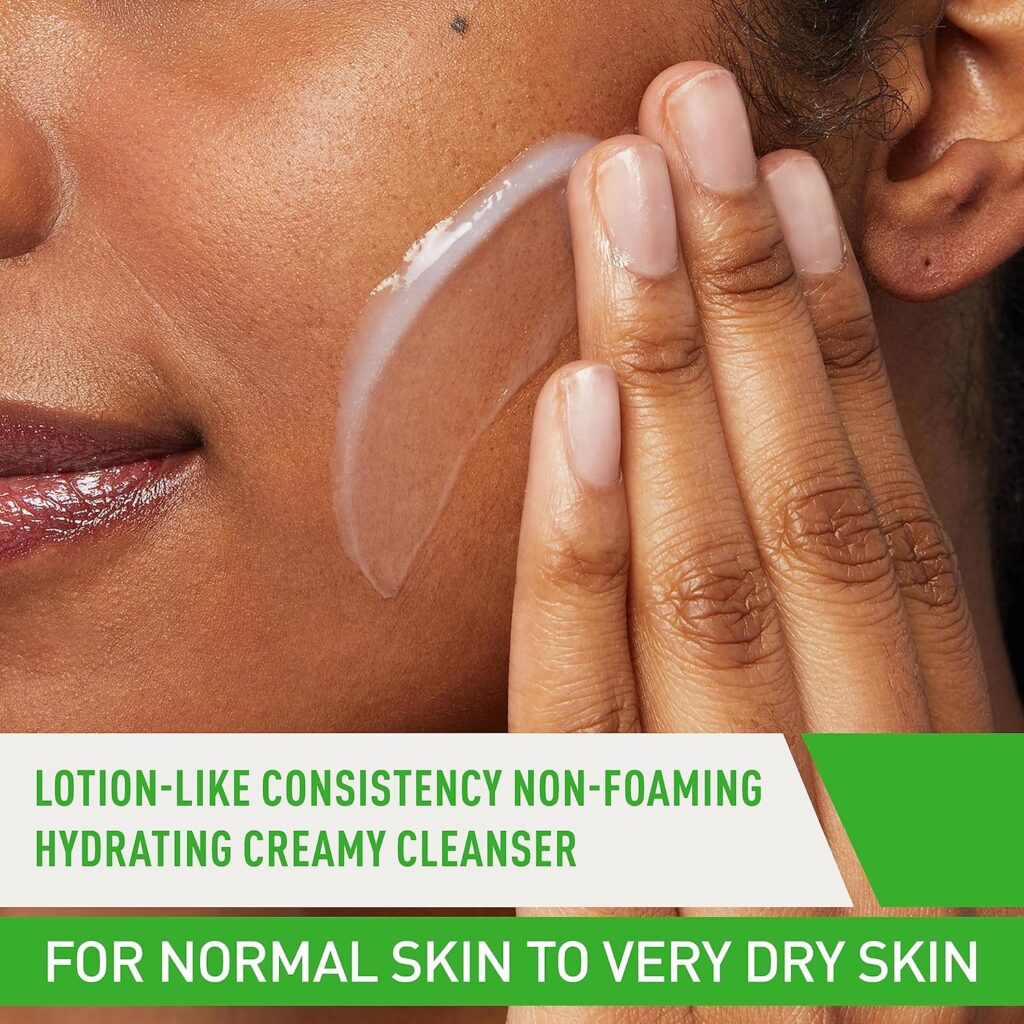
How to read a cleanser label. The ingredient list tells you more than the front of the bottle. A short list of mild surfactants, glycerin and a ceramide or two is doing the job. Fragrance, essential oils and menthol are the ingredients most likely to provoke sensitive skin, and they add nothing to cleaning.
How it feels two minutes after washing matters more than how it feels during. Skin that feels tight is skin that has lost some of its barrier lipids, and that tightness is the first step towards the irritation people blame on their serum.
Step 2: Toner
This is the step most people can skip. Modern toners are not the alcohol-heavy astringents of the 1990s, but for most skin types a hydrating toner is a pleasant extra rather than a functional necessity.
If your skin is oily and you like the feel, a niacinamide or hydrating toner is a reasonable choice. If your skin is dry or sensitive, fewer steps is often better.
Step 3: Spot treatment
Benzoyl peroxide or salicylic acid applied to individual spots, not to the whole face. Applied everywhere, they dry and irritate without benefit. The evidence base for both in acne is covered in the acne article.
Step 4: Antioxidant serum
Vitamin C is the best-known antioxidant serum, and it works synergistically with sunscreen rather than replacing it. Topically it delivers ascorbic acid to the epidermis and has been studied for photoprotection and pigmentation rather than for wrinkle reversal (Al-Niaimi, 2017). Rose hip oil and rose hip extracts are a gentler, cheaper source of similar compounds, though the evidence is less robust than for stabilised vitamin C.
If a retinoid is too irritating, bakuchiol is the best-studied alternative: a randomised double-blind trial found comparable improvement in fine lines and pigmentation over twelve weeks with less stinging (Dhaliwal, 2019), though the trial was small and industry-linked.
A rose hip supplement is a different intervention from a topical serum — oral and topical vitamin C are not interchangeable, and the topical evidence is stronger for skin appearance.
Step 5: Eye cream
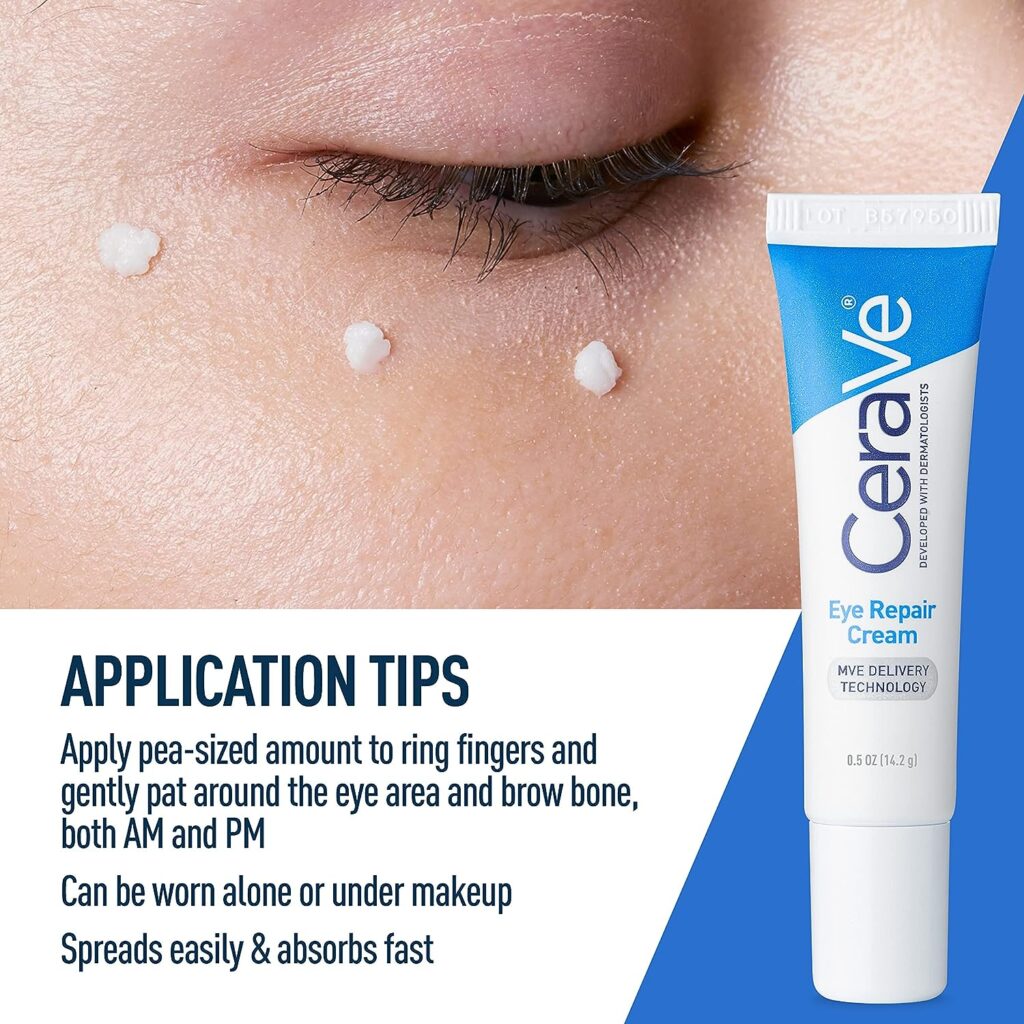
Largely a moisturiser in a smaller, more expensive container. The skin around the eyes is thinner and benefits from a gentle moisturiser, but a dedicated eye cream is rarely better than the moisturiser you already use, applied carefully.
What does have some evidence for the eye area is a retinoid used cautiously, and sunscreen. Neither requires a separate product category.
If you do buy one. Look for the same things you would look for in a face moisturiser: glycerin or hyaluronic acid for hydration, a ceramide or squalane for the barrier, and no fragrance. Caffeine has a modest, temporary effect on puffiness through vasoconstriction, and the evidence for it is thin rather than absent.
What the eye area genuinely benefits from is sun protection and, if you tolerate it, a low-strength retinoid applied sparingly. Neither needs a separate product line.
Step 6: Moisturiser (and sunscreen)
Moisturiser supports the barrier; sunscreen prevents the damage that everything else is trying to repair. In the morning these can be the same product if the SPF is adequate — and “adequate” means SPF 30 or higher, applied generously, which most people do not do.
At night, a retinoid goes on before the moisturiser. Buffer it with moisturiser if you are starting out, and use it two or three nights a week initially rather than nightly.
What the evidence actually supports
| Ingredient | What the evidence shows | Priority |
|---|---|---|
| Sunscreen (SPF 30+) | Prevents photoaging in a randomised trial (Hughes, 2013) | Essential |
| Topical retinoid | Improves photoaging; the best-studied anti-ageing active (Sitohang, 2022) | Essential |
| Niacinamide | Barrier support and oil control; recommended in dermatologist consensus (Alvarez, 2025) | High |
| Vitamin C (topical) | Antioxidant support; complements sunscreen | Moderate |
| Ceramides | Barrier repair, particularly in dry or eczematous skin (Baldwin, 2021) | Moderate |
| Toner | No independent outcome evidence | Optional |
| Eye cream | No evidence over moisturiser | Optional |
| Collagen creams | Molecules too large to penetrate meaningfully | Skip |
Comparisons across topical interventions for facial photoaging consistently put retinoids at or near the top of the ranking, ahead of vitamin C, niacinamide and peptides (Siddiqui, 2024),, with antioxidants and sunscreen as supporting players rather than alternatives (Lin, 2025). If you are choosing where to spend money, that is the ordering.
What you can skip
- Ten-step routines. More products means more chance of irritation and no additional outcome.
- Layering cosmeceuticals you do not need. A review of the acne cosmeceutical market found most adjunct products add irritation risk rather than outcomes on top of a retinoid and benzoyl peroxide (Searle, 2026).
- Daily physical exfoliation. Scrubs damage the barrier; chemical exfoliation two or three times a week is gentler and more effective.
- Collagen creams. Collagen molecules are too large to penetrate the stratum corneum. Oral collagen is a different question, covered in collagen supplements.
- “Detoxing” the skin. Skin does not detoxify; the liver and kidneys do.
- Anything with a jade roller. Cooling and pleasant, no measurable outcome.
Choosing products without overspending
The most reliable predictor of a good skincare product is not price; it is whether the active ingredient is at a concentration that has been studied. Three practical rules:
- Buy the boring version of the active. Generic tretinoin, plain niacinamide, basic SPF. The delivery system matters far less than the ingredient.
- Patch test. Apply to the inner forearm for three nights before putting anything new on your face.
- Change one thing at a time. If you introduce four products at once and react, you have no idea which one caused it.
Five mistakes that undo a good routine
- Not using enough sunscreen. Most people apply a quarter to a half of the amount used in testing, which means the real SPF is far lower than the label.
- Starting a retinoid nightly. Start twice a week, buffer with moisturiser, and build up. Most retinoid irritation is a dosing error.
- Mixing too many actives. Retinoid plus acid plus vitamin C in one evening is a recipe for a compromised barrier.
- Ignoring the neck and hands. They age the same way and are usually untreated.
- Expecting results in two weeks. Retinoids take 12 weeks to show meaningful change; barrier repair takes weeks. Judging a routine at day ten is measuring nothing.
Skin is also a reflection of what is happening underneath it. The gut-skin relationship is real but often overstated — covered in the gut-skin axis — and nutritional status matters for wound healing and barrier function, as covered in vitamins and energy.
What a week of this actually looks like
Routines fail at the scheduling stage more often than at the product stage. A retinoid every night from day one is the most common way people give up on the one ingredient with the best evidence. This is a workable first month:
| Day | Morning | Evening |
|---|---|---|
| Monday | Cleanse · vitamin C · moisturiser · SPF 30+ | Cleanse · retinoid · moisturiser |
| Tuesday | Cleanse · vitamin C · moisturiser · SPF 30+ | Cleanse · moisturiser |
| Wednesday | Cleanse · vitamin C · moisturiser · SPF 30+ | Cleanse · retinoid · moisturiser |
| Thursday | Cleanse · vitamin C · moisturiser · SPF 30+ | Cleanse · moisturiser |
| Friday | Cleanse · vitamin C · moisturiser · SPF 30+ | Cleanse · retinoid · moisturiser |
| Saturday | Cleanse · moisturiser · SPF 30+ | Cleanse · moisturiser |
| Sunday | Cleanse · moisturiser · SPF 30+ | Cleanse · moisturiser |
Three retinoid nights a week is a maintenance dose rather than a starting dose. For the first two to four weeks, use one night a week, buffer it with moisturiser, and add a second night only when the first stops causing flaking. Skipping the weekend actives is deliberate: it gives the barrier two uninterrupted nights to recover.
Two habits sit underneath the schedule and matter more than the products. Sleep is when much of the skin’s barrier recovery happens, and short sleep is associated with poorer skin barrier function and slower recovery from disruptors — covered in improving sleep. And the diet side of skin is not marketing: a diet built around vegetables, fish and olive oil reduces the inflammatory load that shows up in skin, as set out in anti-inflammatory foods.
What changes, and when to expect it
Nearly every disappointment with a skincare routine is a measurement problem. The products are working on schedules that run from days to months, and the mirror is checked daily.
- Days 0 to 14 — barrier, not appearance. Hydration improves and tightness settles. Nothing about photoaging has changed yet.
- Weeks 2 to 4 — texture. Skin feels smoother. If you started a retinoid, this is when flaking peaks, usually between week one and week three.
- Weeks 8 to 12 — the first honest look at a retinoid. Fine lines and roughness change on a scale measured in weeks, not days; trials that show benefit typically run twelve weeks or longer (Sitohang, 2022).
- Months 3 to 6 — pigmentation. Dark spots and melasma are the slowest to shift, and they are the most likely to come back without daily sunscreen.
- Years — prevention. The return on sunscreen is cumulative and mostly invisible in any single month, which is precisely why it gets abandoned.
Hormonal shifts reset the baseline rather than pausing it. Skin that behaved at 30 often changes through perimenopause as oestrogen falls and the barrier becomes drier and more reactive — the pattern described in signs of hormonal imbalance. That is a reason to simplify, not to add products.
Nutritional status is the other upstream variable worth ruling out before buying a seventh serum. Vitamin D in particular has a role in barrier function and in how skin responds to irritation, and deficiency is common in northern winters — see vitamin D deficiency. A serum cannot compensate for a deficiency.
When something goes wrong
Most bad reactions are predictable, and most are caused by dose rather than by the ingredient itself. What the reaction looks like tells you which one you are dealing with:
| What you see | Most likely cause | What to do |
|---|---|---|
| Stinging within a minute of applying | Barrier damage, often from stacking actives | Stop all actives for five to seven days; cleanser and moisturiser only |
| Flaking and tightness on a retinoid | Normal early adaptation, or too high a starting strength | Buffer with moisturiser, drop to one night a week, build back slowly |
| Breakouts four to six weeks in, in your usual areas | Possible retinoid purge | Continue if tolerable; purging settles, genuine irritation does not |
| New spots in areas you never broke out before | A comedogenic product, not a purge | Remove the newest product; check the ingredient list for heavy oils and waxes |
| Redness, swelling and itching | Allergic contact dermatitis | Stop everything, photograph it, and see a doctor rather than swapping products |
The one rule that saves the most money: change one product at a time and give it four weeks. Changing five things at once means you learn nothing from a reaction except that you react.
Persistent acne is a medical condition rather than a routine problem. If you are treating it with a cleanser and a serum and it is not moving, the options with real evidence are covered in the adult acne guide, and some of them need a prescription.
Common questions about skincare routines
Do I need a toner?
No. It is the most skippable step in a routine. Modern toners are pleasant and largely harmless, but they do not have independent evidence for improving skin outcomes.
Can I use vitamin C and retinol together?
Better to separate them: vitamin C in the morning under sunscreen, retinoid at night. Used together they increase irritation risk without a demonstrated added benefit.
How long before I see results?
Barrier changes take two to four weeks. Retinoid effects on photoaging take twelve weeks or more. Pigmentation takes months. Anything promising visible change in a week is selling either exfoliation or a filter.
Is expensive skincare better?
Not reliably. What matters is the active ingredient and its concentration. Some very cheap products are well formulated and some very expensive ones are not, and the correlation with price is weak.
Do I need a separate eye cream?
No. A gentle moisturiser applied carefully around the eye does the same job. If you want a retinoid near the eye, use a low concentration and go slowly — the skin there is thinner and more reactive.
What if my skin is oily — should I skip moisturiser?
No. Oily skin can still be dehydrated, and skipping moisturiser often makes oil production worse by compromising the barrier. Use a light gel or lotion rather than a heavy cream.
Sources
- Hughes MC, et al. Sunscreen and prevention of skin aging: a randomized trial. Ann Intern Med. 2013. PMID 23732711
- Sitohang IBS, et al. Topical tretinoin for treating photoaging: systematic review of randomized controlled trials. Int J Womens Dermatol. 2022. PMID 35620028
- Siddiqui Z, et al. Comparing tretinoin to other topical therapies in the treatment of skin photoaging: systematic review. Am J Clin Dermatol. 2024. PMID 39348007
- Lin L, et al. Comparative efficacy of topical interventions for facial photoaging: network meta-analysis. Sci Rep. 2025. PMID 40707570
- Alvarez GV, et al. Skincare ingredients recommended by cosmetic dermatologists: Delphi consensus study. J Am Acad Dermatol. 2025. PMID 40233838
- Baldwin H, et al. Barrier deficiency in rosacea and integrating OTC skincare. J Drugs Dermatol. 2021. PMID 33852244
- Searle TN, et al. Cosmeceuticals in acne vulgaris: from mechanism to clinical application. Skin Health Dis. 2026. PMID 41923969
- Al-Niaimi F, Chiang NYZ. Topical vitamin C and the skin: mechanisms of action and clinical applications. J Clin Aesthet Dermatol. 2017. PMID 29104718
- Dhaliwal S, et al. Prospective, randomized, double-blind assessment of topical bakuchiol and retinol for facial photoaging. Br J Dermatol. 2019. PMID 29947134