
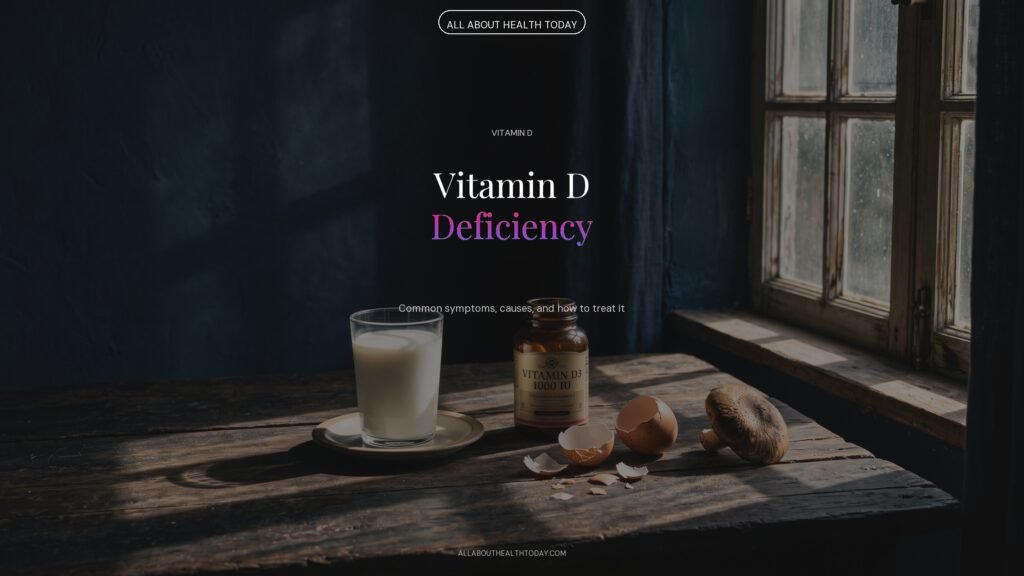
Vitamin D is often called the “sunshine vitamin” — and for good reason. Your body produces it naturally when your skin is exposed to sunlight. Yet despite this elegant built-in system, vitamin D deficiency remains one of the most common nutritional deficiencies worldwide. An estimated 47.9% of the global population has vitamin D levels below 50 nmol/L — numbers that place this nutrient squarely at the center of modern public health conversations.
What makes vitamin D deficiency so sneaky is how quietly it can develop. You might feel more tired than usual, catch every cold that goes around the office, or notice aches that you chalk up to aging — without ever suspecting your vitamin D levels are to blame. This article breaks down the symptoms to watch for, the root causes behind deficiency, and the evidence-backed strategies to get your levels back where they belong.
🔑 Key Takeaways
- Symptoms are subtle but serious: Fatigue, bone pain, frequent infections, and mood changes are classic red flags of vitamin D deficiency.
- Multiple risk factors converge: Limited sun exposure, darker skin, age over 50, obesity, and certain digestive disorders all increase your risk.
- Testing is straightforward: A simple blood test measuring 25-hydroxyvitamin D is the gold standard — levels below 20 ng/mL signal deficiency.
- Supplementation works: Vitamin D3 supplements at 600–2,000 IU daily restore levels effectively for most people, with higher doses reserved for those with confirmed deficiency.
- Food alone usually isn’t enough: While fatty fish, egg yolks, and fortified foods help, reaching therapeutic levels almost always requires sunlight or supplementation.
🧬 What Is Vitamin D — and Why Does Your Body Need It?
Vitamin D isn’t just a vitamin — it functions more like a hormone. Once produced in the skin or consumed through diet, it travels to the liver and kidneys, where it’s converted into its active form: calcitriol. From there, it binds to vitamin D receptors found in nearly every tissue in the body, influencing hundreds of genes.
Its most famous job is regulating calcium and phosphorus to build and maintain strong bones. Without adequate vitamin D, you absorb only about 10–15% of dietary calcium, compared to 30–40% when levels are sufficient. But that’s just the beginning. Research over the past two decades has revealed vitamin D’s roles in:
- Immune defense 🛡️: Vitamin D helps activate T-cells and macrophages — your body’s frontline defenders against infection. A 2021 meta-analysis of 37 randomized controlled trials found that daily vitamin D supplementation reduced the risk of acute respiratory infections, particularly in those who were deficient.
- Inflammation control 🔥: Calcitriol modulates inflammatory cytokines, which is why low vitamin D has been linked to chronic inflammatory conditions. Read more about this connection in our article on chronic inflammation.
- Mood regulation 🧠: Vitamin D receptors are densely concentrated in brain regions involved in mood, and observational studies consistently link deficiency with higher rates of depression.
- Muscle function 💪: Without enough vitamin D, muscle fibers don’t contract efficiently, leading to weakness, cramping, and increased fall risk in older adults.
- Metabolic health: The 2024 Endocrine Society guidelines specifically recommend vitamin D supplementation for people with high-risk prediabetes, citing evidence that it can reduce progression to type 2 diabetes.
⚠️ Vitamin D Deficiency Symptoms: What to Watch For
Vitamin D deficiency is a master of disguise. Its symptoms can be vague, nonspecific, and easily attributed to stress, aging, or a busy lifestyle. Many people have no obvious symptoms at all — until the deficiency has been present long enough to cause measurable harm.
The Classic Warning Signs
Persistent Fatigue and Low Energy
This is one of the most commonly reported symptoms — and one of the most overlooked. People describe it as a heavy, bone-deep tiredness that doesn’t improve with rest. In one clinical study, patients presenting with fatigue were found to have mean vitamin D levels in the deficiency range, and their symptoms improved significantly after supplementation was initiated.
Bone and Back Pain
Vitamin D deficiency leads to poor calcium absorption, which over time softens bones — a condition called osteomalacia in adults. This produces a dull, aching pain, often most noticeable in the lower back, hips, and legs. Unlike muscle soreness, bone pain feels deeper and more persistent.
Frequent Infections
If you seem to catch every cold, flu, or respiratory bug that circulates, low vitamin D may be weakening your immune response. Multiple studies, including research summarized by the BMJ, have documented that deficient individuals experience more frequent and more severe respiratory tract infections.
Mood Changes and Depression
The link between vitamin D and mood is well-established in the research literature. Low levels are associated with a significantly higher risk of depression, particularly the seasonal pattern that emerges during darker winter months. While supplementation isn’t a standalone treatment, correcting deficiency appears to improve depressive symptoms in those who start with low levels.
Muscle Weakness and Cramps
Vitamin D receptors in muscle tissue regulate calcium transport within muscle fibers. When levels drop, muscle function suffers — producing weakness, unexplained cramps, and a sensation of “heavy legs.” In older adults, this translates directly to an increased risk of falls and fractures.
Slow Wound Healing
Following surgery or injury, vitamin D plays a role in the formation of new skin and regulation of the inflammatory healing response. Studies have found that people with low vitamin D levels heal more slowly after dental procedures, surgery, and even minor cuts.
📋 Symptom Summary at a Glance
| Symptom | Why It Happens | When to Suspect Deficiency |
|---|---|---|
| Fatigue | Impaired mitochondrial energy production | Tiredness persists despite adequate sleep |
| Bone pain | Poor calcium absorption → osteomalacia | Deep aching in lower back, hips, ribs |
| Frequent illness | Weakened innate immune response | 4+ respiratory infections per year |
| Depression | Reduced serotonin and dopamine regulation | Mood dips, especially in winter months |
| Muscle weakness | Disrupted calcium signaling in muscle fibers | Difficulty climbing stairs, cramps |
| Hair loss | Disrupted hair follicle cycling | Noticeable thinning, especially in women |
| Slow healing | Impaired tissue regeneration | Wounds taking longer than expected |
🔍 What Causes Vitamin D Deficiency?
Deficiency rarely has a single cause. More often, it’s the result of multiple factors stacking up — lifestyle, biology, geography, and health conditions all playing their part.
☀️ Limited Sun Exposure
This is the single biggest driver worldwide. If you work indoors, live at a high latitude, wear clothing that covers most of your skin, or consistently use sunscreen, your skin simply isn’t making enough vitamin D. In northern U.S. states and Canada, UVB rays are too weak for vitamin D synthesis from roughly October through March — meaning half the year offers zero natural production.
🧴 Darker Skin Tone
Melanin — the pigment that gives skin its color — is a natural sunscreen. The more melanin you have, the more UVB radiation is blocked, and the longer you need to spend in the sun to produce the same amount of vitamin D. Studies consistently show that people with darker skin have significantly higher rates of vitamin D deficiency, even in sunny climates.
👴 Age
As you age, your skin becomes less efficient at synthesizing vitamin D. A 70-year-old produces roughly 75% less vitamin D from sunlight compared to a 20-year-old with the same exposure. Combine this with reduced outdoor time and dietary intake, and it’s no surprise that deficiency rates climb sharply after age 65.
⚖️ Obesity (BMI > 30)
Vitamin D is fat-soluble, which means it gets sequestered in adipose tissue and becomes less bioavailable. People with obesity may need two to three times the standard dose of vitamin D to achieve the same blood levels as someone of normal weight.
🩺 Medical Conditions
Several conditions interfere with vitamin D absorption or metabolism:
- Digestive disorders: Crohn’s disease, celiac disease, and cystic fibrosis all reduce the gut’s ability to absorb dietary fat — and vitamin D with it.
- Kidney and liver disease: These organs are essential for converting vitamin D into its active form. Chronic kidney disease is a particularly common cause of functional deficiency.
- Gastric bypass surgery: Bypassing part of the small intestine dramatically reduces the surface area available for vitamin D absorption.
📊 Risk Factors by Category
| Category | Risk Factor | Why It Matters |
|---|---|---|
| ☀️ Lifestyle | Indoor work, full clothing coverage, high-SPF sunscreen | Reduces UVB-driven D3 production |
| 🌍 Geography | Living above 37° latitude | Insufficient UVB for 6+ months of the year |
| 🧬 Biology | Darker skin, older age | Higher melanin blocks UVB; aging skin produces less D3 |
| ⚖️ Body composition | BMI > 30 | Fat tissue sequesters vitamin D |
| 🩺 Medical | Crohn’s, celiac, kidney disease, gastric bypass | Impaired absorption or activation |
| 💊 Medications | Anticonvulsants, glucocorticoids, cholestyramine | Accelerates vitamin D breakdown |
🩸 How Is Vitamin D Deficiency Diagnosed?
The gold standard test is a blood draw measuring 25-hydroxyvitamin D, abbreviated as 25(OH)D. This is the major circulating form and the best marker of your body’s vitamin D status.
Interpreting Your Results
| Status | 25(OH)D Level (ng/mL) | 25(OH)D Level (nmol/L) |
|---|---|---|
| 🔴 Deficient | Below 20 | Below 50 |
| 🟡 Insufficient | 21–29 | 52–72 |
| 🟢 Sufficient | 30–50 | 75–125 |
| ⚠️ Potentially excessive | Above 50–60 | Above 125–150 |
It’s worth noting that the 2024 Endocrine Society guidelines moved away from recommending routine screening for healthy adults without risk factors. The current guidance focuses instead on targeted testing for people with known risk conditions or symptoms consistent with deficiency. If you fall into one of the high-risk categories above, a conversation with your healthcare provider about testing is warranted.
💊 How to Treat Vitamin D Deficiency
Treatment is straightforward — supplement with vitamin D — but the details matter. The type, dose, and duration depend on how low your levels are, what caused the deficiency, and your individual health profile.
Vitamin D2 vs. D3: Which Is Better?
Vitamin D3 (cholecalciferol) is the form your skin produces from sunlight. Vitamin D2 (ergocalciferol) comes from plant and fungal sources. While both raise blood levels, research consistently shows that D3 is more effective at raising and maintaining 25(OH)D levels over time. For this reason, most clinicians recommend D3 as the preferred form.
Supplementation Strategies
| Scenario | Recommended Approach | Typical Daily Dose |
|---|---|---|
| General prevention (adults 19–70) | Meet the RDA through diet and modest supplementation | 600 IU |
| Adults 71+ | Empiric supplementation to reduce mortality risk | 800–900 IU |
| Confirmed mild deficiency | Daily D3 supplementation + retest in 3 months | 1,000–2,000 IU |
| Confirmed moderate/severe deficiency | High-dose initial therapy (prescription), then maintenance | Up to 50,000 IU weekly for 8 weeks* |
| Obesity (BMI > 30) | Higher doses needed due to adipose sequestration | 2–3× standard dose |
| Prediabetes (high-risk) | Empiric supplementation recommended per 2024 guidelines | ~3,500 IU |
*High-dose regimens should only be undertaken under medical supervision.
☀️ Sunlight: The Natural Approach
For most people, 10–30 minutes of midday sun exposure to arms and legs, several times per week, provides meaningful vitamin D production. The exact amount varies widely by skin type, latitude, season, and time of day. However, dermatologists rightly caution about skin cancer risk, so the sun-exposure strategy should be balanced — brief, non-burning exposure, and never as a substitute for supplementation when deficiency is confirmed.
🥗 Food Sources
| Food | Vitamin D (IU per serving) | Serving Size |
|---|---|---|
| 🐟 Salmon (wild-caught) | ~600–1,000 | 3.5 oz (100g) |
| 🐟 Canned tuna (light) | ~150–270 | 3 oz |
| 🫙 Cod liver oil | ~1,360 | 1 tbsp |
| 🥚 Egg yolk | ~40–50 | 1 large yolk |
| 🌞 UV-exposed mushrooms | ~400–1,000 | 3.5 oz (100g) |
| 🥛 Fortified milk | ~120 | 1 cup (8 oz) |
| 🧃 Fortified orange juice | ~100 | 1 cup (8 oz) |
| 🥣 Fortified cereal | ~40–100 | 1 serving |
While these foods contribute to your overall intake, it’s difficult to reach therapeutic vitamin D levels through diet alone. A single serving of salmon provides roughly a day’s recommended intake — but to correct a deficiency, you’d need to eat it at every meal. For more on nutrition fundamentals, see our nutrition guide.
🛡️ Preventing Vitamin D Deficiency Long-Term
Once your levels are restored, maintaining them is the goal. Here’s a practical prevention plan:
- Take a daily maintenance dose: 600–2,000 IU of D3, depending on your risk factors and baseline levels. Daily dosing is preferred over large weekly boluses, as research suggests daily supplementation is more effective for immune benefits than intermittent high doses.
- Pair it with the right nutrients: Vitamin D works in tandem with calcium, magnesium, and vitamin K2. Magnesium, in particular, is required to activate vitamin D — so low magnesium can undermine your supplementation efforts.
- Get brief midday sun: Aim for short, non-burning exposure to arms and face during peak UVB hours. Even 10–15 minutes can make a meaningful difference in warmer months.
- Eat fatty fish weekly: Two servings per week of salmon, mackerel, or sardines provide a meaningful baseline — plus heart-healthy omega-3 fatty acids.
- Recheck levels annually: If you were previously deficient, an annual blood test confirms that your maintenance strategy is working.
Pro Tip: Take D3 with a Meal Containing Fat
Vitamin D is fat-soluble, which means absorption jumps significantly when taken alongside dietary fat. A study in the Journal of the Academy of Nutrition and Dietetics found that taking vitamin D with the largest meal of the day increased absorption by roughly 50%. Pair your supplement with avocado toast, eggs, olive oil-dressed salad, or nuts for optimal results.
👥 Special Populations Who Need Extra Attention
🤰 Pregnancy and Breastfeeding
The 2024 Endocrine Society guidelines specifically recommend vitamin D supplementation during pregnancy, citing evidence that adequate levels reduce the risk of preeclampsia, preterm birth, and neonatal complications. Breast milk is naturally low in vitamin D, so exclusively breastfed infants typically need their own supplementation — a topic to discuss with your pediatrician.
👶 Children and Adolescents
Severe deficiency in children causes rickets — a softening and weakening of bones that leads to bowed legs, delayed growth, and skeletal deformities. While rickets was once thought to be largely eradicated, cases have been rising in recent years. The Endocrine Society now recommends empiric supplementation for children aged 1–18 to prevent rickets and potentially reduce respiratory infections.
👵 Older Adults
For adults aged 75 and older, the guidelines are clear: supplementation is recommended to reduce mortality risk. As we explored earlier, aging skin produces significantly less vitamin D, and older adults tend to spend less time outdoors. Combined with the elevated risk of falls and fractures, this makes supplementation in this age group a high-priority intervention. For more on nutrition tailored to aging, see our guide on the best diets for women over 50, which covers bone health strategies applicable across genders.
❓ Frequently Asked Questions
With consistent daily supplementation of 1,000–2,000 IU, most people see their levels rise into the sufficient range within 3–4 months. For moderate to severe deficiency treated with prescription-strength doses (e.g., 50,000 IU weekly), levels can normalize in as little as 8 weeks. The key is consistency — and a follow-up blood test to confirm your levels have responded as expected.
It depends heavily on where you live and your skin type. In equatorial regions with year-round strong UVB, brief daily sun exposure may suffice. However, for anyone living above 37° latitude (which includes most of the United States, Canada, and Europe), UVB radiation is insufficient for vitamin D synthesis during fall and winter months — roughly October through March. During those months, supplementation becomes essential to maintain adequate levels, regardless of sun exposure habits.
Vitamin D2 (ergocalciferol) is produced by plants and fungi exposed to UV light. Vitamin D3 (cholecalciferol) is the form your body naturally produces from sunlight and the form found in animal sources. Multiple studies confirm that D3 is significantly more effective at raising and sustaining blood levels of 25(OH)D. Most over-the-counter supplements contain D3 for this reason. D2 is sometimes prescribed in high-dose formulations, but D3 is generally the preferred choice for maintenance.
Yes. Several common medications can accelerate vitamin D breakdown or impair absorption. These include certain anticonvulsants (phenytoin, phenobarbital), glucocorticoids (prednisone), the weight-loss drug orlistat, and bile acid sequestrants like cholestyramine. If you take any of these medications long-term, your healthcare provider should monitor your vitamin D status and adjust supplementation accordingly.
In theory, sunscreen with SPF 30 blocks about 97% of UVB rays, which would dramatically reduce vitamin D production. In practice, most people don’t apply sunscreen perfectly or cover every inch of exposed skin, so the real-world impact is smaller. Studies generally find that regular sunscreen users can still maintain adequate vitamin D levels, though those who are meticulous about full-body, high-SPF application may see reductions. The dermatological consensus is that the skin cancer protection benefits of sunscreen outweigh the vitamin D concerns — and if you’re worried, a daily D3 supplement is a safe, inexpensive backup.
🏁 The Bottom Line
Vitamin D deficiency is remarkably common, remarkably treatable, and remarkably overlooked. It lurks behind symptoms that are easy to dismiss — fatigue, aches, low mood, frequent colds — and it disproportionately affects people who spend their days indoors, have darker skin, carry extra weight, or are over 50.
The good news is that testing is simple, and treatment — when done correctly — is highly effective. A daily D3 supplement of 600–2,000 IU, taken with a meal containing fat, brings most people’s levels into a healthy range within a few months. For those with confirmed deficiency, higher doses under medical supervision provide a straightforward path to recovery.
Your bones, your immune system, and your mood will all thank you for paying attention to this one small but mighty nutrient.
If you suspect you may be vitamin D deficient, speak with your healthcare provider about a simple blood test. Never begin high-dose supplementation without medical guidance.