
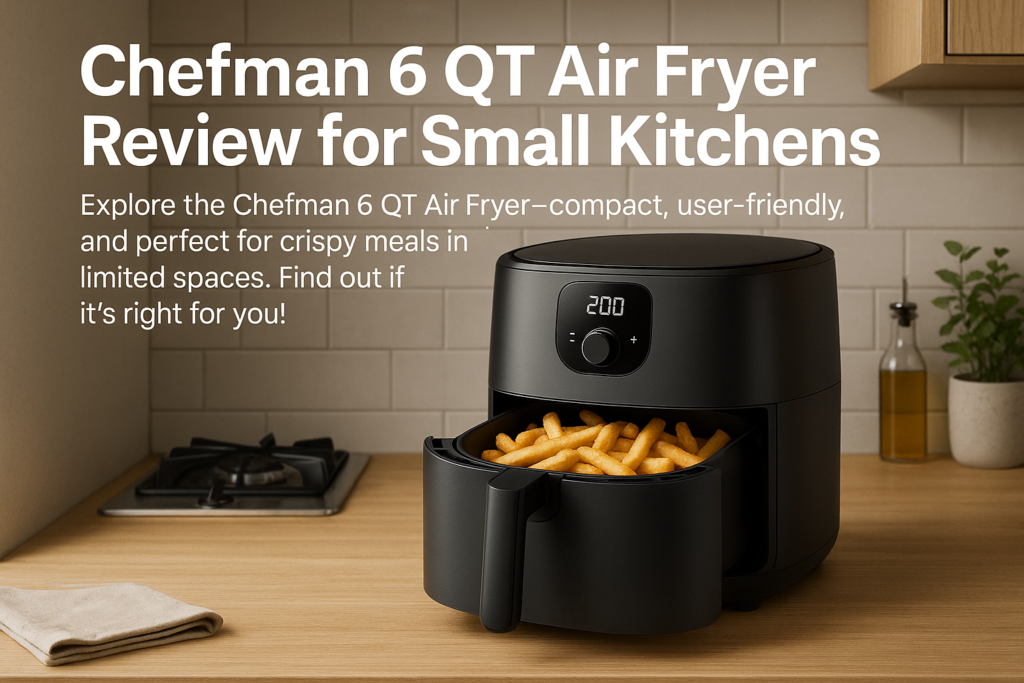
An air fryer is a small convection oven with a fan and a basket. It does not fry — it moves hot air fast. That distinction is the whole review: it is genuinely good at some things, genuinely worse at others, and the one health claim that survives scrutiny is about acrylamide rather than fat.
Medically reviewed by Dr. A. Collins, MDBoard Certified Internist · Updated 26 October 2026
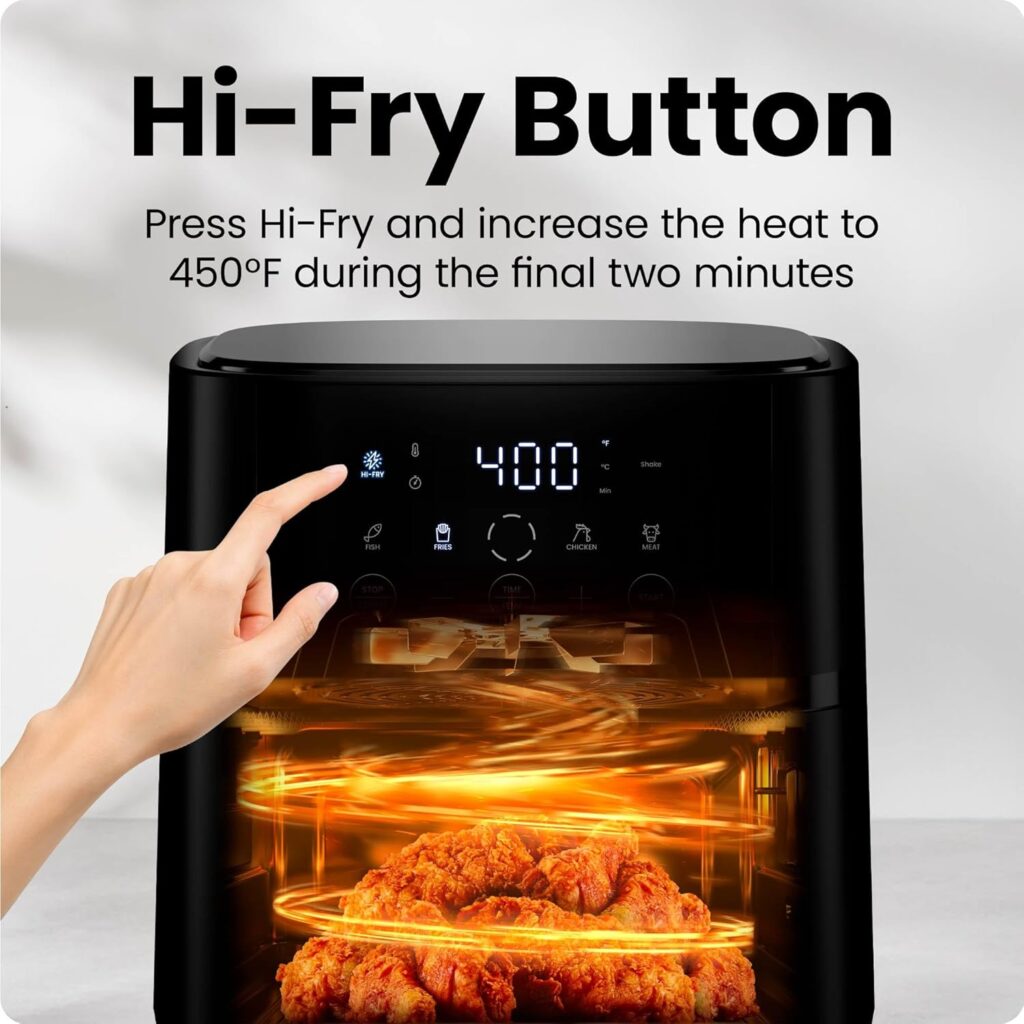
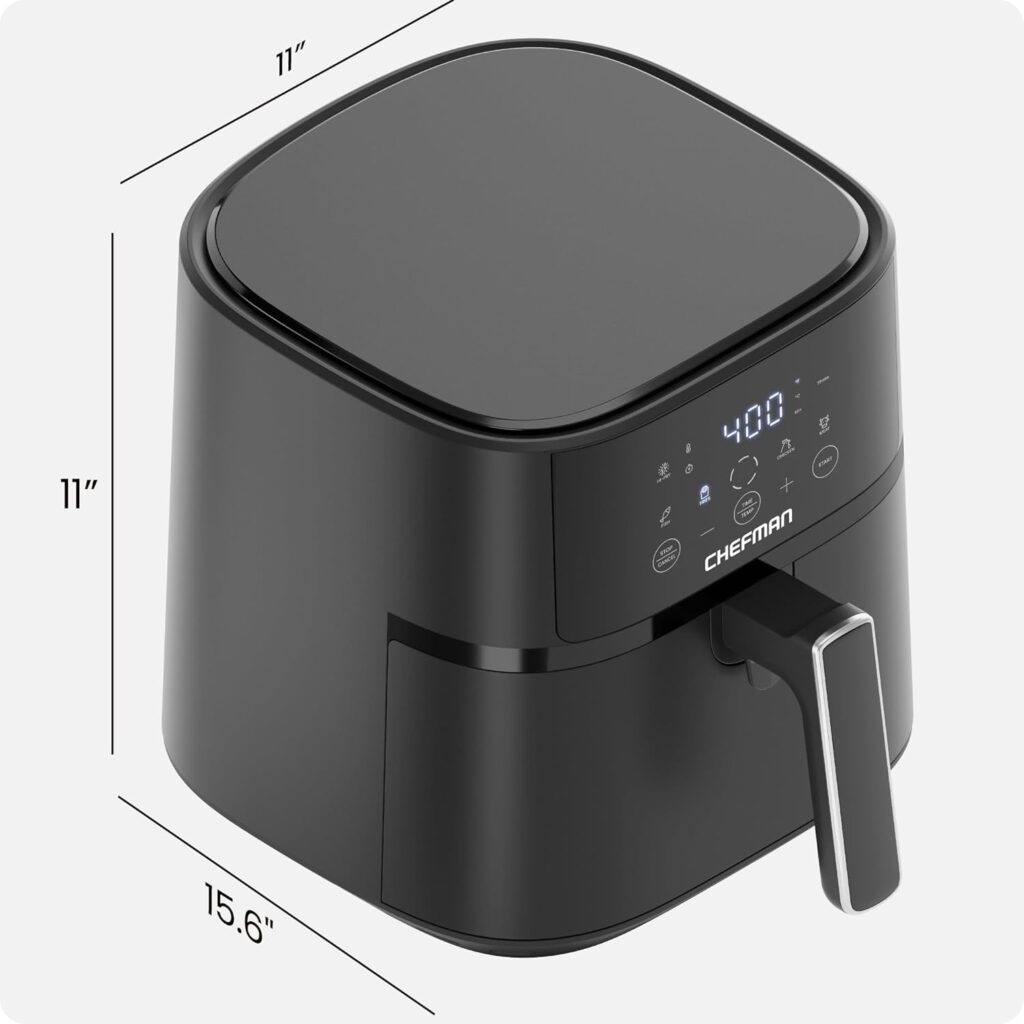
The 6-quart size is the pragmatic middle of the market — big enough for a family portion of chips or a whole chicken, small enough to sit on a counter without eviction. That size, rather than any technology, is what most people are actually choosing between.
What follows is what it is good at, what it is bad at, and what the evidence says about cooking this way.
The spec that matters
Air versus deep versus oven
This is the comparison that decides whether the appliance earns its counter space. Pick a method and see what actually changes.
Indicative comparison of fat uptake and acrylamide formation, not a measurement of your food.
Acrylamide is the real story
Acrylamide forms when starchy food is cooked at high temperature — it is a Maillard reaction by-product, the same chemistry that browns toast. It is classified as a probable human carcinogen, and dietary exposure has been assessed at population level (Li, 2022), including in vulnerable groups (Pekmezci, 2024).
Here is where the air fryer earns its place, and where the marketing gets it slightly wrong. Air frying reduces acrylamide compared with deep frying, because the food is not submerged in hot oil and the surface temperature is more controllable (Sansano, 2015). Studies on fries specifically show that the cooking method and pretreatment change both the texture and the acrylamide load (Dong, 2022).
The practical rule from the food-science literature: cook to golden rather than dark brown, soak potatoes before cooking, and avoid the highest temperature setting for long periods. Those three changes reduce acrylamide more than switching appliances does.
What it genuinely does well
- Frozen convenience food. This is the killer use case — chips, nuggets and breaded items come out close to fried with a fraction of the oil.
- Vegetables. Fast, high-heat roasting gives browning that an oven takes twice as long to achieve, in a small volume.
- Reheating. Genuinely better than a microwave for anything that should be crisp. Leftover pizza is the standard test.
- Small-batch cooking. Faster preheat than a full oven, which matters if you cook for one or two.
- Oil reduction without deprivation. Fat uptake is lower than deep frying while texture remains acceptable, though the starch coating on the food changes how much oil is taken up (Wang, 2026). — the oil absorption literature describes how frying method changes the fat fraction (Ghaitaranpour, 2026).
What it does badly
- Wet batters. Tempura and beer batter slide off into the basket. This is a physics problem, not a technique problem.
- Large volumes. Overfilling turns it into a steamer. One layer, or accept soggy results.
- Anything needing steam or moisture. It is a dry environment; rice, custards and braises do not belong in it.
- Counter footprint. Six quarts is a real object. If it lives in a cupboard, it will stop being used within a month.
- Noise. A fan running next to you for twenty minutes. Worth knowing before you buy.
- The health halo. Chips are still chips. Lower fat than deep fried does not make a diet of them good (Monteiro, 2025) — the carbohydrate and energy context is in how carbohydrates work.
Running costs and the honest maths
An air fryer uses less energy than a full-size oven for small portions, because it heats a small cavity. For a single portion of chips it is meaningfully cheaper to run. For a family roast it is not — you cannot fit enough in.
- Cheaper than the oven for one to two portions of anything.
- More expensive than the oven if you cook in batches, because you run it three times.
- Cheaper than a deep fryer on oil alone, which is the line item people forget.
- Not cheaper than not having one. If you already cook vegetables in an oven happily, the gain is convenience rather than money.
- Compare with what you would cook instead. If the alternative is a takeaway, the air fryer is both cheaper and better — see practical meal ideas.
The verdict
Buy it if you cook for one or two people, eat frozen convenience food, or want fast roast vegetables without heating a whole oven.
Skip it if you mostly cook wet dishes, need to feed a family in one go, or have no permanent counter space for it.
On health grounds: a modest, real reduction in fat and acrylamide compared with deep frying, and nothing more than that.
The second photo shows the basket and drawer arrangement, which is the part that determines whether you will actually clean it. A dishwasher-safe basket is not a luxury — it is the difference between weekly use and a cupboard ornament.
If you are buying, the 6-quart Chefman is a reasonable middle-market example of the format.
Some links in this article are affiliate links. If you buy through them we may earn a commission at no extra cost to you. We have not lab-tested this product and this does not change the assessment above.
If you are reorganising how you cook rather than which appliance you own, the time-budget approach in healthy eating for busy lives is more useful than any gadget, and the snack decisions in smart snacking cover the other half. The wider diet picture sits in anti-inflammatory foods and the Mediterranean guide.
Using it well: what actually changes the result
Most disappointment with an air fryer is operator error rather than appliance failure. Five habits separate the people who use it weekly from the people who put it in a cupboard.
- Dry the surface. Moisture has to evaporate before browning starts. Patting food dry is the single biggest improvement available.
- A thin oil film, not a spray-drizzle. A teaspoon tossed through vegetables browns better than a heavy coating, and adds less fat than people assume.
- Do not crowd the basket. One layer with space between pieces. Overcrowding traps steam and produces the soggy result people blame on the appliance.
- Shake halfway. It evens the browning and prevents the top layer burning while the bottom stays pale.
- Cook to golden, then stop. The acrylamide point again: the last two minutes of darkening add flavour and add the compounds you would rather avoid.
Beyond those, the appliance rewards a specific kind of cooking: fast, dry, small-batch. If your cooking is mostly wet — curries, braises, soups — it will sit unused. That is a mismatch of use case rather than a fault.
How it fits alongside other approaches
The honest comparison is not air fryer versus deep fryer in isolation. It is air fryer versus the way you already cook, and where it saves you both time and fat.
- Versus a full oven: faster to heat, smaller batch, worse at volume. For one or two portions it wins on time and energy.
- Versus a deep fryer: less fat, less acrylamide, no oil disposal problem, slightly different texture. It does not replicate the result exactly, and anyone claiming otherwise has not eaten both.
- Versus a microwave: better texture, slower. Reheating is where the difference is most obvious.
- Versus a slow cooker: opposite tool. One is fast and dry, the other slow and wet; owning both is not redundant.
- Versus cooking less: the healthiest option is usually the one that changes what you eat, not how you heat it — see smart snacking.
For the practical side of fitting cooking into a busy week, the time-budget approach in healthy eating for busy lives is more useful than any appliance decision. And if you are weighing up what counts as healthy food generally, deceptively healthy foods covers the labelling traps.
Common questions about air fryers
Is air-fried food actually healthier?
Lower in fat than deep-fried food, and lower in acrylamide than deep frying at the same temperature. It is not a health food — chips remain chips.
Does it use a lot of electricity?
Less than a full oven for small portions, more if you end up running several batches. Compared with a deep fryer it wins on oil cost rather than electricity.
Can you put foil in an air fryer?
Yes, in the basket, but do not block the airflow or let it touch the heating element. Parchment with holes is safer.
Do I need to preheat it?
A couple of minutes helps browning. Many recipes skip it, which makes the appliance faster than an oven either way.
Is it the same as a convection oven?
Functionally yes — it is a small, fast convection oven with a basket instead of a shelf. The advantage is size and heat-up speed, not a different cooking mechanism.
Does air frying reduce acrylamide?
Compared with deep frying, yes. Compared with boiling or steaming, no — it is still a hot dry environment. Cooking to golden rather than dark brown matters more.
Sources
- Sansano M, et al. Effect of pretreatments and air-frying on acrylamide generation. J Food Sci. 2015. PMID 25872656
- Dong L, et al. Effects of air frying on French fries: physicochemical indications. Front Nutr. 2022. PMID 35571903
- Ghaitaranpour A, et al. From deep-fat frying to G-frying: oil absorption dynamics. Food Sci Nutr. 2026. PMID 42769531
- Wang T, et al. Impact of potato starch on oil uptake during frying. Food Chem. 2026. PMID 41850105
- Li Y, et al. Cancer risk and disease burden of dietary acrylamide exposure. Ecotoxicol Environ Saf. 2022. PMID 35489291
- Pekmezci H, et al. Dietary acrylamide exposure and health risk in pregnant women. Food Sci Nutr. 2024. PMID 38370045
- Monteiro CA, et al. Ultra-processed foods and human health: the main thesis and the evidence. Lancet. 2025. PMID 41270766