

What Is Collagen? The Body’s Structural Protein
Collagen isn’t a single molecule — it’s a family of 28 genetically distinct types. The supplement industry focuses on three: Type I, the predominant collagen in skin, bone, tendons, and ligaments (roughly 90% of total body collagen); Type II, concentrated in cartilage; and Type III, found alongside Type I in skin, blood vessels, and the gut lining. When a label says “Types I & III,” it’s targeting skin and structural support. “Type II” — often from chicken sternum — is aimed at joint health through a fundamentally different mechanism.
At the molecular level, collagen is built from a repeating sequence of glycine, proline, and hydroxyproline. These three form a distinctive triple-helix — three chains wound around each other like a molecular rope — giving collagen remarkable tensile strength. Synthesis depends entirely on cofactors: vitamin C is the most critical, along with copper and zinc. What makes collagen unique among proteins is its amino acid profile — glycine alone makes up roughly one-third of its content, far exceeding concentrations found in whey, soy, or meat.
The Aging-Collagen Connection
Starting around age 25, collagen production declines roughly 1% per year. By age 50, the average person has lost roughly 25% of their peak collagen. Skin thins and loses moisture-holding capacity. Cartilage wears down. The gut lining may become more permeable. Three external factors accelerate this dramatically: UV radiation activates enzymes that degrade collagen fibrils; dietary sugar drives glycation, binding to collagen fibers and making them stiff and brittle; and smoking degrades collagen through direct toxicity and vasoconstriction that starves skin of oxygen. Genetics dictate your baseline; sun protection, sugar intake, and smoking status determine your trajectory.
What the Research Actually Shows
The 2026 Anglia Ruskin umbrella review aggregated the highest-quality data available. Here’s what emerged, broken down by health domain.
Skin: Hydration, Elasticity, and Wrinkle Depth
Across 20 randomized controlled trials (1,217 participants), collagen supplementation produced large, significant improvements in skin elasticity — rated as high-certainty evidence (SMD = 1.01). Nineteen trials on hydration (954 participants) found similarly robust effects (SMD = 0.71). Studies consistently show that 2.5 to 10 grams of hydrolyzed collagen peptides daily for 8 to 12 weeks increases skin moisture and reduces fine wrinkle depth, particularly around the eyes and nasolabial folds.
However, context matters. A 2025 systematic review in The American Journal of Medicine found that when researchers separated studies by funding source, non-industry-funded trials showed no significant benefit for any skin endpoint. The published literature likely overestimates effects. The truth: real but modest improvements, most noticeable in people with established collagen decline (postmenopausal women, older adults), less dramatic in younger populations with intact endogenous production.
Joints: Osteoarthritis Pain and Function
The joint data is arguably the strongest in the collagen literature. Twenty-five RCTs (2,687 participants) found significant pain reduction in osteoarthritis patients (SMD = -0.35, high-certainty evidence). Effects on the WOMAC osteoarthritis index were comparable to glucosamine and chondroitin, with longer supplementation periods yielding better results.
Important distinction: hydrolyzed Type II collagen (from chicken cartilage) works through oral tolerance — exposing the immune system to cartilage proteins in a way that may reduce the autoimmune attack on joint tissue. This is fundamentally different from Type I/III peptides, which provide amino acid building blocks. The dose for Type II is dramatically lower: roughly 40 mg daily versus 5 to 15 grams for peptides.
Hair, Nails, and Gut Health
The evidence for hair is limited — a few small positive trials, including one where a combination supplement containing collagen and biotin improved hair thickness after 90 days, though combination products make it impossible to isolate collagen’s contribution. Nail strength is better supported: a 2017 study found daily collagen peptides increased nail growth by 12% and reduced breakage by 42% over 24 weeks.
Gut health has the widest gap between mechanistic plausibility and clinical evidence. Glycine and proline are structural components of the intestinal lining, and animal studies suggest collagen peptides can strengthen gut barrier function. But human trials are sparse and mostly uncontrolled. The theory has biological logic, but for gut health, an anti-inflammatory diet rich in diverse plant fibers has substantially more direct evidence behind it.
The Bioavailability Question
A persistent criticism: proteins are broken down into amino acids during digestion, and the body can’t distinguish glycine from collagen powder versus glycine from chicken. This is both true and misleading. A meaningful fraction of hydrolyzed collagen survives digestion as short dipeptides and tripeptides — primarily hydroxyproline-proline and hydroxyproline-glycine — which are absorbed intact. These collagen-specific peptides appear to act as signaling molecules, stimulating fibroblasts to upregulate their own collagen and hyaluronic acid production — sending a “make more collagen” signal rather than just providing raw materials.
Critical caveat: you cannot target collagen to specific tissues. Once absorbed, peptides circulate systemically, and your body decides where to use them. If your skin is fine but your knees ache, you can’t direct collagen to your joints. The peptides go where systemic demand is highest, which is one reason effects are diffuse and modest rather than dramatic and localized.
Types of Collagen Supplements Explained
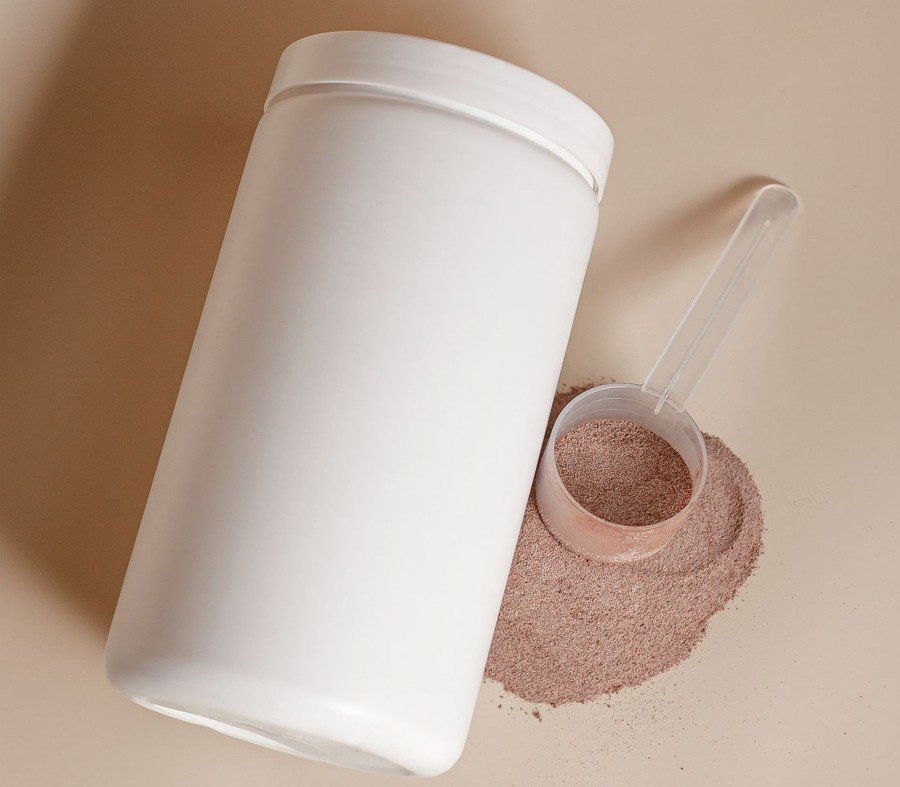
- Hydrolyzed collagen peptides (Types I & III): Enzymatically broken down into short chains (2,000–6,000 daltons) — small enough to dissolve in cold water and absorb efficiently. Tasteless, mix easily into coffee or smoothies, and represent the most research-backed format for skin and general connective tissue support. Typical dose: 2.5 to 15 grams daily. Absorption is approximately 1.8 times higher than unhydrolyzed gelatin.
- Undenatured Type II collagen (UC-II): Sourced from chicken sternum cartilage, minimally processed to preserve the triple-helix structure. Works through oral tolerance induction rather than providing building blocks. Effective dose: just 40 mg daily. Not interchangeable with peptide-based collagen.
- Gelatin: Partially hydrolyzed collagen that retains its gelling properties. Same amino acids as peptides but absorbed more slowly. Best for culinary uses or gut-support protocols where the gel-forming property coats the GI mucosa. Typical dose: 10 to 15 grams in hot liquid.
Bone broth — the traditional source — provides roughly 6 to 12 grams of collagen per 8-ounce serving, but the exact amount is impossible to standardize. It contains additional compounds (glucosamine, chondroitin, hyaluronic acid, minerals) that isolated powder lacks. Commercial peptides offer research-backed consistency; broth offers complementary nutrients. The two aren’t mutually exclusive.
Collagen vs. Whole Protein
Standard dietary proteins — whey, casein, soy, meat — are rich in branched-chain amino acids that drive muscle protein synthesis but relatively low in glycine and proline. A 30-gram scoop of whey provides roughly 400 mg of glycine; a 10-gram serving of collagen peptides provides approximately 2,500 mg — more than six times as much. The average Western diet, heavy in muscle meats and light on connective tissues, may be relatively glycine-deficient. Glycine isn’t just a collagen building block — it’s also a neurotransmitter, a component of glutathione (the body’s master antioxidant), and an inflammation regulator.
But collagen cannot replace complete proteins. It’s missing tryptophan entirely and is low in several essential amino acids. Using collagen as your primary protein source would lead to deficiencies. The practical takeaway: collagen is a targeted supplement to a diet already adequate in complete protein, not a protein replacement.
What Helps Collagen Work
- Vitamin C: Non-negotiable. It’s a required cofactor for the enzymes that stabilize the collagen triple helix. Without it, synthesis halts — which is why scurvy manifests as connective tissue breakdown. If you’re taking collagen without vitamin C, you’re leaving synthesis capacity on the table.
- Copper: The enzyme that cross-links collagen into strong, stable fibers depends entirely on copper. Deficiencies are rare but can occur with prolonged high-dose zinc supplementation.
- Vitamin D: While not a direct cofactor, vitamin D regulates genes involved in tissue repair and calcium metabolism — both intersecting with collagen function in bone and skin.
- Avoid sugar: Sugar-driven glycation cross-links and stiffens collagen fibers. Every blood sugar spike contributes a small, cumulative assault on collagen integrity.
- Sunscreen: Daily broad-spectrum SPF protects existing collagen from UV-driven enzymatic destruction. No supplement outruns unprotected sun exposure.
| Benefit area | Format this article points to | Dose stated in this article | Evidence strength per this article |
|---|---|---|---|
| Skin hydration and elasticity | Hydrolyzed collagen peptides (Types I & III) — the most research-backed format for skin and general connective tissue support | 2.5 to 10 grams of hydrolyzed collagen peptides daily for 8 to 12 weeks; the article’s general peptide range is 2.5 to 15 grams daily | Large, significant improvements rated high-certainty: 20 randomized controlled trials (1,217 participants) for elasticity (SMD = 1.01) and 19 trials (954 participants) for hydration (SMD = 0.71). Caveat stated in the article: a 2025 systematic review in The American Journal of Medicine found non-industry-funded trials showed no significant benefit for any skin endpoint, so the published literature likely overestimates effects |
| Joint pain and function in osteoarthritis | Undenatured Type II collagen (UC-II) from chicken sternum cartilage, which works through oral tolerance induction rather than supplying building blocks; hydrolyzed peptides supply amino acids instead | Roughly 40 mg daily for undenatured Type II, versus 5 to 15 grams for peptides — the article stresses they are not interchangeable | Arguably the strongest data in the collagen literature: 25 RCTs (2,687 participants) found significant pain reduction in osteoarthritis (SMD = -0.35, high-certainty evidence), with WOMAC effects comparable to glucosamine and chondroitin and better results from longer supplementation |
| Nail strength and growth | Daily collagen peptides | Not stated in this article beyond “daily collagen peptides” | Better supported than hair: a 2017 study found nail growth increased by 12% and breakage fell by 42% over 24 weeks |
| Hair thickness | A combination supplement containing collagen and biotin | Not stated in this article | Limited — only a few small positive trials; because the 90-day trial used a combination product it is impossible to isolate collagen’s contribution |
| Gut health and intestinal barrier | Gelatin, whose gel-forming property coats the GI mucosa, or collagen peptides for their glycine and proline content | 10 to 15 grams of gelatin in hot liquid | The widest gap between mechanistic plausibility and clinical evidence in this article: animal studies suggest benefit, but human trials are sparse and mostly uncontrolled |
| Athletic recovery (post-exercise soreness, tendon mechanical properties) | Not applicable — the article explicitly calls collagen’s recovery positioning a marketing myth | Not stated in this article | No meaningful benefit: the 2026 Anglia Ruskin umbrella review found none for post-exercise muscle recovery, soreness or tendon mechanical properties; omega-3 fatty acids have substantially stronger evidence for exercise-induced inflammation |
| Whole-protein adequacy (glycine and essential amino acids) | Collagen peptides as a targeted supplement alongside complete protein — never as a protein replacement | A 10-gram serving of collagen peptides provides approximately 2,500 mg of glycine, versus roughly 400 mg in a 30-gram scoop of whey | Collagen cannot replace complete proteins: it is missing tryptophan entirely and is low in several essential amino acids, so using it as a primary protein source would lead to deficiencies |
Who Benefits — and Who Probably Won’t
Most likely to benefit: Postmenopausal women show the largest and most consistent improvements in skin hydration and elasticity — they’re the population in which estrogen-driven collagen decline accelerates most. People with established osteoarthritis represent the strongest joint-outcome data, with effects comparable to glucosamine. Athletes with high joint loading — runners, weightlifters — may benefit from the tendon and ligament support documented in some trials. Adults over 50 with visible skin aging match the populations studied in the positive research.
Least likely to benefit: A healthy 22-year-old taking collagen “preventively” is unlikely to notice any difference — their endogenous synthesis runs at near-peak capacity, and adding substrate when the machinery is already saturated doesn’t accelerate output. Similarly, collagen won’t erase deep, established wrinkles or reverse advanced osteoarthritis. It supports and modestly improves; it doesn’t dramatically reverse decades of structural change.
The athletic performance myth: Despite marketing positioning collagen as a recovery aid, the 2026 umbrella review found no meaningful benefit for post-exercise muscle recovery, soreness, or tendon mechanical properties. For actual muscle repair, complete proteins containing all essential amino acids are non-negotiable. Omega-3 fatty acids have substantially stronger evidence for managing exercise-induced inflammation.
The Sustainability Angle
The environmental footprint of your collagen depends on its source. Bovine collagen carries the full weight of cattle agriculture: methane emissions, water use, and in some regions, deforestation. A 2025 investigation traced collagen supply chains from Brazilian cattle farms to international supplement brands, linking the industry to Amazon deforestation. Life cycle assessments peg bovine collagen’s carbon footprint at roughly 3.7 times that of marine collagen, with agriculture-phase emissions — feed, manure, land use change — accounting for approximately 80% of the total.
Marine collagen, sourced from fish skin, scales, and bones — byproducts that would otherwise be discarded — generates roughly one-tenth the carbon emissions per kilogram, requires no freshwater or land, and exemplifies circular economy principles. The caveat: the sustainability advantage depends on responsible sourcing from certified fisheries. For the ethically minded consumer, marine collagen from MSC-certified sustainable fisheries represents the best intersection of efficacy and environmental responsibility.
The Bottom Line
Collagen supplementation occupies a legitimate but modest place in evidence-based wellness. The strongest data supports its use for skin hydration and elasticity in aging populations, and for osteoarthritis pain relief — particularly when taken consistently over 12 weeks or longer. The effects are real but not dramatic, and they’re most visible in people whose endogenous collagen production has already declined past a threshold. If you’re a healthy young adult with good skin and pain-free joints, collagen is unlikely to move the needle in any way you’d notice. If you’re postmenopausal, dealing with joint discomfort, or noticing the structural signs of aging skin, the scientific case for a trial is reasonable.
Whatever form you choose — hydrolyzed peptides for skin, undenatured Type II for joints, marine over bovine for sustainability — pair it with the fundamentals: daily sun protection, adequate vitamin C, a diet that limits sugar-driven glycation, and sufficient complete protein from diverse sources. Collagen is a supporting actor in healthy aging, not the lead. Use it that way, and the research suggests it can earn its place.