


A breakfast that actually holds you until lunch has four parts: 25 to 30 grams of protein, a fibre-rich carbohydrate, a little fat, and something with colour. Most people manage one or two of those. Here is how a nutritionist assembles all four, plus three breakfasts that hit the target in under ten minutes.
What makes a breakfast actually work?
Three things drive how you feel by mid-morning: how much protein the meal contains, how slowly it releases energy, and whether it contained enough fibre to blunt the glucose response. A bowl of cereal with milk and juice can hit 60 grams of carbohydrate and 8 grams of protein, which is close to the worst ratio you can start a day with. The same calories arranged differently behave completely differently.
Protein is the part most people get wrong. The daily target is covered in detail in how much protein you actually need, but the breakfast-specific number is roughly a quarter to a third of your daily intake in one sitting — which is why 25 to 30 grams is the working figure. If your daily protein is already arranged around training, the meal-by-meal distribution logic is in protein timing and dosing.
Protein
25–30 gThis is non-negotiable. It is what keeps you full and what protects muscle if you are dieting or over 50.
- 3 whole eggs plus 100 g cottage cheese
- 200–300 g Greek yogurt
- Whey or a plant protein blend
- Smoked salmon, tofu scramble, or kefir
Fibre carbohydrate
8–10 g fibreOats, whole grain bread, or beans. Fibre is what turns a glucose spike into a slope.
- 40–50 g rolled oats
- One slice of dense whole grain bread
- Berries rather than juice
- Chia or ground flax for extra fibre
Fat
1 thumbFat slows gastric emptying, which is most of why a fatty breakfast feels heavier for longer.
- 15 g nuts or seeds
- A quarter avocado
- Olive oil on toast
- Omega-3 from walnuts or a fish oil capsule
Produce
1–2 fistsVolume, vitamin C, potassium and polyphenols, for very few calories. This is the slot people skip.
- Berries, banana, or kiwi
- Spinach blended into a smoothie
- Tomato and mushrooms with eggs
- Fermented options such as kefir or yoghurt
If you only fix one slot, fix protein. If you fix two, add produce — it is where most of the common micronutrient gaps get closed, particularly for women who are low in iron. Whole foods also carry nutrients that fortified products no longer do, which is the subject of the nutrient density problem.
The three breakfasts, built out
These are the same three breakfasts this article has always covered, rebuilt with the numbers attached. Each one fills all four slots, and each one takes a different amount of time — pick by how much of a morning you actually have.

1. Power protein pancakes
Blend 40 g rolled oats, 2 eggs, 150 g cottage cheese (or one scoop of protein powder), a teaspoon of baking powder and a pinch of salt. Cook in a non-stick pan like normal pancakes and top with berries. The cottage cheese is doing the heavy lifting here — it takes the protein from 14 grams to roughly 35 without adding flour.
If you are short on time, a ready-made shake is the shortcut version of the same idea — a Premier Protein shake plus a piece of fruit covers the anchor and the produce slot in about ninety seconds, though it is a thinner meal overall.
2. The smoothie bowl
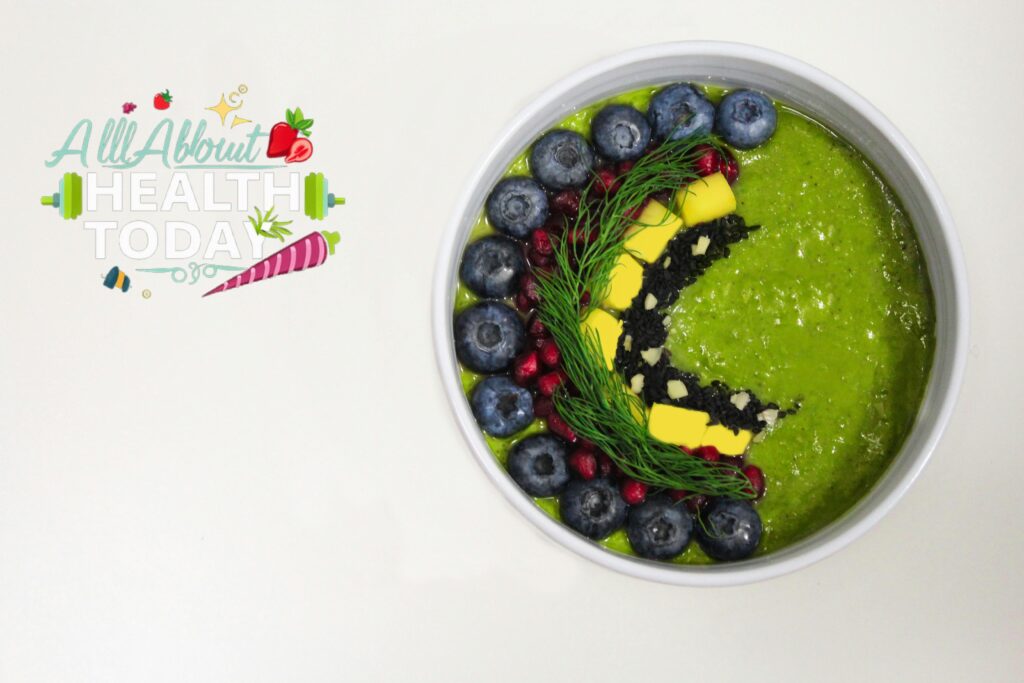
Blend 200 g Greek yogurt, 100 g frozen berries, 30 g oats, 15 g seeds and a handful of spinach until thick, then eat it with a spoon rather than drinking it. The bowl version matters: eaten slowly it registers as a meal, and the toppings add texture that a drink never has. The same base is the starting point for the post-workout smoothie recipes if you train in the morning.
Berry choice is not cosmetic — frozen berries keep their polyphenols and are cheaper year-round. The case for the wider fruit list is in the most nutrient-dense fruits, and the banana specifically is covered in what bananas actually do.
3. Overnight oats
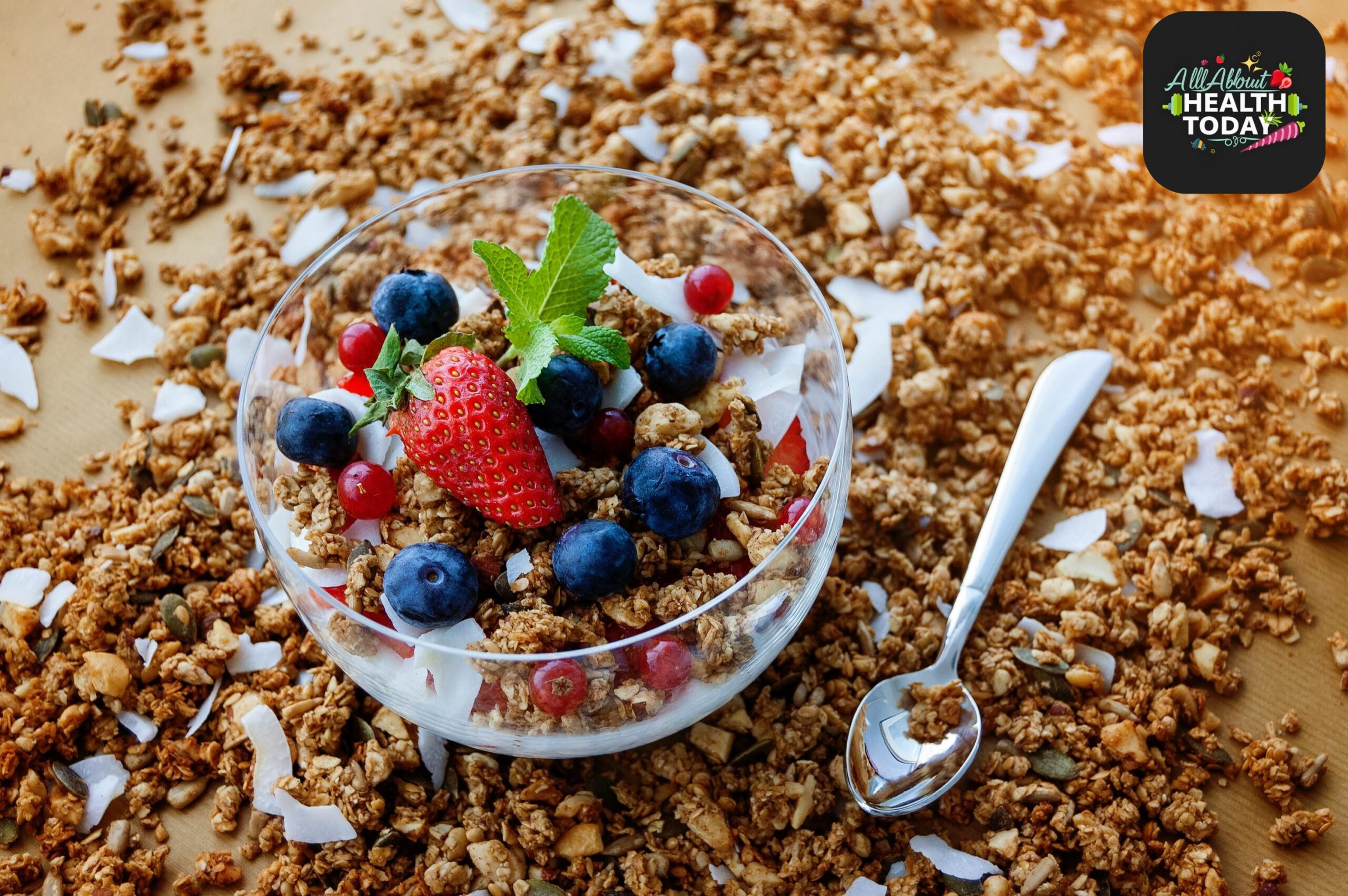
Combine 50 g rolled oats, 200 ml milk, 150 g yogurt, 15 g chia seeds and a handful of berries in a jar. Leave it in the fridge overnight. This is the lowest-effort option and the one that survives a chaotic morning, because the work happened the night before. A teaspoon of honey is optional — if you use one, use a real raw honey such as this KFactor one rather than a flavoured syrup, and treat it as sugar regardless, as the difference between fruit sugar and added sugar explains.
The oats are the reason this one wins on fibre. Oat beta-glucan is one of the few food components with a consistent cholesterol effect, which is covered below.
| Breakfast | Protein | Fibre | Calories | Best for |
|---|---|---|---|---|
| Power protein pancakes | 35 g | 8 g | 480 | Training days, high protein targets |
| Smoothie bowl | 28 g | 7 g | 420 | People who cannot face solid food early |
| Overnight oats | 25 g | 9 g | 450 | Chaotic mornings, fibre goals |
All three land in a similar calorie band, which is deliberate: the difference between a breakfast that works and one that does not is rarely the calorie count, it is the protein-to-carbohydrate ratio and the fibre load. If you want the same logic applied to the rest of the day, the plate-building guide uses the same four-slot structure.
Which swap fixes which problem?
Most breakfast complaints have a structural cause rather than a willpower cause. The table below maps the symptom to the slot that is missing.
| If this happens | The swap | Why it works |
|---|---|---|
| Hungry again by 10am | Add 10–15 g protein to the anchor | Protein is the most satiating macronutrient; a dairy-based protein-rich breakfast reduced hunger and improved concentration before lunch in a randomised trial (Dalgaard, 2024) |
| Energy crash mid-morning | Swap juice for whole fruit | Fibre and cell structure slow the glucose rise; juice delivers the sugar without either |
| No time at all | Move the work to the night before | Overnight oats convert a morning task into an evening one |
| Not hungry in the morning | Liquid first, solids later | A thick smoothie bowl is easier than a plate of food, and still counts as a meal |
| Constipation | Add chia or berries to an existing meal | Fibre and fluid together; fibre alone without fluid makes it worse |
| Bored of the same breakfast | Rotate produce, keep the skeleton | The four slots stay constant; only the produce and fat change |
| Stuck at a weight plateau | Raise protein, not skip meals | Covered in the plateau breakdown; protein protects lean mass in a deficit |
Fibre deserves a sentence of its own, because it is the slot people most often think they are filling when they are not. A systematic review of fibre and satiety found that added fibre reduced subsequent food intake, with the effect depending heavily on fibre type and whether it was eaten with fluid (Clark, 2013). A later mechanistic review reached a similar conclusion: fibres differ enormously in viscosity, fermentability and how much they actually suppress appetite (Akhlaghi, 2024). Oats, chia and berries are the reliable choices at breakfast; a fibre supplement is not equivalent.
Does breakfast timing matter?
Somewhat, and more than most people expect. Glucose tolerance is not constant across the day — it follows a circadian rhythm, and the same meal eaten at 8am produces a different response than at 2pm. A randomised crossover trial found that meal timing shifted glucose tolerance, substrate oxidation and circadian-related variables independently of what was eaten (Bandín, 2015).
A review of breakfast, lunch and dinner timing reached the same practical conclusion: earlier eating patterns are associated with lower obesity and metabolic risk, though the effect sizes are modest and confounded by sleep and total intake (Lopez-Minguez, 2019). The reason has less to do with breakfast specifically than with sleep debt — short sleep shifts appetite toward carbohydrate and raises evening intake, which is the subject of sleep and weight regulation.
If the problem is your clock, not your breakfast.
Meal timing matters because the body runs on a light-driven clock. Retimer 3 glasses deliver timed blue-green light intended to shift circadian timing — the same signal that sets when you wake and when you get hungry. It is a timing tool, not a treatment for insomnia or depression.
15% off with code RETIMER15.
Light exposure shifts circadian timing; it does not treat any medical condition. AllAboutHealthToday may receive a commission at no additional cost to you.
What if you skip breakfast?
This is where the popular advice and the evidence have diverged for a decade. Observational studies consistently associate skipping breakfast with higher body weight (Wicherski, 2021), which is the source of the “breakfast is the most important meal” claim. But observational data cannot separate cause from consequence: people who skip breakfast are more likely to be dieting, stressed, sleep-deprived or unwell.
When the question was tested in randomised trials, the picture changed. A meta-analysis of randomised controlled trials found that breakfast skipping had small and inconsistent effects on body composition and cardiometabolic risk factors — and concluded that the causal evidence for the claim is weak (Bonnet, 2020). A more recent network meta-analysis of intermittent fasting strategies, including skipping breakfast as a pattern, found weight effects that were broadly comparable across fasting patterns rather than uniquely tied to breakfast (Semnani-Azad, 2025).
So the defensible position is this: breakfast is not mandatory, but it is a useful delivery vehicle for protein and fibre, and most people who skip it do not make the intake up later. If you are deliberately running an eating window, the mechanics are covered in the intermittent fasting guide, including the one thing that matters most in any window — hitting your protein total.
Does breakfast change your blood sugar?
Yes, and in two separate ways. The first is the composition of the meal: whole-grain structure matters independently of total carbohydrate. A randomised crossover trial in type 2 diabetes found that whole-grain processing altered glycemic control at the same carbohydrate intake (Åberg, 2020).
The second is whether you eat at all. In people with type 2 diabetes, skipping breakfast was associated with greater glycemic variability — the swings matter, not just the average (Hashimoto, 2020). For anyone whose fasting glucose runs high, the broader picture of what drives those swings is covered in blood sugar dysregulation, and the earlier warning signs are in the insulin resistance checklist.
What about eggs and cholesterol?
The old restriction has not survived the evidence. A meta-analysis of randomised controlled trials found that egg consumption raised total and LDL cholesterol modestly in some groups, but the effect varied by baseline diet and was smaller than the effect of reducing saturated fat (Li, 2020). An updated umbrella review of systematic reviews and meta-analyses found no consistent signal of harm for the general population at usual intakes (Formisano, 2025).
For most people, three eggs at breakfast is a normal meal, not a risk. If you have familial hypercholesterolaemia or established cardiovascular disease, this is a conversation for your own clinician rather than a general rule.
Oats deserve a mention here too, since all three breakfasts lean on them. A meta-analysis of randomised controlled trials found that oat beta-glucan lowered LDL cholesterol in a dose-dependent way (Whitehead, 2014), with a separate systematic review finding consistent effects on LDL, non-HDL and apoB (Ho, 2016). That is a rare thing in nutrition: a food component with a replicable clinical effect.
Common questions about breakfast
Do I have to eat breakfast to lose weight?
No. The randomised trial evidence does not support breakfast eating as a weight-loss strategy on its own. What it does support is using breakfast to reach a protein target that is otherwise hard to hit — for most people, 25 to 30 grams at breakfast is easier than making it up at dinner.
Is oatmeal actually healthy, or is it just carbs?
It is a carbohydrate with a specific advantage: oat beta-glucan has a consistent, replicated effect on LDL cholesterol at realistic intakes. Plain rolled oats are the form that works; flavoured instant packets carry enough sugar to undo the benefit. Add protein and it becomes a complete breakfast.
What is the fastest high-protein breakfast?
Greek yogurt with berries and seeds, or a shake plus a piece of fruit. Both take under two minutes and deliver 25 to 30 grams of protein. Overnight oats take five minutes the night before and are the best option if mornings are genuinely chaotic.
Can I drink my breakfast instead of eating it?
You can, but the evidence on satiety favours solid food. A blended bowl eaten with a spoon is a reasonable middle ground. If you drink it, add fibre and fat so it is not just liquid sugar — otherwise you will be hungry again within two hours.
Does coffee count as breakfast?
No, and coffee on an empty stomach is the most common cause of the 10am crash in people who insist they are not hungry. If caffeine suppresses your appetite, eat first and drink coffee after, which is the pattern most people find easier than the reverse.
Should I take vitamins with breakfast?
Breakfast is the best slot for most supplements because fat-soluble vitamins need dietary fat. Vitamin D, magnesium and the B vitamins are the usual ones, covered in vitamin D deficiency, the different forms of magnesium and vitamins for energy. If you are choosing a general multivitamin, the 2026 comparison covers what is actually worth taking.
One last thread worth pulling: if you are waking up foggy rather than hungry, the problem may not be the meal at all. Brain fog has its own causes list, and breakfast is only one lever among several.
Sources
- Dalgaard LB, et al. Dairy-based protein-rich breakfast, satiety and cognitive concentration. J Dairy Sci. 2024. PMID 38135050
- Clark MJ, Slavin JL. The effect of fiber on satiety and food intake: a systematic review. J Am Coll Nutr. 2013. PMID 23885994
- Akhlaghi M. Dietary fibers in regulating appetite: mechanisms and weight consequences. Crit Rev Food Sci Nutr. 2024. PMID 36193993
- Bandín C, et al. Meal timing affects glucose tolerance, substrate oxidation and circadian-related variables. Int J Obes. 2015. PMID 25311083
- Lopez-Minguez J, et al. Timing of breakfast, lunch and dinner: effects on obesity and metabolic risk. Nutrients. 2019. PMID 31684003
- Wicherski J, et al. Association between breakfast skipping and body weight: systematic review and meta-analysis. Nutrients. 2021. PMID 33477881
- Bonnet JP, et al. Breakfast skipping, body composition and cardiometabolic risk: meta-analysis of randomised controlled trials. Obesity. 2020. PMID 32304359
- Semnani-Azad Z, et al. Intermittent fasting strategies and cardiometabolic risk factors: systematic review and network meta-analysis. BMJ. 2025. PMID 40533200
- Åberg S, et al. Whole-grain processing and glycemic control in type 2 diabetes: randomised crossover trial. Diabetes Care. 2020. PMID 32424022
- Hashimoto Y, et al. Skipping breakfast and glycemic variability in type 2 diabetes. Nutrition. 2020. PMID 31869658
- Li MY, et al. Egg consumption and cholesterol concentration: systematic review and meta-analysis. Nutrients. 2020. PMID 32635569
- Formisano E, et al. Effect of egg consumption on health outcomes: umbrella review. Nutr Metab Cardiovasc Dis. 2025. PMID 39934049
- Whitehead A, et al. Cholesterol-lowering effects of oat beta-glucan: meta-analysis. Am J Clin Nutr. 2014. PMID 25411276
- Ho HV, et al. Oat beta-glucan and LDL, non-HDL and apoB. Br J Nutr. 2016. PMID 27724985
- Kairey L, et al. Effects of kefir consumption on human health: systematic review of RCTs. Nutr Rev. 2023. PMID 35913411