
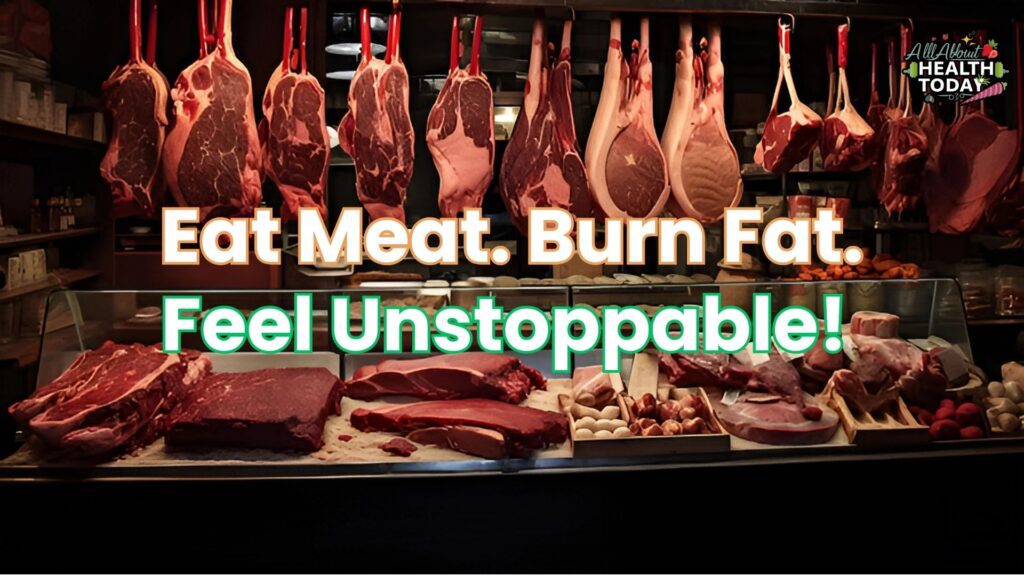
The carnivore diet is simple to describe and almost impossible to evaluate honestly, because the evidence base is surveys and case reports rather than trials. It probably does produce short-term weight loss. What it costs you in fibre, micronutrients and social eating is real, and nobody has followed a large group of people on it long enough to know the rest.
What is the short answer?
The carnivore diet eliminates every plant food and asks you to eat only animal products. Proponents argue it matches what early humans ate and that modern carbohydrate-heavy diets drive chronic disease. There is a plausible kernel in that — whole-food diets of any composition tend to beat processed-food diets — but the specific claim that plants are the problem is not supported by the evidence.
What the literature actually contains is a small number of self-reported surveys and modelled nutrient analyses. One of the largest surveyed 2,029 adults eating a carnivore diet and reported self-assessed health improvements (Lennerz, 2021). That is a survey of people who chose the diet and stayed on it, which is about as favourable a sample as you can construct. It is not evidence that the diet works for people who did not choose it, and it cannot rule out the people who quit.
A modelling study of what a carnivore diet actually delivers nutritionally found the picture is not automatically deficient but is highly dependent on which animal foods you include — organ meats and fatty fish do very different work from muscle meat alone (Goedeke, 2024). Whether a carnivore diet can supply all essential nutrients has been reviewed directly, and the answer is conditional rather than yes or no (O’Hearn, 2020).
What the carnivore diet actually is

Strictly, it is meat, fish, eggs and animal fat, with some versions allowing dairy and others excluding it. No fruit, vegetables, grains, legumes, nuts or seeds. Practically, that means zero fibre by definition, which is the detail most versions of this article skip.
It sits at the far end of the low-carbohydrate spectrum. A ketogenic diet restricts carbohydrate enough to produce nutritional ketosis; the keto quick-start guide covers that threshold, and the carnivore diet simply takes it to zero.
People arrive here for different reasons: weight loss, digestive symptoms they blame on plants, autoimmune conditions, or simply because the rules are unambiguous and require no counting.
What the evidence actually is
This is the part worth being precise about, because “there are studies” is doing a lot of work in most carnivore content. Here is the actual evidence pyramid for this diet.
| Study type | What exists | What it can and cannot tell you |
|---|---|---|
| Randomised trials of carnivore | Essentially none | The direct evidence for the diet itself does not exist |
| Self-reported surveys | 2,029 adults, self-assessed outcomes (Lennerz, 2021) | Can describe who chooses it and what they report; cannot establish cause |
| Modelled nutrient analysis | Case-study modelling of diet composition (Goedeke, 2024); review of nutrient adequacy (O’Hearn, 2020) | Can tell you whether the intake is theoretically adequate; cannot tell you the health outcome |
| Trials of very-low-carbohydrate diets | Meta-analyses of weight and lipids (Bueno, 2013) | Useful proxy, but these diets include vegetables |
| Mechanistic reviews | Ketogenic diet mechanisms and safety (Faheem, 2024) | Explains plausibility; not outcome evidence |
Ketosis, correctly
Here is the accurate version. When carbohydrate intake drops low enough, the liver converts fat into ketone bodies, which most tissues can burn instead of glucose. That is nutritional ketosis, and it is a controlled physiological state: blood pH stays within its normal range because the body buffers ketones and excretes the excess.
Ketoacidosis is not the same thing. It occurs when ketone production vastly exceeds the body’s ability to buffer — most often in type 1 diabetes or severe alcohol misuse — and blood pH does fall. It is a medical emergency. Confusing the two is the single most common error in low-carbohydrate content, and it matters because the confusion is used to make ketosis sound more dramatic than it is.
What ketosis does not do is melt fat by itself. The weight loss seen in very-low-carbohydrate trials is largely explained by reduced intake, partly through satiety and partly through the removal of highly palatable processed food (Bueno, 2013). Ketosis is a metabolic state you pass through on the way to a calorie deficit, not a mechanism that replaces one.
The nutrient ledger: what you give up
Every diet is a trade. Here is what the strict version of this one removes, and whether animal foods replace it. The pattern is that the things meat is rich in stay fine, and the things plants carried are the ones that go missing.
Read the ledger as a whole and the shape becomes obvious: this diet is nutritionally workable only in its more varied forms — organs, fish, eggs, and dairy if you tolerate it. The version people actually post about, steak and butter, is the version with the most gaps.
What it may genuinely help with

Short-term weight loss. Very-low-carbohydrate diets produce weight loss at least comparable to low-fat diets in the short and medium term, with the difference narrowing over time (Bueno, 2013). Some of the early loss is water bound to glycogen, which is why the first two weeks look dramatic and then flatten.
Satiety and simplicity. Protein and fat are filling, and a diet with unambiguous rules removes decision fatigue. If your previous pattern was grazing on processed food, removing it will do most of the work regardless of the label on the diet.
Reported digestive relief. People with symptoms they attribute to specific plant foods often report improvement. That is plausible for a genuine intolerance and is exactly the kind of claim a self-reported survey cannot distinguish from regression to the mean.
Blood sugar in type 2 diabetes. This is the area with the most legitimate clinical interest. A very-low-carbohydrate approach can improve glycaemic markers, and lipid responses in type 2 diabetes have been studied in meta-analysis (Li, 2022). The mechanism overlaps with what is described in the insulin resistance checklist — but if you take glucose-lowering medication, changing carbohydrate intake sharply needs medical supervision, not a forum thread.
What it is not shown to do. Cure autoimmune disease, reverse established cardiovascular disease, or outperform other whole-food diets in a head-to-head trial. Those claims rest on anecdotes, and the anecdotes are real experiences but not evidence.

Who should not do this
- Kidney disease. A very high protein load is a genuine concern when filtration is already impaired.
- Pregnancy or breastfeeding. Folate, calcium and iodine requirements rise, and the margin for a restrictive diet narrows.
- Children and adolescents. Growth requires nutrient adequacy, not just calorie adequacy.
- History of an eating disorder. A diet defined by eliminating entire food groups is a poor fit for someone in recovery, and this is the strongest contraindication on the list.
- Familial hypercholesterolaemia or established cardiovascular disease. Saturated fat reduction lowers cardiovascular events in trials (Hooper, 2020), and a diet built on fatty meat pushes in the opposite direction. If your LDL is already high, this is the wrong experiment.
- Type 1 diabetes. Ketosis and insulin management together require specialist supervision because of ketoacidosis risk.
If you are going to try it anyway

Harm reduction beats moralising. If you are determined to run this experiment, these are the things that make the difference between a two-week trial and an actual health problem.
- Include organs and oily fish. Liver covers folate, iron and vitamin A; fish covers omega-3 and vitamin D. Steak and butter alone do not.
- Get baseline bloods first. Lipids, HbA1c, kidney function, ferritin, B12 and vitamin D. Without a baseline you cannot tell what changed.
- Recheck at three months. Especially LDL and kidney function.
- Do not ignore constipation. It is the most common complaint on zero-fibre diets and it is a signal, not an inconvenience.
- Set an exit date. A defined trial of eight to twelve weeks with a review is a different proposition from an indefinite identity.
- Tell your doctor. Particularly if you take medication for blood pressure, glucose or anticoagulation.

If you want recipes rather than theory
A cookbook is genuinely useful for one thing: getting past the point where you eat the same steak six nights in a row. It will not tell you whether the diet is right for you, and no recipe book can. Use it as a planning aid alongside the bloods and the exit date above.
See the carnivore cookbookAllAboutHealthToday may receive a commission at no additional cost to you.
Common questions about the carnivore diet
How much weight can you lose on a carnivore diet?
It varies too much to promise a number, and anyone quoting one is selling something. What the trial evidence supports is that very-low-carbohydrate diets produce meaningful short-term loss, comparable to low-fat diets, with the advantage shrinking over twelve months (Bueno, 2013). A large part of the early drop is water.
Do you need fibre?
No essential requirement for fibre has been established in the way there is for protein or vitamin C, which is the argument carnivore proponents make. But fibre intake is strongly associated with gut microbiota composition and health outcomes (Fu, 2022), and the practical symptom — constipation — is common. “Not technically essential” and “a good idea” are different claims.
Is ketosis dangerous?
Nutritional ketosis is not dangerous in itself. Ketoacidosis is, and it is a different condition involving a failure of buffering, usually in type 1 diabetes. The two get conflated constantly, including in this article’s earlier version.
Can you do carnivore as a vegetarian?
Not by definition — the diet is animal foods only. If the appeal is the simplicity and the elimination of processed food rather than the meat specifically, a whole-food omnivorous or Mediterranean-style pattern gets you most of the benefit with none of the nutrient gaps.
What supplements do carnivore dieters need?
Most would benefit from magnesium and vitamin D, and calcium if they exclude dairy. But supplementing your way out of a nutrient gap is a signal that the diet pattern needs adjusting, not that the supplements are the answer. What is worth taking in general is covered in this 2026 comparison.
Does it help autoimmune conditions?
There are case reports and a great deal of anecdote. There is no controlled trial evidence. Autoimmune conditions fluctuate on their own, which is why anecdotes about elimination diets are so persuasive and so unreliable. If you have a diagnosed condition, this is a conversation to have with the specialist managing it.
One last thread worth pulling: if your goal is body composition rather than an elimination experiment, the variables that actually move are protein intake and resistance training. How much protein you need and protein timing cover the first; preventing muscle loss covers the second, and the metabolic case for keeping muscle is in visceral fat.
Sources
- Lennerz BS, et al. Behavioral characteristics and self-reported health status among 2,029 adults consuming a carnivore diet. Curr Dev Nutr. 2021. PMID 34934897
- O’Hearn A. Can a carnivore diet provide all essential nutrients? Curr Opin Endocrinol Diabetes Obes. 2020. PMID 32833688
- Goedeke S, et al. Assessing the nutrient composition of a carnivore diet: case study model. Nutrients. 2024. PMID 39796574
- Palmer RD. The protein paradox, carnivore diet and hypertrophy versus longevity. Nutr Health. 2025. PMID 40094942
- Faheem Y, et al. Ketogenic diet: systematic review of efficacy, safety and mechanisms. Cureus. 2024. PMID 38533170
- Bueno NB, et al. Very-low-carbohydrate ketogenic diet versus low-fat diet for long-term weight loss: meta-analysis. Br J Nutr. 2013. PMID 23651522
- Li M, et al. Very low-carbohydrate ketogenic diet and lipid metabolism in type 2 diabetes: meta-analysis. Nutr Hosp. 2022. PMID 35243868
- Hooper L, et al. Reduction in saturated fat intake for cardiovascular disease. Cochrane Database Syst Rev. 2020. PMID 32428300
- Fu J, et al. Dietary fiber intake and gut microbiota in human health. Microorganisms. 2022. PMID 36557760
- Paul JK, et al. The human gut microbiota: comprehensive review of its role in different diseases. World J Gastroenterol. 2025. PMID 39926224
- Chiavaroli L, et al. Low glycaemic index or load dietary patterns and cardiometabolic risk. BMJ. 2021. PMID 34348965