
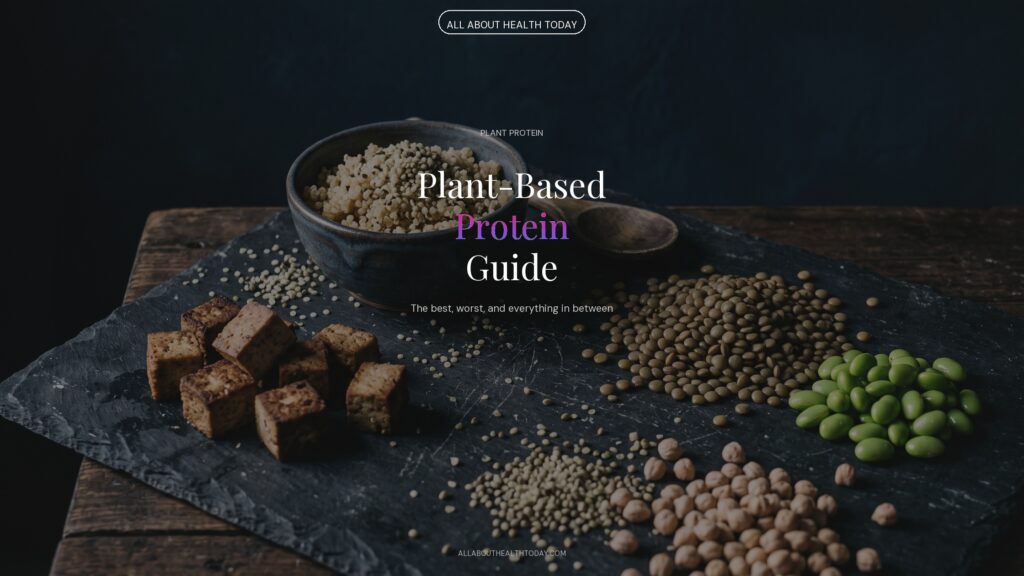
Walk down any grocery aisle and you’ll see it — protein has gone everywhere. Bars, cereals, pasta, even water now boasts added protein. And in the middle of this frenzy sits a quiet revolution: plant-based protein is no longer the niche choice of vegans and hippie communes. It’s mainstream. It’s massive. And it’s complicated.
Here’s the uncomfortable truth most articles won’t tell you: not all plant proteins are created equal. Some rival animal sources in every metric that matters. Others are little more than expensive filler with a green label slapped on. The gap between the best and the worst is enormous — in amino acid completeness, digestibility, and environmental footprint. And navigating it without a map means you’re probably leaving gains (and health) on the table.
So let’s draw that map. We’ll rank plant proteins from gold-standard to garbage-tier, explain why the differences exist at the molecular level, and give you the practical framework to build a plant-powered diet that actually works — whether you’re fully vegan, flexitarian, or just trying to eat a little less beef.
🧬 What Makes a Protein “Complete”? The Amino Acid Story
Proteins are chains of amino acids — 20 total, of which 9 are “essential” because your body can’t manufacture them. You have to eat them. When a food contains all 9 essential amino acids (EAAs) in proportions that match human needs, it’s called a complete protein.
Animal proteins — eggs, whey, chicken, beef — nail this formula naturally. Plant proteins? Most don’t. They’re typically low in one or more EAAs, called the “limiting amino acid.” For grains and nuts, the bottleneck is lysine. For legumes (beans, lentils, peas), it’s methionine. This is the biochemical reason rice and beans have been paired across cultures for millennia — each fills the other’s gap.
But the “incomplete” label has been wildly overblown. Research published in Food & Function (2026) confirms that consuming a variety of plant proteins throughout the day — not necessarily at the same meal — meets all essential amino acid requirements. The “protein combining” panic of the 1970s? Largely debunked.
Still, quality varies dramatically. And that’s where the scoring systems come in.
📊 PDCAAS vs. DIAAS — How We Measure Protein Quality
PDCAAS (Protein Digestibility-Corrected Amino Acid Score) has been the regulatory standard for decades. It scores proteins from 0.0 to 1.0 based on amino acid profile and fecal digestibility. Soy protein isolate hits a perfect 1.0 — matching eggs and milk.
DIAAS (Digestible Indispensable Amino Acid Score) is the newer, more accurate system recommended by the FAO. Unlike PDCAAS, DIAAS measures digestibility at the ileum (small intestine), isn’t capped at 1.0, and better differentiates high-quality proteins. Under DIAAS, most plant proteins score lower — but soy still shines, with scores approaching 0.91–0.97.
🥇 The Best Plant Protein Sources — Tier 1
These are the heavy hitters. Complete or near-complete amino acid profiles, high digestibility, solid research backing, and minimal antinutrient interference. If you’re building a plant-based diet around protein quality, start here.
| Source | PDCAAS | DIAAS | Protein (per 100g) | Key Strength |
|---|---|---|---|---|
| 🥛 Soy Protein Isolate | 1.00 | 0.91–0.97 | ~80g | Gold standard — complete EAA profile matching whey |
| 🫘 Tofu (firm) | 0.91–0.97 | 0.91–0.97 | ~17g | Whole-food soy with calcium and isoflavones |
| 🌿 Tempeh | 0.91–0.97 | 0.88–0.93 | ~20g | Fermented — improved digestibility, gut-friendly |
| 🟢 Pea Protein Isolate | 0.82–0.89 | 0.80–0.82 | ~80g | Rich in BCAAs, close to whey for muscle synthesis |
| 🌾 Quinoa | 0.90 | ~0.70 | ~14g | Rare grain-like seed with all 9 EAAs |
Why Soy Leads the Pack
Soy isn’t just the best plant protein — it’s in a league of its own. A 2025 quantitative review in Frontiers in Nutrition found that soy protein isolate’s DIAAS rivals animal sources, and its amino acid profile contains every EAA in ratios that closely match human requirements. The isolation process strips away trypsin inhibitors and phytates, pushing digestibility above 95%.
Tempeh deserves special mention. The fermentation process (using Rhizopus mold) does something remarkable: it partially digests the protein, reduces antinutrients, and even synthesizes small amounts of vitamin B12. It’s essentially pre-digested soy — and the texture is substantial enough that it actually satisfies in a way tofu sometimes doesn’t.
Pea Protein: The Dark Horse
Pea protein isolate has exploded in popularity, and the science backs it up. A May 2024 study demonstrated that pea protein fortified with additional leucine stimulated muscle protein synthesis (MPS) to levels comparable with whey protein. Even without fortification, pea protein’s branched-chain amino acid (BCAA) content — particularly leucine — makes it the strongest non-soy option for anyone training.
The one knock? Methionine is low. Pair pea protein with rice protein (which has methionine but lacks lysine), and you’ve essentially constructed a complete animal-quality protein from two plants. Many commercial blends already do this.
🥈 The Middle Ground — Decent, With Caveats
These sources are good but not great. They belong in a balanced plant-based diet but shouldn’t be your primary protein anchor — at least not without complementary pairing.
Lentils & Chickpeas
PDCAAS: 0.54–0.78
Protein: ~9g per 100g cooked
Lentils are fiber-rich, affordable, and environmentally stellar — but methionine-limited. Red lentils score a DIAAS of just 54 in recent analyses. Pair with rice or wheat, and the methionine gap closes. As part of a diverse diet, they’re excellent — as a sole protein source, they fall short.
Seeds (Hemp, Chia, Pumpkin, Sunflower)
PDCAAS: 0.49–0.85
Protein: 18–33g per 100g
Hemp seed is technically complete but its PDCAAS of 0.49–0.53 reflects poor digestibility in whole-seed form. Sunflower seeds score better (0.85) but are lysine-limited. Use seeds as nutritional boosters, not protein foundations. Their omega-3 and mineral profiles are where they truly shine.
Nuts (Almonds, Peanuts, Pistachios)
PDCAAS: 0.52–0.57
Protein: 21–26g per 100g
Peanuts score just 0.52 on PDCAAS — lysine is the bottleneck again. Almonds and pistachios fare slightly better. But nuts are fundamentally a fat source (~50–75% of calories) with protein as a bonus, not a feature. They’re calorie-dense, so using them for protein means over-consuming energy. Treat them as snacks, not staples.
Whole Grains (Oats, Brown Rice, Wheat)
PDCAAS: 0.42–0.66
Protein: 7–14g per 100g cooked
Wheat scores a DIAAS of 66 for adults; oats languish at 0.57 PDCAAS. Grains are critically low in lysine — it’s their defining limitation. But they’re methionine-rich, which makes them the perfect dance partner for legumes. Rice + beans isn’t folk wisdom; it’s biochemistry.
🥉 The Worst — What to Watch Out For
Here’s where things get uncomfortable. Some plant proteins aren’t just mediocre — they’re actively problematic, either because of antinutrient loads, abysmal digestibility, or misleading marketing that positions them as something they’re not.
⚠️ The Watchlist
Raw or Undercooked Kidney Beans: Contain phytohaemagglutinin, a lectin so potent that as few as 4–5 undercooked beans can trigger severe nausea and vomiting. Always boil kidney beans for at least 10 minutes — slow cookers don’t get hot enough to neutralize the toxin per FDA guidance.
Unprocessed Soy (Raw Soybeans): Raw soybeans are loaded with trypsin inhibitors and lectins that block protein digestion entirely. This is why no culture on Earth eats raw soybeans. Processing (heating, fermenting, isolating) transforms soy from indigestible to gold-standard. The lesson: form matters.
Seitan (Vital Wheat Gluten): Seitan packs ~25g of protein per 100g, and the macros look incredible on paper. But it’s almost pure gluten — and it’s severely lysine-deficient, giving it a PDCAAS of roughly 0.25. Unless combined with lysine-rich foods, seitan alone is effectively incomplete protein that won’t support muscle maintenance or growth. It’s a texture substitute, not a protein substitute.
Brown Rice Protein (unfortified, alone): Rice protein isolate scores 0.86 PDCAAS — not bad. But whole brown rice? Below 0.5, and lysine is abysmal. Many “plant-powered” snacks that lean on brown rice as their protein claim are using creative math. Check the label: if brown rice is the primary protein source and there’s no pea or soy complement, you’re getting incomplete protein.
Ultra-Processed Plant Meats (some brands): A 2026 analysis in Food & Function found that processed plant-based analogues frequently display deficiencies in methionine and lysine simultaneously — the worst of both worlds. Beyond the amino acid gaps, some products pack sodium levels exceeding potato chips and saturated fat from coconut oil that rivals beef. Not all plant meats are equal: read the ingredient panel, not the marketing.
💡 The Antinutrient Reality Check
Phytates, lectins, oxalates, and tannins — the so-called “antinutrients” in plants — genuinely reduce mineral and protein absorption. Phytates alone can decrease zinc and iron absorption by 20–50% in high-phytate meals according to a 2023 review. But here’s what the fearmongers don’t tell you: traditional preparation methods functionally solve this problem. Soaking, sprouting, fermenting, and thorough cooking slash antinutrient content by 30–90%. Cultures that built their diets around grains and legumes developed these techniques for a reason. Use them.
🌍 Environmental Impact — Why This Conversation Matters
If you only care about your biceps, skip this section. But for anyone who cares about what their food choices do to the planet, the numbers are staggering — and they’re the strongest argument for shifting protein sourcing, even partially.
| Protein Source | GHG Emissions (kg CO₂-eq / kg) | Water Use (L / kg) | Land Use (m² / kg) |
|---|---|---|---|
| 🐄 Beef | 25–26 | 8,700–15,400 | 164 |
| 🐑 Lamb | 20–24 | 8,700 | 185 |
| 🐔 Chicken | 4–6 | 4,300 | 9 |
| 🥚 Eggs | 3–5 | 3,300 | 6 |
| 🫘 Legumes (avg.) | 0.27 | 1,600 | 3 |
| 🌰 Nuts | 1.2 | 4,100 | 8 |
| 🌾 Grains | 0.5 | 1,600 | 3 |
The climate math is brutal for animal agriculture. A Nature Food study published in March 2024 found that replacing just half of red and processed meat intake with plant proteins reduces dietary carbon footprint by roughly 25%. Scale that up, and the projections are even more dramatic: a March 2026 modeling study in Future Foods estimated that a full European shift from animal to plant protein could cut food-related greenhouse gas emissions by up to 50%.
Water tells an equally stark story. Producing one gram of protein from beef demands roughly six times more water than getting that same gram from pulses. Legumes average 0.27 kg CO₂-eq/kg — that’s roughly one percent of beef’s carbon cost.
This isn’t about guilt-tripping anyone into veganism. It’s about recognizing that even partial substitution — Meatless Mondays, swapping one meal a day — produces measurable environmental benefits. Protein doesn’t have to be binary.
🛠️ Practical Strategies — How to Build a Plant-Protein Diet That Works
1. Aim for the Leucine Threshold
Leucine is the master switch for muscle protein synthesis, activating the mTOR pathway. The threshold for maximal MPS stimulation is approximately 2.5–3g of leucine per meal for adults. Animal proteins hit this easily (30g of whey provides ~3g leucine). Plant proteins, which average 6–8% leucine by weight vs. whey’s 10–12%, require a larger serving — roughly 30–40g of plant protein per meal to reach the same threshold per recent MPS research.
Practical takeaway: If you’re relying on plant protein for muscle, eat slightly more per sitting than you would with animal protein, or choose leucine-fortified blends.
2. Blend, Don’t Stress
Combining complementary proteins — legumes (lysine-rich, methionine-poor) with grains (methionine-rich, lysine-poor) — fixes the amino acid gaps naturally. The canonical pairs:
- Rice + beans/lentils — The global classic. Rice brings methionine; beans bring lysine.
- Pea + rice protein powder — The supplement industry’s go-to blend, and for good reason.
- Hummus + whole wheat pita — Chickpeas + wheat = complete.
- Peanut butter + whole grain bread — Lunchbox MVP, biochemically sound.
And remember: you don’t need to pair them at the same meal. The body maintains an amino acid pool, and consuming complementary proteins within the same day is sufficient per current evidence.
3. Preparation Matters — Soak, Sprout, Ferment
Traditional food cultures weren’t doing these things for fun. Soaking beans overnight reduces phytate content by 30–50%. Sprouting grains and legumes activates phytase enzymes that break down phytates further. Fermentation (tempeh, miso, sourdough) goes even further, partially digesting proteins and reducing antinutrient loads by up to 90% in controlled studies.
If you’re eating large amounts of whole grains and legumes as protein sources, skipping prep isn’t just less nutritious — it can cause genuine digestive distress. Invest the time.
4. Prioritize Protein Density
One under-discussed challenge of plant-based eating: protein density. To get 30g of protein, you’d need ~175g of tofu (reasonable), but ~330g of cooked lentils (a lot of food) or ~550g of cooked quinoa (borderline impossible in one sitting). Plant protein isolates — soy, pea, or blends — solve this problem elegantly. They’re not “processed junk”; they’re concentrated nutrition, and for anyone with higher protein needs (athletes, older adults, anyone in a deficit), they’re practically essential.
For more on building a nutritionally complete diet, see our guide on the nutrient density crisis in modern food.
📋 The Bottom Line — A Tiered Summary
| Tier | Sources | Verdict |
|---|---|---|
| 🥇 Tier 1 — Elite | Soy isolate, tofu, tempeh, edamame, pea protein isolate, soy+pea blends | Complete or near-complete. Can anchor a diet. Comparable to animal protein for muscle synthesis. |
| 🥈 Tier 2 — Solid Support | Lentils, chickpeas, quinoa, hemp seeds, sunflower seeds, pistachios | Good protein content but have limiting amino acids. Combine with complementary sources. Excellent as part of a varied diet. |
| 🥉 Tier 3 — Use With Caution | Brown rice, oats, almonds, peanuts, seitan (alone), most whole grains | Low in key EAAs, especially lysine. Never rely on these as a primary protein source. Fine as complementary foods. |
| ❌ Avoid / Heavily Limit | Raw/undercooked legumes, ultra-processed plant meats with poor amino acid profiles, seitan as a sole protein, brown rice as primary protein | Inadequate amino acid profiles, antinutrient overload, or safety concerns. Not worth the label claims. |

Plant-based protein isn’t a monolith. The difference between soy protein isolate (PDCAAS 1.0) and seitan (PDCAAS ~0.25) isn’t marginal — it’s a fourfold gap in usable protein quality. Treating “plant protein” as one category is like treating “vehicles” as one category when you’re choosing between a bicycle and a Tesla.
The good news: with minimal knowledge — understanding complementary pairing, hitting leucine thresholds, and choosing the right sources — a plant-based diet can match animal-based diets for protein adequacy, muscle synthesis, inflammation control, and overall health outcomes. The environmental benefits are a massive bonus, not the main event.
For those navigating dietary transitions, our keto quick-start guide and breakdown of foods to avoid for arthritis offer complementary frameworks — different goals, same principle: know what you’re actually eating.
❓ Frequently Asked Questions
Can you build muscle on plant protein alone?
Yes — with the right strategy. A systematic review and meta-analysis published in April 2026 found only small differences in muscle protein synthesis favoring animal protein, primarily in older adults — younger adults showed similar MPS responses between sources. The keys: consume 30–40g of plant protein per meal (to hit the ~2.5–3g leucine threshold), prioritize soy and pea proteins, and consider leucine-fortified blends if you’re training seriously. For more on metabolic health and training, read our article on blood sugar dysregulation.
Is soy safe for men? What about estrogen?
This is one of the most persistent myths in nutrition. Soy contains isoflavones — phytoestrogens that are structurally similar to human estrogen but functionally different and far weaker (roughly 1/1,000th the potency). A comprehensive 2020 meta-analysis of 41 clinical studies found no effects of soy or isoflavones on total or free testosterone in men. Multiple large-scale reviews have confirmed that soy consumption — even at amounts far exceeding typical intake (50g+ of soy protein daily) — does not feminize men, reduce testosterone, or impair fertility. The fear originated from a couple of case reports in the early 2000s that were never replicated in controlled research.
Do I need to combine proteins at every meal?
No. The idea that you must combine complementary proteins (like rice and beans) at the same meal was popularized by Frances Moore Lappé in Diet for a Small Planet (1971) — and she herself later corrected this, acknowledging that the body maintains an amino acid pool and that eating complementary proteins within the same day is sufficient. Current research confirms that as long as you consume a variety of plant proteins across your day, your body will assemble the full EAA profile it needs.
Which plant milk has the most protein?
Soy milk, by a wide margin — roughly 7–8g of protein per cup, comparable to cow’s milk. Pea protein milk (like Ripple) comes second at ~8g per cup. After that, the drop-off is steep: oat milk (~3g), almond milk (~1g), rice milk (<1g), coconut milk (~0g). Most nut and grain milks are essentially flavored water with negligible protein — they're beverages, not protein sources. If you're using plant milk as a protein vehicle, soy or pea milk is the only game in town. For more on navigating food labels and nutritional claims, see our guide to the best vitamins of 2026.
Is plant protein better for longevity?
Observational evidence strongly suggests yes — but with an important caveat: it depends what you replace. A 2024 study in Nature Food found that replacing red and processed meat with plant protein reduced all-cause mortality risk, likely through multiple mechanisms: lower saturated fat, higher fiber, more polyphenols, and reduced inflammatory compounds like TMAO. However, replacing meat with ultra-processed plant alternatives high in sodium and refined oils doesn’t confer the same benefit. The longevity advantage comes from whole and minimally processed plant proteins — tofu, tempeh, lentils, chickpeas — not from plant-based chicken nuggets. See our deep dive on nervous system regulation as a longevity pillar for the broader picture.
This article is for informational purposes only and does not constitute medical advice. Consult your healthcare provider before making significant dietary changes.