
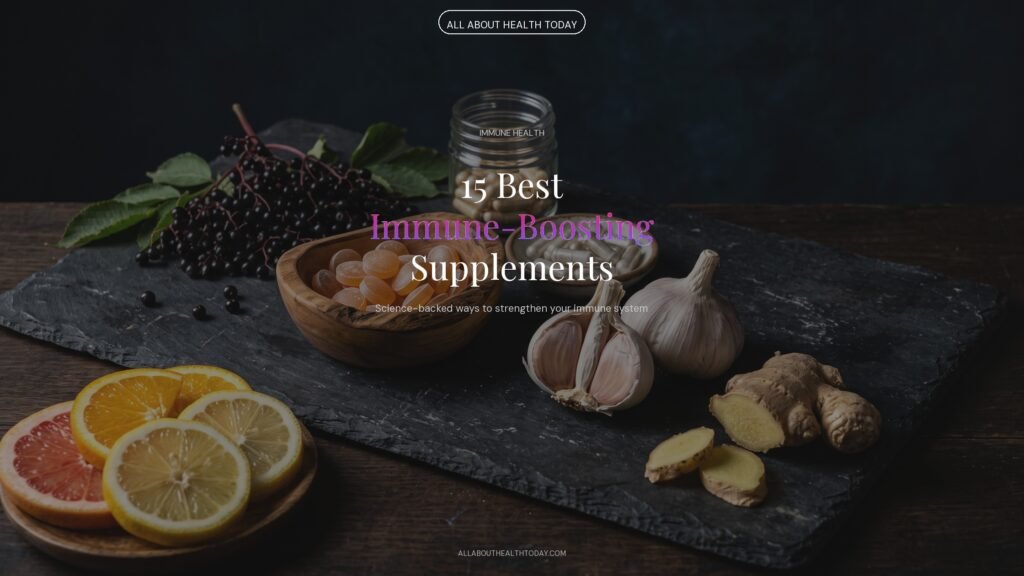
🧬 The 15 Best Supplements to Boost Your Immune System Right Now
Your immune system is a marvel of biological engineering — a 24/7 defense network that never clocks out. But modern life — stress, poor sleep, processed food — can leave it running on fumes. The right supplements can fill the gaps, and science has plenty to say about which ones actually work.
We analyzed hundreds of studies, meta-analyses, and clinical trials to bring you the 15 most evidence-backed immune supplements available today. No fads. No wishful thinking. Just compounds with real data behind them.
| Supplement | Best For | Typical Daily Dose | Evidence Strength |
|---|---|---|---|
| 🍊 Vitamin C | Cold duration, antioxidant defense | 500–1000 mg | ⭐⭐⭐⭐⭐ |
| ⚡ Zinc | Cold recovery, T-cell function | 15–30 mg | ⭐⭐⭐⭐⭐ |
| ☀️ Vitamin D | Respiratory infection prevention | 1000–4000 IU | ⭐⭐⭐⭐⭐ |
| 🫐 Elderberry | Flu symptom reduction | 500–1000 mg | ⭐⭐⭐⭐ |
| 🦠 Probiotics | Gut-immune axis, mucosal defense | 5–50 billion CFU | ⭐⭐⭐⭐ |
| 🍎 Quercetin | Allergy relief, antiviral support | 500–1000 mg | ⭐⭐⭐ |
| 💨 NAC | Mucus clearance, glutathione boost | 600–1200 mg | ⭐⭐⭐⭐ |
| 🍄 Mushrooms | NK cell activation, broad immunity | 500–3000 mg | ⭐⭐⭐ |
| 🌿 Echinacea | Cold prevention, early intervention | 300–900 mg | ⭐⭐⭐⭐ |
| 🌱 Astragalus | Long-term immune resilience | 500–1500 mg | ⭐⭐⭐ |
| 🔬 Selenium | Antioxidant enzyme support | 55–200 mcg | ⭐⭐⭐⭐ |
| 🧄 Garlic | Cold prevention, antimicrobial | 600–1200 mg (aged extract) | ⭐⭐⭐⭐ |
| 🧫 Beta-Glucans | Immune priming, URTI prevention | 250–500 mg | ⭐⭐⭐⭐ |
| ✨ Curcumin | Inflammation control, antioxidant | 500–1500 mg | ⭐⭐⭐⭐ |
| 💊 B Vitamins | Immune cell production, energy | B6: 5–25 mg; B12: 250–1000 mcg; Folate: 400–800 mcg | ⭐⭐⭐⭐ |
1. Vitamin C — The Classic That Earned Its Reputation 🍊
Vitamin C (ascorbic acid) is the most famous immune supplement on the planet — and for good reason. This water-soluble vitamin concentrates inside immune cells, where it acts as a frontline antioxidant and directly supports both the innate and adaptive arms of your immune system.
When phagocytes like neutrophils and macrophages engulf pathogens, they unleash a respiratory burst that generates massive oxidative stress. Vitamin C protects these cells from their own weapons while simultaneously enhancing their ability to track, engulf, and destroy invaders. Research published in Nutrients confirmed that vitamin C accumulates in phagocytic cells, boosting chemotaxis and microbial killing capacity.
Beyond frontline defense, vitamin C supports the adaptive immune system by promoting the differentiation and proliferation of both B-cells and T-cells — the special forces of your immune response. A comprehensive review found that regular supplementation at 200 mg daily can reduce cold duration by approximately 8–14% in adults.
2. Zinc — The Immune System’s Gatekeeper ⚡
If vitamin C is the immune system’s fuel, zinc is its ignition system. This essential mineral is required for the development and function of virtually every major immune cell type — neutrophils, natural killer (NK) cells, macrophages, and both T and B lymphocytes.
Zinc’s role is so fundamental that even marginal deficiency can cripple your immune response. A landmark paper in Nutrients detailed how zinc deficiency impairs neutrophil function, reduces T-cell counts, and causes thymic atrophy — essentially shrinking the organ where T-cells mature. The same review confirmed that supplementation restores immune function in deficient individuals, particularly older adults whose zinc status often declines with age.
For the common cold, zinc lozenges have been a subject of intense study. A 2024 meta-analysis in Frontiers in Nutrition concluded that zinc supplementation, particularly when started within 24 hours of symptom onset, can reduce cold duration by 1–2 days. The mechanism appears to involve zinc’s ability to inhibit viral replication in the nasal epithelium.
3. Vitamin D — The Sunshine Hormone Your Immune Cells Crave ☀️
Vitamin D is misnamed — it’s not really a vitamin but a steroid hormone that virtually every immune cell in your body has receptors for. From macrophages to T-cells, your immune army listens to vitamin D’s signals.
The relationship between vitamin D status and respiratory infections is one of the most consistent findings in nutritional immunology. A major review published in 2022 found that vitamin D deficiency is strongly associated with increased risk of respiratory infections, including SARS-CoV-2. Correcting deficiency decreased hospitalization risk, ICU admission, and mortality.
Vitamin D works through multiple mechanisms: it promotes the production of antimicrobial peptides like cathelicidin and defensins (your body’s natural antibiotics), enhances macrophage function, and helps regulate the inflammatory response so it doesn’t spiral out of control. Research shows it promotes innate immune responses against pathogens while restraining excessive adaptive immune reactions that can lead to damaging inflammation.
If you live north of Atlanta, work indoors, or have darker skin, you’re at high risk for insufficiency — especially from October through March when UVB radiation is too weak for your skin to produce vitamin D. If you’re interested in a broader look at supplementation, check out our guide to the best vitamins for 2026.
4. Elderberry — Nature’s Antiviral Powerhouse 🫐
Elderberry (Sambucus nigra) has graduated from folk remedy to evidence-backed supplement, thanks to a growing body of clinical research. The dark purple berries are packed with anthocyanins — potent flavonoid compounds that give elderberry its immune-modulating and direct antiviral properties.
A 2019 meta-analysis found that elderberry supplementation significantly reduced the duration of upper respiratory symptoms across multiple randomized controlled trials. Participants taking elderberry recovered approximately 2–4 days faster than placebo groups. For influenza specifically, studies showed a 38–42% reduction in symptom severity when elderberry was taken within 48 hours of onset.
What makes elderberry unique is its dual-action mechanism. The anthocyanins don’t just modulate immune function — they appear to directly interfere with viral replication by binding to viral surface proteins and blocking their ability to enter host cells. Laboratory studies have confirmed this mechanism against multiple influenza strains.
For a deeper dive into how food compounds fight inflammation, see our article on science-backed anti-inflammatory foods.
5. Probiotics — Your Gut Is Your Immune HQ 🦠
Roughly 70% of your immune system resides in your gut. The gut-associated lymphoid tissue (GALT) is the largest immune organ in the body, and the trillions of bacteria living there — your microbiome — are in constant dialogue with it. Probiotics are live beneficial bacteria that can tune this conversation in your favor.
Probiotics strengthen the intestinal barrier, preventing pathogens and their toxins from crossing into the bloodstream (a phenomenon known as “leaky gut”). They also stimulate the production of secretory IgA — the antibody that coats your mucosal surfaces and neutralizes threats before they can establish infection. A 2023 review detailed how specific strains enhance mucosal immunity and modulate inflammatory responses.
The most studied strains for immune health include Lactobacillus rhamnosus GG, Lactobacillus plantarum, Bifidobacterium lactis, and Lactobacillus paracasei. A systematic review found that probiotic supplementation reduced the incidence of upper respiratory tract infections by approximately 12% and shortened their duration by nearly 2 days.
Interested in the broader nutrition picture? Read our deep dive on nutrition fundamentals for immune health.
6. Quercetin — The Flavonoid That Calms Immune Overreactions 🍎
Quercetin is a plant flavonoid found in apples, onions, capers, and berries that has attracted significant attention for its immunomodulatory properties. Unlike supplements that simply “boost” immunity, quercetin is better described as an immune balancer — it calms overactive responses while supporting appropriate defense.
One of quercetin’s most distinctive mechanisms is its ability to stabilize mast cells — the immune cells responsible for releasing histamine during allergic reactions. By preventing unnecessary mast cell degranulation, research shows quercetin can reduce histamine release and pro-inflammatory cytokine production, making it particularly useful for people with seasonal allergies or histamine intolerance.
Quercetin also acts as a zinc ionophore — it helps shuttle zinc across cell membranes, potentially amplifying zinc’s antiviral effects. This synergy has made the quercetin-zinc combination a popular immune support strategy. A 2024 randomized controlled trial examining quercetin supplementation found it safe and well-tolerated, with trends toward improved immune metrics in at-risk populations.
7. N-Acetylcysteine (NAC) — The Master Antioxidant Booster 💨
N-acetylcysteine is the supplement form of the amino acid cysteine, and its superpower is simple but profound: it’s the rate-limiting precursor for glutathione — your body’s master antioxidant. Without adequate cysteine, glutathione production stalls, and your immune cells lose their primary defense against oxidative damage.
But NAC does more than just replenish glutathione. It’s a potent mucolytic — it breaks disulfide bonds in mucus proteins, thinning thick respiratory secretions so your airways can clear pathogens more efficiently. This dual mechanism (antioxidant + mucolytic) makes NAC uniquely suited for respiratory immune defense.
A landmark clinical trial found that NAC supplementation significantly decreased the frequency, severity, and duration of influenza-like episodes in elderly, high-risk individuals. Treated subjects showed improved cell-mediated immunity, shifting from anergy (no immune response) to normoergy (normal response). A separate study demonstrated NAC’s ability to reduce circulating inflammatory markers including IL-6, TNF-α, and C-reactive protein.
If chronic inflammation is a concern, don’t miss our comprehensive article on chronic inflammation and disease.
8. Medicinal Mushrooms — Ancient Wisdom Meets Modern Immunology 🍄
For thousands of years, traditional medicine systems — particularly in East Asia — have prized certain mushrooms for their health-promoting properties. Modern science is now validating what ancient healers knew: medicinal mushrooms contain some of the most potent natural immunomodulators ever discovered.
The key compounds are beta-glucans (complex polysaccharides), triterpenes, and fungal immunomodulatory proteins (FIPs). These molecules bind to specific receptors on immune cells — particularly dectin-1 and complement receptor 3 (CR3) on macrophages and NK cells — effectively “priming” them for a faster, more robust response to pathogens.
The most studied species include:
- Reishi (Ganoderma lucidum): A clinical study administering Reishi beta-glucans to children found significant increases in total lymphocytes, CD3+, CD4+, and CD8+ T-cells — all critical for defense against infections.
- Turkey Tail (Trametes versicolor): Rich in polysaccharide-K (PSK) and polysaccharopeptide (PSP), both extensively studied for immune activation. PSK is an approved cancer drug in Japan.
- Cordyceps (Cordyceps militaris): Research shows cordycepin and polysaccharides enhance both innate and adaptive immunity while suppressing overactive immune responses.
- Shiitake (Lentinula edodes): Lentinan, its primary beta-glucan, has well-documented immunomodulatory effects and is used clinically in several countries.
9. Echinacea — The Purple Coneflower That Fights Colds 🌿
Echinacea is one of the most commercially successful herbal supplements in the world — and one of the most rigorously studied. While some early trials produced conflicting results due to variations in species, plant parts, and extraction methods, more recent standardized research has clarified its benefits.
A 2024 meta-analysis linked echinacea use for cold prevention to a significant reduction in the need for antibiotics — suggesting it helps the body resolve infections without pharmaceutical intervention. A University of Connecticut meta-analysis found that echinacea reduced cold risk by over 50% and shortened duration by an average of 1.4 days.
Most impressively, a 2024 Korean clinical trial demonstrated that 8 weeks of Echinacea purpurea extract significantly increased natural killer (NK) cell cytotoxic activity — one of the most direct measures of immune readiness — along with beneficial increases in IL-2, IFN-γ, and TNF-α without any adverse effects.
Echinacea works by stimulating phagocytosis (the process by which immune cells engulf pathogens), increasing the production of cytokines that orchestrate immune responses, and enhancing the activity of NK cells that target virus-infected cells. The alkylamides in echinacea root appear to be the primary active compounds.
10. Astragalus — The Adaptogenic Root for Long-Term Resilience 🌱
Astragalus (Astragalus membranaceus) is a cornerstone of Traditional Chinese Medicine, where it’s classified as an adaptogen — a substance that helps the body resist stress of all kinds, including immunological stress. Unlike acute immune stimulants, astragalus is thought to build immune resilience over time.
A 2023 review of 19 studies involving over 1,000 participants concluded that astragalus enhanced immune responses and lowered levels of proinflammatory cytokines. A more recent 2025 meta-analysis reported a 30–50% reduction in respiratory infection rates and a 15–35% increase in NK cell activity among astragalus users.
Astragalus is particularly interesting for age-related immune decline (immunosenescence). As we age, our thymus shrinks and T-cell production drops — but research suggests astragalus polysaccharides may help counteract this decline by reducing pro-inflammatory cytokines associated with “inflammaging.”
While the evidence base is still developing — many studies are small and vary in methodology — the safety profile is excellent, and the traditional use history spans centuries.
11. Selenium — The Trace Mineral That Packs an Immune Punch 🔬
Selenium might not get the same headlines as vitamin C, but this trace mineral is absolutely essential for immune function. It’s incorporated into at least 25 selenoproteins, many of which are antioxidant enzymes that protect immune cells from the oxidative damage they generate while fighting pathogens.
The glutathione peroxidase family — selenium-dependent enzymes — are your immune cells’ primary defense against self-inflicted oxidative damage. Without adequate selenium, these enzymes can’t function, and your immune cells essentially burn out faster. Selenium also boosts the efficiency of macrophages and neutrophils in pathogen-killing. Research confirms selenium deficiency impairs both innate and adaptive immune responses.
Perhaps most dramatically, selenium status affects viral mutation rates. Studies have shown that selenium deficiency in a host allows normally benign viruses to mutate into more virulent strains — a phenomenon observed in both coxsackievirus and influenza models. Adequate selenium appears to suppress viral mutation.
That said, selenium has a narrow therapeutic window. While deficiency is common in regions with selenium-poor soil (parts of China, Europe, the Pacific Northwest), supplementation in selenium-replete individuals provides no additional immune benefit and may increase risks. More is definitely not better here.
12. Garlic — More Than Just a Kitchen Staple 🧄
Garlic has been used medicinally for over 5,000 years, and modern science has identified the mechanisms behind its immune benefits. When garlic is crushed or chopped, the enzyme alliinase converts alliin into allicin — a sulfur compound responsible for garlic’s characteristic smell and many of its therapeutic effects.
A classic 12-week randomized controlled trial found that participants taking a garlic supplement experienced 63% fewer colds than the placebo group, and those who did get sick recovered significantly faster. A review of clinical evidence confirmed garlic’s ability to reduce the risk, duration, and severity of cold and flu symptoms.
Aged garlic extract (AGE) deserves special mention. The aging process converts harsh, unstable allicin into stable, bioavailable compounds like S-allylcysteine. Research shows AGE enhances the proliferation and activation of γδ-T cells and NK cells — specialized immune cells that serve as a bridge between innate and adaptive immunity.
13. Beta-Glucans — The Immune System’s Training Wheels 🧫
Beta-glucans are among the most extensively studied natural immunomodulators in existence — with over 20,000 published studies to date. These complex polysaccharides, found in the cell walls of baker’s yeast, certain mushrooms, oats, and barley, work by a remarkably elegant mechanism: they’re molecular patterns that your immune system has evolved to recognize as signatures of fungal pathogens.
When you consume yeast-derived beta-glucans, they survive digestion and are taken up by immune cells in the gut’s Peyer’s patches via specialized receptors (dectin-1 and CR3). This interaction doesn’t cause an inflammatory reaction — instead, it “primes” your innate immune cells to respond faster and more effectively to actual threats. Recent McGill University research demonstrated that beta-glucans can reprogram innate immune cells through trained immunity — a form of immunological memory previously thought exclusive to the adaptive immune system.
Multiple randomized controlled trials have demonstrated beta-glucans’ ability to reduce the incidence, duration, and severity of upper respiratory tract infections in children, adults, and athletes prone to exercise-induced immune suppression.
14. Curcumin — The Golden Anti-Inflammatory ✨
Curcumin, the bright yellow polyphenol that gives turmeric its color, is one of the most researched natural compounds on the planet — and for immune health, its primary contribution is inflammation control. A well-regulated inflammatory response is essential for immunity, but chronic low-grade inflammation (the kind driven by poor diet, stress, and aging) actually impairs immune function.
A 2024 meta-analysis confirmed that curcumin significantly reduces key inflammatory markers including C-reactive protein (CRP), interleukin-6 (IL-6), and tumor necrosis factor-alpha (TNF-α). By lowering this background inflammatory noise, curcumin allows your immune system to respond more precisely to actual threats rather than being chronically distracted.
Curcumin’s mechanism centers on the inhibition of NF-κB, a master transcription factor that controls the expression of hundreds of inflammatory genes. 2024 research also highlighted curcumin’s ability to modulate macrophage polarization — shifting these versatile immune cells from a pro-inflammatory M1 state to a tissue-healing M2 state when appropriate.
One critical note: standard curcumin has notoriously poor bioavailability. Look for formulations with enhanced absorption — liposomal curcumin, curcumin phytosome (complexed with phosphatidylcholine), or curcumin combined with piperine (black pepper extract), which can increase absorption by up to 2000%.
15. B Vitamins — The Production Crew Behind Your Immune Cells 💊
B vitamins don’t get the immune spotlight they deserve. These water-soluble vitamins are the production crew behind every immune response — without them, your body literally can’t manufacture enough immune cells to mount an effective defense.
Vitamin B6 (pyridoxine) is essential for the production and proper functioning of lymphocytes (T-cells and B-cells) and for the synthesis of antibodies — the proteins that tag pathogens for destruction. A 2024 study noted B6’s critical role in reducing pro-inflammatory cytokines like IL-6 and TNF-α. Deficiency leads to atrophy of lymphoid tissues and reduced antibody production. Research confirms that marginal B6 deficiency is common in older adults and may contribute to age-related immune decline.
Vitamin B12 (cobalamin) is crucial for the rapid cell division required when your immune system ramps up production of lymphocytes and NK cells. It’s also essential for DNA synthesis — without it, immune cell proliferation stalls. Recent 2026 research from Cornell University revealed that B12’s role in immune resilience is more intricate than previously understood, with implications for how the body copes with immune challenges and metabolic stress.
Folate (vitamin B9) works alongside B12 in DNA synthesis and cell division. Research shows that folate deficiency impairs CD8+ T-cell function — the killer T-cells responsible for eliminating virus-infected cells. Folate supplementation has been shown to improve antioxidant and anti-inflammatory responses and reduce C-reactive protein levels.
🧩 How to Build Your Immune Supplement Stack
With 15 supplements on the table, you’re probably not going to take all of them — and you shouldn’t. The goal is a personalized stack that addresses your specific vulnerabilities without overcomplicating your routine.
Here’s a practical framework:
| Priority Level | Supplements | Who Needs Most |
|---|---|---|
| 🥇 Foundation Start here — highest evidence, broadest benefit |
Vitamin D, Vitamin C, Zinc, Probiotics | Everyone — these cover the most common deficiencies and have the strongest evidence base |
| 🥈 Targeted Boost Add based on specific needs |
Elderberry (winter months), NAC (respiratory), Beta-Glucans (frequent colds), Garlic (prevention) | People prone to respiratory infections, seasonal illness, or mucus-heavy symptoms |
| 🥉 Advanced Stack Add for deeper support or specific conditions |
Quercetin (allergies), Curcumin (inflammation), Mushrooms (NK cell activation), Astragalus (long-term resilience), Echinacea (acute colds), Selenium (if deficient), B-Complex (if diet-limited) | People with chronic inflammation, allergies, autoimmune conditions, or those wanting maximal coverage |
📊 What the Science Really Says — Separating Signal from Noise
Supplement marketing often overpromises. Here’s what the evidence actually supports, ranked honestly:
| Claim | What the Evidence Shows | Confidence |
|---|---|---|
| “Boosts your immune system” | The immune system isn’t a single dial you can “turn up.” Most supplements support specific immune functions or correct deficiencies rather than creating superhuman immunity. | 🟡 Nuanced |
| Vitamin C prevents colds | No — it does NOT prevent colds in the general population. It may modestly shorten their duration, especially in people under physical stress. | 🔴 Overstated |
| Zinc lozenges shorten colds | Yes — when taken within 24 hours of symptom onset, at adequate doses (≥75 mg/day of zinc acetate or gluconate lozenges). | 🟢 Well-supported |
| Vitamin D reduces respiratory infections | Yes — particularly in people who are deficient. The effect is most pronounced with daily/weekly dosing (not bolus). | 🟢 Well-supported |
| Elderberry cures the flu | No — but it may reduce symptom severity by 38–42% and shorten duration by 2–4 days when taken early. | 🟡 Promising |
| Probiotics prevent all infections | No — but specific strains reduce respiratory infection incidence by ~12% and GI infections in some populations. | 🟡 Strain-dependent |
| Echinacea prevents colds | Evidence is mixed but trending positive with standardized extracts. May reduce risk by up to 50% and shorten duration by ~1.4 days. | 🟡 Promising |
🏃 Supplements Work Best With Lifestyle — Not Instead of It
No supplement stack can outrun a poor lifestyle. The immune system is profoundly influenced by behaviors that no pill can replicate:
- 😴 Sleep: Even one night of poor sleep reduces natural killer cell activity by up to 70%. Prioritize 7–9 hours consistently.
- 🏋️ Exercise: Moderate exercise enhances immune surveillance; chronic exhaustive exercise suppresses it. Find the sweet spot.
- 🥗 Diet: A diverse, whole-food diet provides the full spectrum of micronutrients and phytochemicals that isolated supplements can’t replicate. Check out our guide to anti-inflammatory foods for practical guidance.
- 🧘 Stress management: Chronic cortisol elevation suppresses lymphocyte function and reduces antibody production. Meditation, nature exposure, and social connection are evidence-backed immune supports.
- 💧 Hydration: Mucosal surfaces — your first line of defense — require adequate hydration to function properly. Dry membranes are more permeable to pathogens.
For a comprehensive look at how lifestyle factors drive or calm systemic inflammation — which directly impacts immune competence — read our article on chronic inflammation and its role in disease.
❓ Frequently Asked Questions
Technically yes, but it’s neither necessary nor recommended. Taking 15 different supplements daily is expensive, burdensome, and increases the risk of interactions. Start with the Foundation tier (vitamins D, C, zinc, and a probiotic) — these cover the most common gaps with the strongest evidence. Add targeted supplements based on your specific needs and seasonal risks. Always space out minerals (zinc, selenium) from each other and from certain medications. And consult your healthcare provider about your full supplement list, especially if you take prescription medications.
It depends on the supplement. Water-soluble vitamins (C, B-complex) reach therapeutic blood levels within hours. Fat-soluble vitamin D requires weeks of consistent supplementation to meaningfully raise serum levels. Minerals like zinc and selenium can correct mild deficiencies within 2–4 weeks. Herbal immunomodulators like astragalus and medicinal mushrooms work best when taken consistently over 4–8 weeks. For acute situations (a cold coming on), zinc lozenges and elderberry work within 24–48 hours of symptom onset. Bottom line: most immune supplements are preventive, not curative — the time to start is before you get sick.
Yes. Excessive zinc (above 40 mg/day long-term) can suppress immune function and cause copper deficiency. High-dose selenium (above 400 mcg/day) can be toxic and impair immune responses. Some “immune-boosting” blends contain undisclosed stimulants or ingredients that may interact with medications. Echinacea and astragalus may theoretically exacerbate autoimmune conditions by stimulating immune activity. And any supplement contaminated with heavy metals, undeclared pharmaceuticals, or microbial toxins poses a risk — which is why third-party testing (USP, NSF, ConsumerLab) matters. The principle holds: more isn’t better, and targeted supplementation beats indiscriminate megadosing every time.
Children’s immune systems are still developing, and most immune supplements have not been thoroughly tested in pediatric populations. Vitamin D is the exception — the American Academy of Pediatrics recommends 400 IU daily for breastfed infants, and many pediatricians recommend it for all children. Probiotics with well-studied strains like Lactobacillus rhamnosus GG have good safety data in children. Zinc may reduce cold duration in children (per some studies), but dosing must be weight-appropriate. Elderberry, echinacea, and most herbal supplements lack adequate safety data for young children. Always consult a pediatrician before giving any supplement to a child. A nutrient-dense diet, adequate sleep, and outdoor play time are the best immune supports for kids.
This is more than marketing semantics. “Immune boost” suggests turning up the immune system’s volume — but an overactive immune system is exactly what causes autoimmune diseases, allergies, and cytokine storms. You don’t want a “boosted” immune system; you want a balanced and responsive one. Most evidence-backed supplements work not by indiscriminately ramping up immune activity, but by: (1) correcting nutrient deficiencies that impair normal immune function, (2) providing antioxidant protection so immune cells don’t burn out, (3) modulating inflammatory responses so they’re appropriate rather than excessive, and (4) supporting mucosal barriers that prevent pathogen entry. This is why we use the term “immune support” throughout this article — it’s more accurate and honest.