
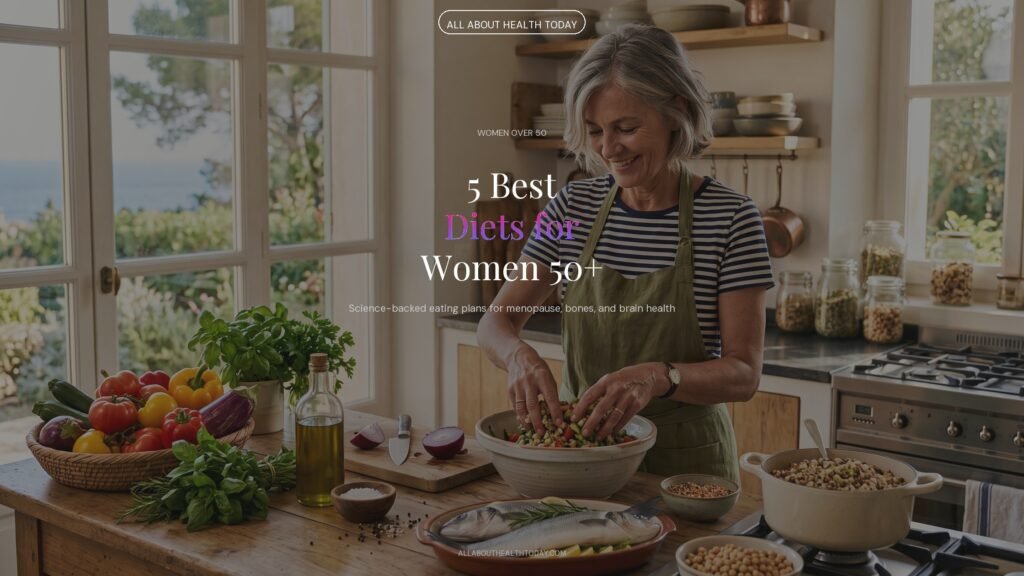
Your fifties bring a new chapter — and with it, a metabolism that doesn’t play by the old rules. Menopause reshapes how your body stores fat, builds bone, and regulates blood pressure. The good news? What you put on your plate remains one of the most powerful tools you have. After reviewing decades of nutritional science, we’ve identified five eating patterns that stand apart — not as fads, but as evidence-backed frameworks that actually deliver for women over 50.
🧬 Why Your Diet Needs a Reset After 50
The hormonal shifts of menopause aren’t just about hot flashes. Declining estrogen levels trigger a cascade of metabolic changes: muscle mass begins to erode (sarcopenia), bone density drops faster, and blood pressure — a major risk factor for heart disease — increases significantly after menopause. Meanwhile, your body becomes less efficient at using insulin, making weight management harder even if your habits haven’t changed.
This isn’t just about calories in, calories out. The right eating pattern can actively counter these age-related shifts. Research from the 2020–2025 Dietary Guidelines for Americans highlights that women over 50 need more calcium, vitamin D, protein, and B vitamins — nutrients that directly support bone density, muscle preservation, and cognitive function. The diets below were selected because they deliver these nutrients while remaining flexible enough to sustain long-term.
We also know that chronic inflammation accelerates aging at the cellular level, contributing to joint pain, cardiovascular strain, and cognitive decline. Each diet on this list includes a strong anti-inflammatory component — not as an afterthought, but as a core mechanism of action.
🥇 The 5 Best Diets for Women Over 50
Consistently ranked the healthiest eating pattern on the planet, the Mediterranean diet is the gold standard for women over 50 — and for good reason. Modeled after the traditional eating habits of Greece and Southern Italy in the 1960s, it’s built around vegetables, legumes, fruit, nuts, whole grains, and extra-virgin olive oil as the primary fat source. Fish and seafood appear several times a week; poultry, eggs, and dairy in moderation; red meat and sweets are rare guests at the table.
Why it works after menopause: A landmark study found that postmenopausal women following a Mediterranean diet had significantly higher bone mineral density and muscle mass compared to those who didn’t. Decades of research also link this diet to reduced risk of heart disease, type 2 diabetes, and certain cancers. The polyphenols in olive oil and the omega-3s from fish actively lower systemic inflammation — a driver of nearly every age-related disease.
Best part? Nothing is off-limits. A glass of red wine with dinner, a square of dark chocolate — these aren’t “cheats.” They’re part of the pattern. The Mediterranean diet is arguably the easiest to stick with because it doesn’t feel like a diet at all.
Key foods: Olive oil, leafy greens, tomatoes, chickpeas, walnuts, salmon, sardines, yogurt, berries, whole-grain bread.
DASH — Dietary Approaches to Stop Hypertension — was originally developed to lower blood pressure without medication. For women over 50, its relevance has only grown. Post-menopause, hypertension rates climb sharply as estrogen’s protective effect on blood vessels fades. One study found that obese postmenopausal women who combined the DASH diet with moderate exercise saw significant reductions in both systolic and diastolic blood pressure, along with improved cholesterol profiles.
How it works: DASH emphasizes foods rich in potassium, calcium, and magnesium — minerals that naturally relax blood vessel walls — while strictly limiting sodium. The plate is filled with vegetables, fruit, low-fat dairy, whole grains, lean protein, nuts, and seeds. Processed meats, sugary drinks, and ultra-processed snacks are minimized.
DASH also offers a hidden benefit for bone health. Its emphasis on low-fat dairy and leafy greens delivers calcium and vitamin D at the levels postmenopausal women need. Research suggests that adherence to DASH can significantly reduce markers of bone turnover, potentially preserving bone mineral status over time.
The trade-off? DASH requires more attention to sodium intake and food labels than the Mediterranean diet. But for women with hypertension or a family history of heart disease, the payoff is substantial.
Key foods: Low-fat yogurt, spinach, bananas, sweet potatoes, oats, almonds, beans, skinless poultry.
“Mostly plants” is the Flexitarian motto — and for women over 50, it strikes a near-perfect balance. Unlike strict vegetarian or vegan diets, the Flexitarian approach doesn’t eliminate animal products. It simply makes plants the star while allowing meat, fish, eggs, and dairy as supporting players. The result: you get the fiber, antioxidants, and phytonutrients of a plant-based diet without the risk of nutrient gaps that sometimes accompany full veganism.
Why it’s ideal post-menopause: Plant-based diets have been shown to help prevent bone loss in postmenopausal women when the diet emphasizes whole, unrefined plant foods. The Flexitarian approach also makes it easier to hit the 1.0–1.2 grams of protein per kilogram of body weight recommended for women over 50, since occasional lean meat and fish fill in where beans and lentils might leave off.
A 2021 study examining postmenopausal weight loss found that plant-forward eating patterns — including Flexitarian-style diets — helped reduce body fat mass while preserving lean tissue. The diet’s high fiber content also supports blood sugar stability, reducing the energy crashes and cravings that derail weight management efforts.
Key foods: Lentils, chickpeas, tofu, quinoa, sweet potatoes, walnuts, chia seeds, eggs, occasional salmon or chicken.
Here’s a sobering statistic: roughly two-thirds of Alzheimer’s patients are women. The MIND diet — short for Mediterranean-DASH Intervention for Neurodegenerative Delay — was developed specifically to fight this disparity. Created by researchers at Rush University and Harvard, it combines the brain-protective elements of both the Mediterranean and DASH diets into a single, targeted eating plan.
The evidence is compelling. Strict adherence to the MIND diet lowers Alzheimer’s risk by up to 53%, and even moderate followers see a 35% reduction. A 2024 study published in Neurology analyzing over 14,000 participants found the MIND diet was associated with an 8% lower risk of cognitive decline specifically in women — a more pronounced effect than in men. And a 2025 study confirmed it’s never too late to start: participants who improved their MIND diet adherence over 10 years had a 25% lower dementia risk.
The MIND diet zeros in on leafy greens and berries — six or more servings of greens and two or more servings of berries per week — both loaded with flavonoids that combat oxidative stress in the brain. It also emphasizes whole grains, nuts, beans, fish, and poultry while limiting red meat, butter, cheese, pastries, and fried foods.
Key foods: Spinach, kale, blueberries, strawberries, walnuts, salmon, whole grains, beans, olive oil.
If you’ve spent decades riding the diet rollercoaster — lose, regain, repeat — Intuitive Eating offers a radical alternative. It’s not a diet in the conventional sense. There are no meal plans, no forbidden foods, no calorie counting. Instead, it’s a framework for relearning your body’s natural hunger and fullness signals, building a peaceful relationship with food after years of restriction.
Why it matters after 50: Chronic restrictive dieting can backfire in ways that are particularly damaging for older women. Research links yo-yo dieting to bone loss, rebound weight gain, disordered eating, and diminished quality of life. Intuitive Eating breaks that cycle. A 2020 study found that intuitive eaters had significantly better psychological health and lower rates of disordered eating behaviors. Another study showed intuitive eaters were more likely to maintain a healthy weight over the long term — even though weight loss isn’t the stated goal.
Intuitive Eating also aligns with what we know about the nervous system’s role in metabolism. Chronic stress and restrictive eating patterns can keep the body in a sympathetic “fight or flight” state, disrupting digestion and promoting fat storage — especially visceral fat around the midsection. Learning to eat intuitively helps shift the body toward parasympathetic “rest and digest” mode, where nutrient absorption and metabolic function actually improve.
Core principles: Honor your hunger, respect your fullness, make peace with food, reject the diet mentality, discover the satisfaction factor.
📊 Diet Comparison at a Glance
| Diet | Key Features | Benefits for Women 50+ | Evidence Level |
|---|---|---|---|
| 🥇 Mediterranean | Plant-forward, olive oil, fish, whole foods; nothing restricted | Heart health, bone density, muscle preservation, lower inflammation | Strong |
| 💜 DASH | Low sodium, high potassium/calcium/magnesium; limits processed foods | Blood pressure control, bone turnover reduction, cholesterol improvement | Strong |
| 🥬 Flexitarian | Mostly plants, occasional animal products; high fiber, flexible | Weight management, blood sugar stability, bone loss prevention | Moderate |
| 🧠 MIND | Greens + berries focus; combines Mediterranean & DASH brain science | Cognitive protection, 53% lower Alzheimer’s risk, anti-inflammatory | Strong |
| 🧘 Intuitive Eating | No rules, no restrictions; rebuilds body trust and hunger awareness | Psychological wellbeing, sustainable weight maintenance, breaks diet cycle | Moderate |
🔑 Making the Right Choice for You
The best diet isn’t the one with the most impressive research citations — it’s the one you can sustain. Here’s a quick decision guide based on your primary goal:
- Your main concern is heart health or blood pressure? → Start with DASH
- You want broad protection against aging — heart, brain, bones, weight? → Mediterranean is your foundation
- You’re worried about family history of dementia or Alzheimer’s? → Layer in MIND principles
- You want weight loss without rigidity? → Flexitarian gives structure with breathing room
- You’re burnt out on dieting and need a mental reset? → Intuitive Eating is your path forward
These diets aren’t mutually exclusive. Many women find success combining elements — eating Mediterranean-style most days, adding MIND diet berries and greens for brain protection, and applying Intuitive Eating principles to break the all-or-nothing perfectionism trap.
Before making significant dietary changes, consult your healthcare provider — especially if you take medications for blood pressure, diabetes, or any chronic condition. Rapid shifts in sodium, carbohydrate, or calorie intake can interact with medications. If you have a history of disordered eating, Intuitive Eating is best explored with the support of a registered dietitian or therapist trained in the approach.
❓ Frequently Asked Questions
There’s no single answer, but research points to a few approaches that consistently work. A 2021 study examining postmenopausal weight loss found that low-glycemic diets may be more effective at reducing body fat mass than other approaches. Low-carb diets can improve triglyceride and HDL cholesterol levels, while low-fat diets tend to improve LDL cholesterol. The Mediterranean diet shines for blood pressure and heart disease risk reduction. The common thread: all successful approaches emphasize whole, minimally processed foods and adequate protein — at least 1.0–1.2 grams per kilogram of body weight daily — to preserve muscle mass during weight loss.
According to the 2020–2025 Dietary Guidelines, a moderately active woman over 50 needs roughly 1,800 calories per day to maintain weight. To lose about one pound per week, aim for a 500-calorie daily deficit — approximately 1,300 calories per day. However, this is a rough estimate. Factors like medications, activity level, genetics, and lean body mass all influence individual caloric needs. The Mifflin-St Jeor equation provides a more personalized estimate, and a registered dietitian can help fine-tune your target.
Most of these diets are designed to meet nutrient needs through food alone. However, women over 50 should pay special attention to a few nutrients regardless of eating pattern: Vitamin D (600–800 IU daily, often requiring supplementation in winter months or northern climates), Calcium (1,200 mg daily — spread intake throughout the day as your body only absorbs 500–600 mg at a time), and Vitamin B12 (especially important if you lean heavily plant-based, as B12 is found primarily in animal products). Always check with your doctor before starting any supplement regimen.
Absolutely — and many nutrition experts encourage it. The Mediterranean and DASH diets already share significant overlap with the MIND diet, since MIND was built from both. A practical approach: use the Mediterranean diet as your baseline (olive oil, vegetables, fish, whole grains), incorporate DASH principles if you have blood pressure concerns (watch sodium, boost potassium-rich foods), add MIND’s emphasis on berries and leafy greens for brain health, and apply Intuitive Eating’s mindset tools to stay flexible and avoid guilt-driven food rules. The goal is a sustainable pattern, not perfect adherence to a single label.
None of the evidence-backed diets on this list demand total elimination of any food group. That said, there are foods worth minimizing: ultra-processed snacks and ready meals (high in sodium, sugar, and inflammatory seed oils), sugar-sweetened beverages (linked to weight gain and insulin resistance), processed meats like bacon and deli meats (classified as Group 1 carcinogens by the WHO), and excessive alcohol (which can worsen hot flashes, disrupt sleep architecture, and increase breast cancer risk). The Mediterranean diet’s “rarely, in small amounts” approach is a sensible guideline — enjoy these foods occasionally, but don’t build your daily plate around them.
🌟 The Bottom Line
Turning 50 isn’t a nutritional crisis — it’s an opportunity to eat more intentionally. The five diets here share a common DNA: more plants, more whole foods, less processing. Whether you choose the heart-protective Mediterranean pattern, the brain-focused MIND approach, or the freedom of Intuitive Eating, the science is clear: your diet remains one of the most powerful levers you have for aging well. The best diet for you is the one that nourishes your body and fits your life — not just for a few weeks, but for decades to come.