
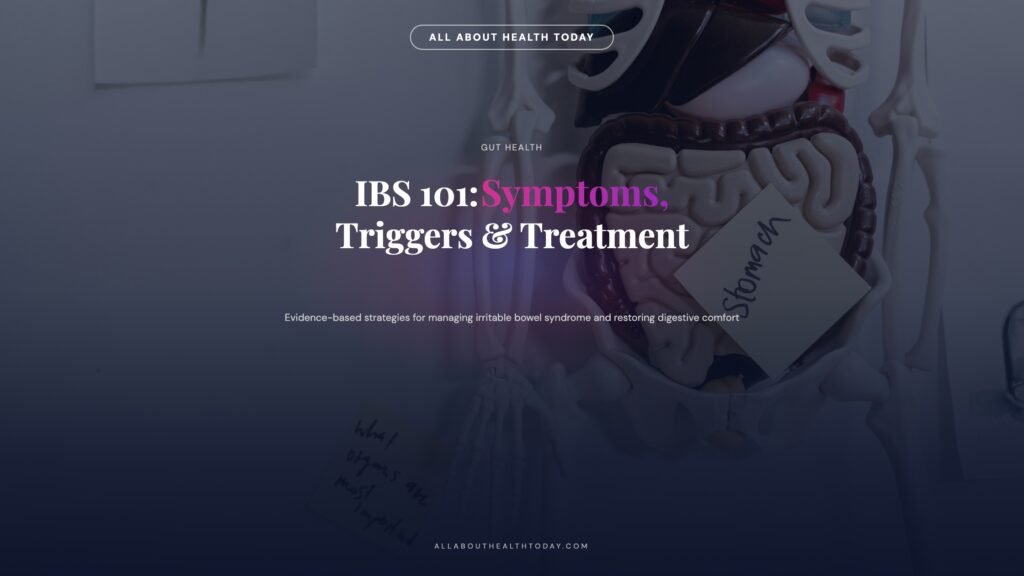
IBS 101: Symptoms, Triggers, and Evidence-Based Management Strategies
Irritable bowel syndrome (IBS) affects roughly 10–15% of adults worldwide, making it one of the most commonly diagnosed gastrointestinal disorders. Characterized by recurring abdominal pain, bloating, and altered bowel habits, IBS symptoms can range from mildly inconvenient to severely disruptive, impacting work, social life, and mental well-being. This guide breaks down what IBS is, how it’s diagnosed, the four subtypes, common triggers, and the evidence-based strategies that help you manage it naturally.
Unlike inflammatory bowel disease (IBD), IBS does not cause visible damage to the digestive tract, but that does not make it any less real. The condition sits at the intersection of gut motility, visceral hypersensitivity, and the gut-brain axis — a complex communication network linking your digestive system and central nervous system. Research over the past decade has moved clinicians away from the outdated notion that IBS is “all in your head” and toward a model rooted in measurable physiological dysfunction.
Medically reviewed by
Dr. A. Collins, MD — Board Certified Internist
Studies show that IBS patients report health-related quality of life scores comparable to those with chronic conditions like diabetes or end-stage renal disease. The unpredictability of flare-ups creates anxiety around eating, traveling, and socializing that compounds physical symptoms. The good news is that multiple evidence-based interventions exist — from dietary modifications and targeted supplements to stress-reduction techniques and gut-directed hypnotherapy — so you can work with your healthcare provider to build a personalized plan.
Whether you’ve just received a diagnosis or have been navigating IBS symptoms for years, the strategies outlined here are grounded in current clinical research — including the Rome IV diagnostic criteria, the low-FODMAP diet trials, and emerging data on the gut microbiome’s role in functional GI disorders.
What Is Irritable Bowel Syndrome?
Irritable bowel syndrome is a functional GI disorder — symptoms arise from how the gut works rather than from visible structural abnormalities. In IBS, coordinated muscle contractions that move food through the digestive tract (peristalsis) become disrupted: some people experience abnormally fast transit leading to diarrhea, others have slowed motility resulting in constipation, and many cycle between both. This is compounded by visceral hypersensitivity — a lowered threshold for pain signals, so normal amounts of gas or stool stretch register as significant discomfort.
IBS is classified into four subtypes based on predominant bowel habit:
- IBS-C (constipation-predominant): Hard or lumpy stools on more than 25% of bowel movement days, with loose stools on fewer than 25% of days. Bloating and abdominal pain are common, often relieved partially by a bowel movement.
- IBS-D (diarrhea-predominant): Loose or watery stools on more than 25% of days, with hard stools on fewer than 25% of days. Urgency — the sudden, overwhelming need to find a bathroom — is a hallmark feature.
- IBS-M (mixed): Both hard and loose stools each occur on more than 25% of bowel movement days. Symptoms can shift week to week, which makes dietary planning especially challenging.
- IBS-U (unclassified): Bowel habits don’t fit neatly into any of the above categories, though abdominal pain and bloating remain the central complaints.
Understanding your subtype matters because management strategies differ. Soluble fiber supplementation tends to help IBS-C more than IBS-D, while certain antispasmodics may be more appropriate for diarrhea-predominant patterns. Working with a gastroenterologist to identify your subtype is a critical early step.
| IBS subtype | Typical stool pattern | Common features & triggers | Management focus |
|---|---|---|---|
| IBS-C (constipation-predominant) | Hard or lumpy stools on more than 25% of bowel-movement days; loose stools on fewer than 25% | Bloating and abdominal pain are common, often relieved partially by a bowel movement | Soluble fiber (psyllium) tends to help more than in IBS-D; secretagogues (lubiprostone, linaclotide); exercise showed particular benefit in constipation-predominant patients |
| IBS-D (diarrhea-predominant) | Loose or watery stools on more than 25% of days; hard stools on fewer than 25% | Urgency is a hallmark; fatty and fried foods trigger cramping and urgency particularly in IBS-D | Antispasmodics may be more appropriate; 5-HT3 antagonists (alosetron) for severe cases; rifaximin holds FDA approval for IBS-D |
| IBS-M (mixed) | Both hard and loose stools each occur on more than 25% of bowel-movement days | Symptoms can shift week to week, which makes dietary planning especially challenging | Not stated separately in this article |
| IBS-U (unclassified) | Bowel habits don’t fit neatly into the categories above | Abdominal pain and bloating remain the central complaints | Not stated separately in this article |
How Common Is IBS, Really?
Prevalence estimates vary, but most meta-analyses land between 10% and 15% of the global adult population. In North America, studies find rates in the 10–12% range, with women roughly 1.5 to 2 times more likely to be diagnosed than men — hormonal influences on gut motility and pain perception are suspected contributors. Most diagnoses occur before age 50, and new-onset symptoms in someone over 50 warrant thorough evaluation, as the likelihood of organic diseases like colorectal cancer rises with age. Despite how common IBS is, studies suggest only about 30% of those with symptoms ever consult a doctor, leaving millions managing alone without a formal diagnosis.
How Is IBS Diagnosed? The Rome IV Criteria
IBS is a clinical diagnosis — there is no single lab test or scan that confirms it. Instead, clinicians rely on the Rome IV criteria: recurrent abdominal pain, on average at least one day per week in the last three months, associated with two or more of the following:
- Pain related to defecation (either improving or worsening with bowel movements)
- A change in stool frequency when the pain occurs
- A change in stool form (appearance) when the pain occurs
Symptoms must have started at least six months before diagnosis, with criteria met for the preceding three months. A thorough workup typically includes a complete blood count, inflammatory markers (C-reactive protein or fecal calprotectin), celiac serology, and — depending on age and risk factors — a colonoscopy. Alarm features (covered later) warrant more urgent investigation.
The Most Common IBS Symptoms
The core IBS symptom cluster includes:
- Abdominal pain or cramping: Typically lower abdominal, often relieved by passing stool or gas. May be dull, sharp, or cramping.
- Altered bowel habits: Diarrhea, constipation, or alternating between the two — consistency often fluctuates even within a single day.
- Bloating and abdominal distension: A sensation of gassiness or visible swelling, often worsening as the day progresses and after meals. Consistently rated as one of the most bothersome symptoms.
- Mucus in the stool: Clear or white mucus produced by the intestinal lining. Unlike blood, mucus alone is generally not a cause for alarm.
- Incomplete evacuation: The feeling that you haven’t fully emptied your bowels, even after a bowel movement.
- Non-GI symptoms: Fatigue, sleep disturbances, muscle aches, and urinary frequency are reported at higher rates in IBS populations, reflecting the systemic nature of gut-brain dysfunction.
IBS symptoms fluctuate naturally — flare-ups lasting days to weeks alternate with relatively symptom-free periods. Tracking symptoms in a journal (noting food intake, stress, and bowel habits) reveals patterns that aren’t obvious day-to-day and is one of the most useful tools for identifying personal triggers.
Common IBS Triggers
Dietary Triggers
Food is the most frequently reported trigger, but specific culprits vary widely. Research has identified several categories that commonly provoke IBS symptoms:
- FODMAPs (fermentable oligosaccharides, disaccharides, monosaccharides, and polyols): These short-chain carbohydrates are poorly absorbed in the small intestine and rapidly fermented by gut bacteria, producing gas and drawing water into the bowel. High-FODMAP foods include wheat, onions, garlic, legumes, certain fruits (apples, pears, stone fruits), dairy containing lactose, and artificial sweeteners ending in “-ol” (sorbitol, mannitol, xylitol).
- Fatty and fried foods: High-fat meals trigger exaggerated gastrocolic reflexes — the signal that tells your colon to contract after eating — leading to urgency and cramping, particularly in IBS-D.
- Caffeine and alcohol: Both accelerate gut motility and can irritate an already sensitive digestive tract.
- Spicy foods: Capsaicin, the active compound in chili peppers, activates pain receptors in the gut that are already hypersensitive in IBS.
- Carbonated beverages: The gas introduced by carbonation distends the gut and triggers pain in individuals with visceral hypersensitivity.
Identifying your specific dietary triggers requires a systematic approach. The low-FODMAP elimination diet — conducted under a registered dietitian’s guidance — has the strongest evidence base, with roughly 50–75% of patients reporting clinically significant improvement in randomized controlled trials.
Stress and the Gut-Brain Axis
The connection between stress and IBS is neurobiological, not psychological hand-waving. The gut and brain are linked by the gut-brain axis, a bidirectional communication network involving the vagus nerve, the enteric nervous system (the “second brain”), and the gut microbiome. When you experience stress, your brain releases corticotropin-releasing factor (CRF), which directly alters gut motility, increases intestinal permeability, and sensitizes colonic pain pathways. Brain imaging studies show differences in how pain-processing regions respond to gut distension in IBS patients, which helps explain why IBS frequently overlaps with anxiety and depression. In fact, the gut-brain connection plays a key role not just in digestion but in overall mental health, with emerging research linking microbiome composition to mood disorders.
Hormonal Influences
Many women report that IBS symptoms worsen around their menstrual period. Estrogen and progesterone receptors are present throughout the GI tract, and hormonal fluctuations can affect gut transit time and visceral sensitivity. Tracking your cycle alongside symptom journals helps anticipate predictable flare-ups.
Antibiotics and Gut Infections
Post-infectious IBS (PI-IBS) develops after acute gastroenteritis — a bout of food poisoning or a bacterial gut infection. Research suggests that 7–30% of people who experience a significant GI infection go on to develop persistent IBS-like symptoms, involving lingering low-grade inflammation and microbiome disruption. Broad-spectrum antibiotics, while sometimes necessary, can wipe out beneficial gut bacteria alongside pathogens. This is one reason the relationship between gut permeability and systemic health — often called leaky gut — has become a major focus of gastroenterology research in recent years.
Evidence-Based Management Strategies
Managing IBS effectively requires a multi-pronged approach. Individual responses vary, so patience and systematic trial-and-error are essential.
1. Dietary Modification
The low-FODMAP diet is the most rigorously studied dietary intervention for IBS. It involves three phases: elimination (4–6 weeks removing all high-FODMAP foods), reintroduction (systematically testing each FODMAP subgroup to identify personal triggers), and personalization (building a long-term diet that avoids only problematic foods). The elimination phase is not meant to be permanent — long-term restriction can reduce beneficial gut bacteria. A registered dietitian’s guidance greatly improves adherence and nutritional adequacy.
Additional dietary strategies with some evidence behind them include:
- Soluble fiber supplementation: Psyllium husk has RCT data showing global IBS symptom improvement. It regulates stool consistency by absorbing water and forming a gel. Insoluble fiber (wheat bran), by contrast, can worsen symptoms.
- Smaller, more frequent meals: Large meals trigger a stronger gastrocolic reflex. Eating 4–5 smaller meals spaced through the day reduces postprandial cramping and urgency.
- Limiting alcohol and caffeine: Both irritate the gut lining and accelerate motility.
- Eating more anti-inflammatory foods: Incorporating science-backed anti-inflammatory ingredients like turmeric, fatty fish, and leafy greens into your daily diet may help calm low-grade gut inflammation.
2. Targeted Supplements and Medications
Peppermint oil is one of the best-studied natural interventions for IBS. Enteric-coated capsules deliver L-menthol directly to the small intestine, where it acts as a smooth muscle relaxant, reducing spasms and pain. Multiple meta-analyses have found peppermint oil significantly superior to placebo, with a number needed to treat (NNT) of approximately 4 — meaning one in four patients treated will experience meaningful benefit.
Probiotics have more mixed evidence. Some specific Bifidobacterium and Lactobacillus strains show modest benefits for bloating and abdominal pain, but commercial products vary enormously in strain composition and quality. If you choose to try a probiotic, select one with strain-specific data and give it at least four weeks before assessing its effect.
Prescription options discussed with a gastroenterologist include antispasmodics, secretagogues for IBS-C (lubiprostone, linaclotide), and 5-HT3 antagonists for severe IBS-D (alosetron). Rifaximin, a non-absorbable antibiotic, has FDA approval for IBS-D based on trials showing symptom improvement, particularly for bloating.
3. Exercise and Physical Activity
Moderate physical activity improves IBS symptoms by reducing stress hormones, promoting regular bowel motility, and positively influencing the gut microbiome. An RCT published in the American Journal of Gastroenterology found that 12 weeks of moderate exercise (20–60 minutes, 3–5 times per week) significantly reduced IBS symptom severity compared to usual care, with particular benefit for constipation-predominant patients. Even 20–30 minutes of walking after meals can help stimulate healthy peristalsis and reduce bloating.

4. Stress Management and Psychological Approaches
Given the gut-brain axis’s central role, therapies targeting the brain side have some of the strongest effect sizes:
- Gut-directed hypnotherapy: Focuses on normalizing gut sensation and function. Multiple RCTs show it to be as effective as the low-FODMAP diet, with benefits lasting years after treatment. Increasingly available via telehealth.
- Cognitive behavioral therapy (CBT): Helps patients reframe catastrophic thinking around symptoms, reducing the anxiety that amplifies pain perception. Meta-analyses show CBT produces significant and durable symptom improvement.
- Mindfulness and meditation: Mindfulness-based stress reduction (MBSR) programs have demonstrated reduced symptom severity in clinical trials by dampening the fight-or-flight response that exacerbates gut dysfunction.
- Yoga and breathing exercises: Gentle yoga emphasizing diaphragmatic breathing can stimulate the vagus nerve and shift the body into a parasympathetic (rest-and-digest) state.
The skin can also signal what’s happening inside — the gut-skin axis reveals how digestive health influences conditions like acne, eczema, and psoriasis, underscoring how interconnected whole-body health truly is.
5. Sleep Hygiene
Sleep disturbances and IBS form a vicious cycle: poor sleep worsens next-day GI symptoms, and GI symptoms disrupt sleep quality. Studies show that IBS patients have more frequent nighttime arousals and less restorative deep sleep. Prioritizing sleep — with a consistent bedtime, a cool dark room, and a screen-free wind-down routine — can improve symptom perception and the body’s capacity to regulate inflammation and pain signaling.
When to See a Doctor: Red-Flag Symptoms
Most IBS symptoms do not reflect tissue damage or disease progression. However, certain alarm features warrant prompt medical evaluation because they may indicate IBD, colorectal cancer, or other structural disease:
- Rectal bleeding or blood in the stool
- Unintentional weight loss of more than 5% of body weight
- New-onset symptoms after age 50
- Nocturnal diarrhea that wakes you from sleep (IBS rarely does)
- Family history of colorectal cancer, celiac disease, or inflammatory bowel disease
- Iron-deficiency anemia or other laboratory abnormalities on blood work
- Fever, severe persistent vomiting, or signs of bowel obstruction
If you experience any of the above, do not assume it is IBS — see a gastroenterologist for proper workup. Early detection dramatically improves outcomes. Also consider whether other dietary factors are contributing. For example, emulsifiers — common food additives found in processed foods — have been shown to disrupt the gut microbiome and may worsen GI symptoms in sensitive individuals. Cutting back on ultra-processed foods is a reasonable step regardless of your IBS subtype.
Putting It All Together
Living with IBS is not about a single magic bullet — it is about stacking small, evidence-based interventions that collectively shift the balance toward symptom control. Start with the fundamentals: keep a symptom and food journal for two weeks to map your personal trigger patterns. Experiment with one change at a time — whether that’s adding psyllium husk, trialing low-FODMAP, or starting a daily 20-minute walk — and give each intervention at least two weeks before judging its effect.
IBS is a chronic but manageable condition. With the right combination of dietary strategy, stress management, and — when needed — medical support, most people with IBS can significantly reduce symptom frequency and severity, reclaiming quality of life. The key is patience, persistence, and a willingness to treat IBS as the complex, multisystem condition that it is.