
The Gut-Brain Axis: Your Second Brain Is in Your Belly
If the phrase “gut feeling” sounds metaphorical, it’s not. The enteric nervous system — a mesh of about 500 million neurons lining your gastrointestinal tract — operates with enough autonomy that scientists sometimes call it the “second brain.” It connects to your actual brain through the vagus nerve, a bidirectional highway that carries signals in both directions. What happens in the gut doesn’t stay in the gut.
That 95% serotonin stat matters because it means the gut microbiome — the ecosystem of bacteria, fungi, and other microbes living in your intestines — is constantly producing, modulating, and consuming neuroactive compounds. Certain gut bacteria manufacture GABA, the calming neurotransmitter that benzodiazepines like Valium target. Others produce dopamine precursors. Some strains of Lactobacillus and Bifidobacterium have been shown in human trials to reduce anxiety scores and improve stress resilience. When this ecosystem goes awry — a condition called dysbiosis, often driven by a diet heavy in processed foods and low in fiber — the signaling molecules that support stable mood get disrupted.
For a deeper look at how gut health shapes mental wellbeing, our guide on the gut-brain connection and mental health covers the mechanisms in detail.
Nutrients That Move the Needle
Not all nutrients carry equal weight in the mood conversation. Some have randomized trial data behind them. Others show up consistently in observational studies but lack the same rigor. Here’s what the evidence says about the ones that matter most.
Omega-3 Fatty Acids: EPA Over DHA for Mood
Omega-3s are the best-studied nutrients in psychiatric nutrition, and the picture is sharper than it used to be. Not all omega-3s are created equal for mood. Eicosapentaenoic acid (EPA) consistently outperforms docosahexaenoic acid (DHA) in depression trials. A 2019 meta-analysis published in Translational Psychiatry found that supplements containing at least 60% EPA relative to DHA were the most effective, with doses around 1 to 2 grams of EPA per day showing the strongest signal. The mechanism likely involves EPA’s anti-inflammatory effects — depression has a well-documented inflammatory component, and EPA dampens the cytokines that drive neuroinflammation. Our omega-3 supplement guide breaks down what to look for on a label.
B Vitamins: Methylation and the MTHFR Factor
Folate, B12, and B6 sit at the center of a biochemical pathway called methylation — the process your body uses to produce neurotransmitters including serotonin, dopamine, and norepinephrine. When methylation runs poorly, neurotransmitter synthesis suffers. The MTHFR gene variant (present in roughly 40% of the population, depending on ethnicity) reduces the body’s ability to convert dietary folate into its active form, L-methylfolate — the form that crosses the blood-brain barrier. Several studies have found that people with depression are more likely to have low folate levels, and low B12 is independently associated with treatment-resistant depression. The fix isn’t always as simple as popping a B-complex, but addressing deficiencies — especially in people with the MTHFR variant — can meaningfully shift treatment response.
Vitamin D: Modest but Worth Watching
The link between low vitamin D and depression is one of the most replicated findings in nutritional epidemiology. Whether supplementation reverses it is trickier. A 2022 mega-analysis in Critical Reviews in Food Science and Nutrition found vitamin D supplementation produced a small but statistically significant improvement in depressive symptoms. The effect was strongest in people with confirmed deficiency (below 50 nmol/L) and in those with clinical depression rather than the general population. Testing levels before supplementing is cheap, and correcting deficiency carries little downside.
Magnesium: The NMDA Gatekeeper
Magnesium regulates the NMDA receptor, a glutamate receptor involved in learning, memory, and — when overactive — anxiety and depression. Low magnesium intake is consistently associated with higher depression risk in population studies. For supplementation, magnesium glycinate tends to be the preferred form for mood and anxiety: glycine itself has calming properties and absorption is better than magnesium oxide (which mostly works as a laxative). Typical clinical doses range from 200 to 400 mg of elemental magnesium per day.
Zinc: The Hippocampal Protector
Zinc concentrates in the hippocampus, a brain region that regulates mood and shrinks in chronic depression. Multiple meta-analyses have found that depressed individuals have significantly lower serum zinc levels than controls, and a handful of small trials show zinc supplementation (usually 25 mg per day as an adjunct to antidepressants) reducing depression scores. The effect size is modest — zinc alone isn’t an antidepressant — but the consistency of the deficiency finding makes it worth checking, especially in people who don’t eat much red meat or shellfish, the richest dietary sources.
The Mediterranean Diet: The Best-Studied Pattern
If nutritional psychiatry has a north star, it’s the Mediterranean diet. Beyond the SMILES trial, multiple large prospective cohort studies — including the SUN Project in Spain with over 15,000 participants — have found that closer adherence to a Mediterranean pattern predicts lower depression incidence over time. The diet’s mood benefits likely come from multiple overlapping mechanisms: high polyphenol intake from olive oil and vegetables reduces oxidative stress; omega-3s from fish tamp down neuroinflammation; fiber feeds gut bacteria that produce short-chain fatty acids with anti-inflammatory properties; and the diet naturally restricts ultra-processed foods, which have their own independent link to depression. For a practical starting point, see our beginner’s guide to the Mediterranean diet.
Processed Food and Mood: A 33% Higher Risk
On the other side of the plate, ultra-processed foods — the packaged snacks, sugary drinks, and reconstituted meat products that make up nearly 60% of calories in the average American diet — show a consistent association with worse mental health. A 2022 analysis of the NutriNet-Santé cohort (over 26,000 participants followed for roughly 5 years) found that every 10% increase in ultra-processed food intake was associated with a roughly 21% higher risk of developing depressive symptoms. A separate meta-analysis covering multiple large cohorts pegged the depression risk for the highest consumers of ultra-processed foods at 33% higher than the lowest consumers. The likely culprits include the inflammatory effects of refined seed oils, the gut microbiome disruption from emulsifiers and artificial sweeteners, and the blood sugar volatility those foods provoke. For a broader look at the inflammatory angle, explore our science-backed list of anti-inflammatory foods.
Blood Sugar Swings and Irritability
Anyone who has ever felt “hangry” already understands the blood sugar-mood link intuitively. The mechanism is straightforward: when blood glucose crashes after a high-glycemic meal, the body releases cortisol and adrenaline to mobilize stored glucose. Those same stress hormones trigger anxiety, irritability, and a sense of being on edge. In people prone to mood instability, these swings can be especially destabilizing. Eating protein, fat, and fiber together at each meal — rather than isolated carbohydrates — flattens the glucose curve and reduces the emotional rollercoaster that comes with it.
The Tryptophan Paradox: Why Low-Carb Can Hurt Mood
Tryptophan is the amino acid precursor to serotonin, and the pathway from protein to mood goes through an interesting bottleneck. When you eat protein, tryptophan enters the bloodstream alongside other large neutral amino acids — tyrosine, valine, leucine, and isoleucine — that compete for the same transporter across the blood-brain barrier. Tryptophan is outnumbered and tends to lose this competition. This is where carbohydrates come in. Insulin, released in response to carbs, shunts those competing amino acids into muscle tissue while leaving tryptophan alone in the bloodstream. With its competition cleared, tryptophan crosses the blood-brain barrier more easily and becomes available for serotonin synthesis.
This is why some people on very low-carb or ketogenic diets report worsened mood — not because the diet is inherently bad for mental health (some people thrive on it, particularly for certain neurological conditions), but because cutting carbs too low can limit serotonin production in individuals who are sensitive to that pathway. Including modest amounts of complex carbohydrates — sweet potatoes, oats, legumes — alongside protein at meals helps keep the tryptophan pipeline open without the blood sugar chaos that refined carbs bring.
Fermented Foods: The Stanford Trial
In 2021, researchers at Stanford published a trial that caught the attention of nutritional psychiatry researchers everywhere. They randomized healthy adults to either a high-fermented-foods diet (yogurt, kefir, kimchi, kombucha, and fermented vegetables) or a high-fiber diet for 10 weeks. The fermented foods group showed a significant drop in 19 inflammatory markers, including IL-6 and other cytokines linked to depression. The fiber group didn’t show the same effect. The interpretation: it may not just be about feeding your existing gut bacteria (fiber is their fuel), but about introducing new beneficial strains through fermented foods — essentially diversifying the microbiome ecosystem from the top down. Our fermented foods guide covers the best options and how to start incorporating them.
A Mood-Supporting Day of Eating
Translating all of this into a plate doesn’t require a nutrition degree. Here’s what a practical, mood-supporting day looks like:
- Breakfast: Steel-cut oats with walnuts, ground flaxseed, and blueberries. The oats provide slow-release carbs for tryptophan transport. Walnuts and flax are plant-based omega-3 sources. Blueberries add polyphenols that reduce oxidative stress.
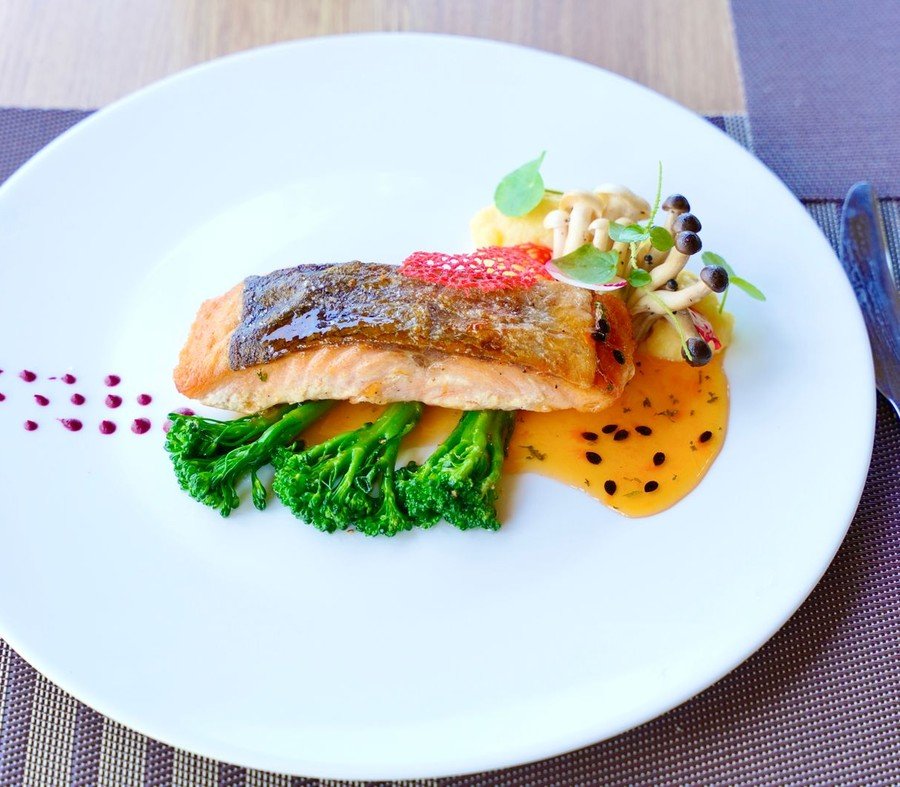
- Lunch: A large salad with leafy greens (folate), chickpeas (fiber and magnesium), roasted salmon (EPA-rich omega-3s), olive oil, and lemon. The olive oil’s polyphenols support anti-inflammatory pathways.
- Snack: Plain Greek yogurt with a handful of pumpkin seeds. The yogurt contributes probiotic strains; pumpkin seeds are one of the richest magnesium sources.
- Dinner: Lentil and vegetable stew with turmeric and black pepper, served with a side of sautéed spinach. Legumes feed gut bacteria; turmeric (with black pepper for absorption) has documented anti-inflammatory effects; spinach packs folate and magnesium.
- Evening: Herbal tea, a square or two of dark chocolate (70%+ cocoa). Dark chocolate’s polyphenols support cerebral blood flow and have mild mood-elevating properties.
This isn’t a prescription — it’s a pattern. The individual foods matter less than the overall shift away from processed packages and toward whole ingredients. Someone eating this way most days, with flexibility for real life, is doing the nutritional equivalent of what sleep hygiene does for insomnia: creating conditions where the brain can regulate itself more effectively.