
Your body digests food with a team of enzymes it produces on demand — amylase for carbohydrates, proteases for protein, lipase for fat. When that team underperforms, food moves through your system partially broken down. The result isn’t always dramatic. Sometimes it’s a decade of bloating after every meal, a stool that sticks to the bowl no matter what you eat, or a slow, unexplained weight loss that no diet change fixes. Digestive enzyme deficiency is one of the most overlooked causes of chronic digestive misery — partly because its symptoms overlap so heavily with IBS, celiac disease, and food intolerances.
The most serious form is exocrine pancreatic insufficiency (EPI), where the pancreas simply doesn’t deliver enough enzymes to the intestine. But milder, subtler enzyme shortfalls also occur — and both matter. The good news: enzyme deficiency is highly treatable. Pancreatic enzyme replacement therapy is backed by randomized trials, and even over-the-counter enzyme supplements show real evidence for bloating and functional dyspepsia.
This guide covers the signs that your food isn’t being broken down properly, the tests that confirm it, and what the current evidence actually supports — so you can stop guessing and get the right help.
What Are Digestive Enzymes — and What Does Each One Do?
Digestive enzymes are proteins that split large food molecules into absorbable pieces. Your body produces them primarily in the pancreas, with help from the salivary glands (amylase) and the stomach (pepsin, gastric lipase). Each enzyme targets a specific nutrient:
| Enzyme | Breaks down | Where it’s made | When output drops |
|---|---|---|---|
| Amylase | Carbohydrates and starches | Salivary glands, pancreas | Undigested starch ferments in the colon → gas and bloating |
| Proteases (trypsin, chymotrypsin) | Protein | Pancreas | Protein malabsorption → muscle loss, low amino acid levels |
| Lipase | Fat | Pancreas, stomach | Fat malabsorption → greasy stools, fat-soluble vitamin deficiencies |
| Lactase | Lactose (milk sugar) | Small intestine lining | Lactose intolerance → bloating, diarrhea after dairy |
Here’s a critical detail: lipase is the most fragile enzyme, and fat malabsorption usually appears before problems with protein or carbs. That’s why greasy stools and weight loss are the classic EPI signals — fat is the first nutrient your body stops absorbing when pancreatic output drops.
Signs You’re Not Breaking Down Food Properly
Enzyme deficiency symptoms are nonspecific — which is exactly why they’re missed. Bloating, gas, and diarrhea are the same complaints that send people down the IBS rabbit hole for years. But several signs point more specifically at malabsorption:
| Symptom | What it looks like | What it suggests |
|---|---|---|
| Steatorrhea (fatty stools) | Pale, greasy, bulky, foul-smelling stools that float or stick to the toilet bowl | The most specific sign of fat malabsorption — a hallmark of EPI |
| Unexplained weight loss | Losing weight while eating normally, or eating less to avoid symptoms | Calories are passing through unabsorbed |
| Post-meal bloating and gas | Distension and flatulence within hours of eating, especially fatty meals | Undigested nutrients fermenting in the colon |
| Chronic diarrhea | Loose, frequent stools; undigested food particles visible | Rapid transit from malabsorbed fat and water pulled into the colon |
| Abdominal discomfort | Cramping or pain, often upper-middle abdomen | Overlapping with pancreatitis, gallstones, or IBS — needs workup |
| Fat-soluble vitamin deficiency signs | Night vision problems (A), bone pain or low density (D), bruising (K), dry skin (E) | Fat carries vitamins A, D, E, K — if fat isn’t absorbed, neither are they |
| Muscle loss and fatigue | Weakness, sarcopenia, persistent tiredness | Protein and calorie malabsorption over time |
What Causes Low Digestive Enzymes?
Enzyme output drops for several distinct reasons, and the cause determines the treatment:
- Chronic pancreatitis — long-term pancreatic inflammation progressively destroys enzyme-producing cells. Alcohol use and smoking are major contributors.
- Cystic fibrosis — thick secretions block pancreatic ducts; most people with CF need enzyme replacement from childhood.
- Pancreatic cancer and pancreatic surgery — tumors and resections directly reduce enzyme capacity.
- Celiac disease and Crohn’s disease — damage to the small intestine lining can impair the enzymes produced there, and pancreatic function can suffer secondarily.
- Small intestinal bacterial overgrowth (SIBO) — bacteria consume nutrients before your enzymes can, producing gas and malabsorption symptoms that mimic enzyme deficiency.
- Age-related decline — pancreatic enzyme output tends to decrease with age, and many older adults have subclinical insufficiency.
- Specific enzyme loss — lactase deficiency (primary lactose intolerance) is the most common example, affecting a large share of adults worldwide.
How to Test for Digestive Enzyme Deficiency
You don’t need to guess — there are objective tests:
- Fecal elastase-1 (FE-1): The first-line, noninvasive test. Elastase is an enzyme that survives passage through the gut, so stool levels reflect pancreatic output. Below 200 μg/g is abnormal; below 100 μg/g indicates pancreatic insufficiency; below 50 μg/g is severe. It’s reliable in adults and children, though not after pancreatic resection.
- 72-hour fecal fat test: The gold standard for steatorrhea — you collect stool for three days while eating 100 g of fat daily. Fat above 7 g/day confirms fat malabsorption. It’s accurate but laborious, so it’s usually reserved for confirmation.
- Serum trypsinogen: A blood level below 20 ng/mL is sensitive for pancreatic steatorrhea.
- Ruling out look-alikes: Because symptoms overlap with IBS, celiac, IBD, and SIBO, a proper workup typically includes blood work and sometimes breath testing to separate these conditions.
Treatment: What the Evidence Actually Supports
Pancreatic enzyme replacement therapy (PERT) — the gold standard
For confirmed pancreatic insufficiency, prescription PERT is the cornerstone of treatment. The 2025 European guidelines (UEG, ESPEN, and six other societies) rate it as Level 1 evidence for improving fat and protein absorption. A 2025 meta-analysis of 14 randomized trials and 684 patients found PERT significantly improved both fat absorption (coefficient of fat absorption) and protein absorption (coefficient of nitrogen absorption) compared with placebo — with consistent benefits across chronic pancreatitis and cystic fibrosis.
Dosing matters more than most people realize. A 2025 systematic review found that 40% of real-world patients receive doses below the recommended 40,000–50,000 lipase units per meal — enough to ease diarrhea, but too low to restore nutritional status. If you’re on PERT and still losing weight or deficient in vitamins, the fix is often a dose increase, not a new diagnosis. Enzymes should be taken with the first bite of a meal and adjusted to the meal’s fat content.
Over-the-counter digestive enzyme supplements
OTC enzyme blends (typically amylase, lipase, protease, sometimes lactase) are a different product from prescription PERT — lower potency, unregulated dosing — but the evidence isn’t zero. A 2025 review of the research rated multi-enzyme supplements as having strong evidence for bloating and functional dyspepsia: three placebo-controlled studies found multi-enzyme blends significantly reduced postprandial bloating, fullness, and flatulence after meals. The catch: OTC products are not a substitute for treating a real pancreatic deficiency. They’re best viewed as a reasonable trial for mild, meal-related bloating — ideally discussed with a clinician first.
Lactase for lactose intolerance
Lactase supplements taken with dairy are well-established and can meaningfully expand the diet of people with lactose intolerance. This is the one case where a single-enzyme OTC product is clearly supported.
Food Sources and Habits That Support Digestion
Whole foods can’t cure a true enzyme deficiency — but they can lighten the load and support gut health:

- Chew thoroughly and eat slowly. Salivary amylase starts carbohydrate digestion in the mouth; rushing meals shortchanges that step.
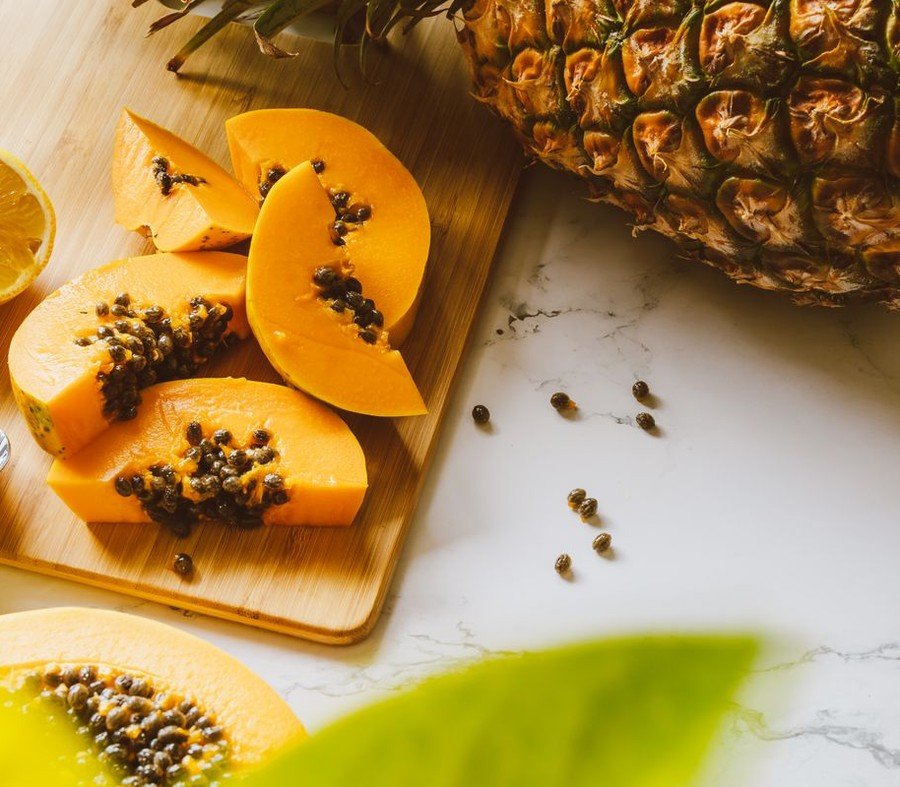
- Add natural enzyme sources: Pineapple (bromelain), papaya (papain), kiwi, and fermented foods like sauerkraut and kimchi supply enzymes and support the gut microbiome.
- Eat smaller, more frequent meals rather than large ones — less fat per meal is easier to digest when enzyme output is limited.
- Pair fats with fiber-rich foods and cook vegetables lightly; heavy processing and raw high-fiber loads both increase digestive burden.
- Support gut bacteria: A healthy microbiome produces its own enzymes and aids nutrient breakdown. Probiotics and fermented foods are a reasonable everyday addition.
When to See a Doctor
Book an appointment — and ask specifically about enzyme deficiency and EPI — if you have:
- Greasy, pale, foul-smelling stools that stick to the bowl, especially with weight loss
- Unexplained weight loss while eating normally
- Chronic bloating, gas, or diarrhea that hasn’t responded to diet changes or IBS management
- Signs of fat-soluble vitamin deficiency (night vision changes, easy bruising, bone pain)
- A history of pancreatitis, gallstones, celiac disease, or abdominal surgery with new digestive symptoms
One more reason not to delay: untreated EPI leads to malnutrition, low bone density, muscle loss, and — per the 2025 European guidelines — increased morbidity and mortality. It’s easily missed, but it’s also easily treated once identified.
Frequently Asked Questions
How do you know if you have low digestive enzymes?
The strongest clues are steatorrhea — pale, greasy, foul-smelling stools that stick to the toilet bowl — plus bloating after meals, excess gas, and unexplained weight loss. These overlap with IBS, so the only way to know for sure is testing: a fecal elastase-1 stool test is the standard first step, with a 72-hour fecal fat test as the gold-standard confirmation.
Can digestive enzyme deficiency cause constipation?
It’s possible but less common than diarrhea. While fat malabsorption typically produces loose stools, some people with enzyme insufficiency experience alternating stool changes, and enzyme-related nutrient malabsorption can slow motility indirectly. More often, constipation alongside bloating points to other causes like low fiber, hypothyroidism, or IBS-C — which is why a proper workup matters before you assume it’s enzymes.
How is digestive enzyme deficiency tested?
The first-line test is fecal elastase-1, a stool test that measures pancreatic output (below 200 μg/g is abnormal; below 100 μg/g suggests insufficiency). For confirmation, a 72-hour fecal fat test measures actual fat malabsorption, and serum trypsinogen can be checked in blood. Your doctor will also rule out celiac disease, IBD, and SIBO, since their symptoms overlap heavily.
Do over-the-counter digestive enzyme supplements work?
For mild, meal-related bloating and fullness, yes — placebo-controlled trials show multi-enzyme blends meaningfully reduce postprandial bloating and flatulence. But OTC enzymes are far lower potency than prescription PERT and are not a treatment for true pancreatic insufficiency. If you have steatorrhea or weight loss, see a doctor for proper testing and prescription enzymes rather than relying on OTC products.
What causes low digestive enzymes?
The most common serious cause is chronic pancreatitis, which progressively destroys enzyme-producing cells. Cystic fibrosis, pancreatic cancer, and pancreatic surgery also cause it. Secondary causes include celiac disease, Crohn’s disease, and SIBO, which damage the intestine or consume nutrients before absorption. Age-related decline in pancreatic output is also real — and specific single-enzyme losses like lactase deficiency are extremely common in adults.
Can enzyme deficiency cause weight loss even if I eat enough?
Yes — this is one of its most important red flags. When lipase output drops below about 5–10% of normal, fat (and eventually protein and calories) passes through unabsorbed. You can eat a full diet and still lose weight, because a meaningful share of it never enters your bloodstream. Unexplained weight loss with greasy stools is a classic EPI presentation and a strong reason to get tested.