
What Are Some Foods People Think Are Healthy But Actually Aren’t?
Estimated reading time: 5 minutes
- Be wary of health halos: Foods labeled “natural” or “organic” can still be unhealthy.
- Check sugar content: Many so-called healthy options are high in added sugars.
- Emphasize whole foods: Focus on minimally processed foods for better health.
- Read labels critically: Understanding ingredient lists is essential for making healthy choices.
- Explore healthier alternatives: Small swaps can lead to significant improvements in diet.
Table of Contents
Understanding the “Health Halo” Problem
The “health halo” effect refers to the perception that certain foods are healthier than they actually are, due to clever marketing or limited information. Foods labeled as “natural” or “organic” can still contain high amounts of sugar or unhealthy ingredients. For instance, granola is perceived as a healthful breakfast choice. However, many granola products are packed with added sugars and calories (source). This misperception can lead us to consume these products in larger amounts, thinking they are beneficial for our health.
Quick Guidelines: What “Actually Healthy” Usually Looks Like
To identify truly healthy foods, consider these criteria:
- Minimal Added Sugar: Keep added sugar intake below 6–9 teaspoons per day, as recommended by the American Heart Association (source).
- High Fiber and Protein: Opt for foods that are rich in fiber and protein rather than refined carbohydrates.
- Limited Sodium: Watch sodium intake to maintain heart health.
- Minimal Processing: Choose foods with short ingredient lists and without unnecessary additives.
Whole foods such as vegetables, fruits, legumes, nuts, and lean proteins are excellent baselines for a healthy diet.
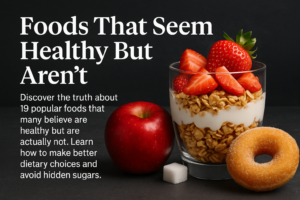
19 Popular “Healthy” Foods That Aren’t So Healthy
1. Granola & Granola Bars
Granola is often seen as a high-fiber breakfast option. However, many store-bought versions are dense with added sugar and calories (source). Look for granolas with at least 3–4 grams of fiber, 5 grams of protein, and no more than 6–8 grams of added sugar per serving. Alternatively, make your own granola with oats, nuts, and seeds, or consume plain oats with fruits and nuts.
2. Flavored Yogurt
Though yogurt is known for its probiotic content, many flavored varieties contain over 20 grams of sugar per small container (source). Instead, choose plain Greek yogurt and add fresh fruits and a sprinkle of nuts for sweetness.
3. Protein Bars
Often marketed for fitness enthusiasts, protein bars can contain as much sugar and calories as a candy bar (source). Select bars with more protein than sugar, or opt for a handful of nuts and fresh fruit as a snack.
4. Sports Drinks
While sports drinks are intended for hydration and recovery, they often add excessive sugar and calories (source). Water typically suffices for hydration, or choose low-sugar electrolyte options for intense workouts.
5. Gluten-Free Snacks
Being gluten-free does not automatically make a product healthy. Many gluten-free snacks are still high in refined starches and sugars (source). Opt for naturally gluten-free foods like fruits, nuts, and beans.
6. “Fat-Free” Packaged Foods
These products often compensate for flavor loss due to fat removal by adding sugars or refined carbs (source). Instead, consume full-fat versions in moderation and focus on balanced meal patterns.
7. Breakfast Cereal
Despite claims of being “heart-healthy,” many cereals are made from refined grains and sugar (source). Seek unsweetened whole-grain cereals or oatmeal topped with fruits and nuts.
8. Premade Smoothies
Smoothies may appear healthy but frequently include high-calorie ingredients like juices and syrups (source). For a nutritious alternative, make homemade smoothies with vegetables, whole fruits, and a protein source.
9. Frozen Yogurt
Frozen yogurt is seen as a low-calorie ice cream alternative but often matches ice cream in sugar content, especially when topped (source). Choose small portions of high-quality ice cream or create frozen fruit desserts at home.
10. Yogurt-Covered Snacks
Despite health food store placement, yogurt-covered pretzels and raisins are calorie- and sugar-dense (source). Choose plain nuts, seeds, or dried fruits instead.
11. “Veggie” Chips
These chips claim to have vegetable benefits but mostly contain potato starch or flour, making them similar to regular chips (source). Opt for whole-vegetable chips made from kale or carrots.
12. Pretzels
Perceived as a healthier snack option, pretzels consist mainly of refined flour and salt (source). Switch them for air-popped popcorn or whole-grain crackers.
13. Plant-Based Meats
While they serve as meat alternatives, some are highly processed and contain additives (source). Emphasize whole plant proteins like lentils and beans.
14. Vegetable Oils
Though healthier compared to butter, some vegetable oils are highly refined and promote inflammation when overly consumed (source). Use olive oil primarily, with a diet rich in omega-3 fats.
15. Store-Bought Salad Dressings
These are often high in additives and sugar. Homemade dressings with olive oil, vinegar, and herbs are a healthier choice.
16. Sushi Rolls
While sushi is considered clean eating, many rolls come with fried or sugary components (source). Opt for simple rolls with fish, vegetables, and seaweed.
17. Coffee Drinks
Many specialty coffee drinks include sugary syrups and creams, converting them to dessert status (source). Stick to plain coffee or low-sugar variations.
18. “Detox” Juices
These juices promote detoxing but often overload you with sugars. Whole fruits and vegetables with balanced meals are recommended (source).
19. Microwave & Flavored Popcorn
Packaged popcorn often adds unhealthy seasonings. Air-popped, lightly seasoned popcorn is a better option (source).
How to Spot “Fake Healthy Foods”
Here’s a quick checklist:
- Check Sugar Content: Keep added sugar at 6–8 g per serving.
- Evaluate The First Ingredients: Avoid products heavily based on sugars or refined ingredients.
- Look for Fiber and Protein: Seek at least 3 g of fiber and 5–10 g of protein.
- Watch Sodium: Prefer snacks under 200–250 mg of sodium.
- Short Ingredient Lists: These indicate minimal processing.
Be critical of buzzwords like “organic” or “keto,” which aren’t guarantees of healthiness.
Healthier Alternatives & Simple Swaps:
Below is a table to help you make better dietary decisions:
| “Healthy” Food | Main Problem | Better Everyday Option |
|---|---|---|
| Flavored yogurt | High in sugar | Plain Greek yogurt with fruit |
| Granola bars | Sugar and refined carbs | Homemade trail mix or low-sugar bars |
| Sports drinks | Added sugar | Water or unsweetened electrolyte beverage |
| Gluten-free cookies | High sugar and fats | Fruit or a small dark chocolate piece |
| Frozen yogurt | Sugar content comparable to ice cream | Small ice cream portion or fruit sorbet |
FAQs:
1. Which foods are deceptively unhealthy?
– Granola, flavored yogurt, protein bars, and sports drinks, particularly those processed and high in sugars (source).
– Granola, flavored yogurt, protein bars, and sports drinks, particularly those processed and high in sugars (source).
2. Are gluten-free products better for weight loss?
– Not inherently, as they often hold similar calorie and sugar levels (source).
– Not inherently, as they often hold similar calorie and sugar levels (source).
3. Is frozen yogurt a better choice than ice cream?
– Usually not, due to similar sugar levels (source).
– Usually not, due to similar sugar levels (source).
4. How can I determine a food’s true health value?
– Thorough label reading is crucial: monitor sugar, sodium, and ingredient lists (source).
– Thorough label reading is crucial: monitor sugar, sodium, and ingredient lists (source).
Conclusion
Unveiling these “healthy” foods can empower you to make more informed dietary decisions. We encourage you to explore the options smarter by embracing natural and minimally processed foods. For personalized nutrition advice, or assistance improving your eating habits, please contact us to leverage our expertise in health and wellness consulting.
Ready to revitalize your diet and uncover more about food myths? Explore our services or reach out to us to transform your approach to healthy eating today!