
White noise is a masking tool, not a sleep hormone. It works by covering the intermittent sounds that wake you — a door, a car, a neighbour — rather than by inducing sleep directly. That distinction explains both where it helps and where it does nothing at all.
Medically reviewed by Dr. A. Collins, MDBoard Certified Internist · Updated 26 October 2026

The reason white noise works for some people and not others comes down to what is waking them. If your problem is a partner’s snoring, traffic or a creaking floorboard, masking helps. If your problem is falling asleep because your mind will not stop, a fan is not treating anything.
That is worth stating plainly, because the marketing implies a general sleep treatment and the evidence describes a specific acoustic intervention.
What it actually does
Sleep is fragile at transitions. The brain continues monitoring sound while you sleep, and an abrupt change in the acoustic environment — particularly a sudden onset — triggers a brief arousal even if you do not wake fully. Repeated arousals fragment sleep architecture and are why you can spend eight hours in bed and feel unrefreshed.
White noise, and its cousins pink and brown noise, raise the baseline acoustic floor. A door closing still adds energy, but the step from a 45 dB baseline to 55 dB is less disruptive than from 25 to 55. That is the entire rationale, and it is a good one.
A systematic review of noise as a sleep aid described exactly this: benefit is most consistent where the problem is environmental noise rather than insomnia itself (Riedy, 2021).
A night with the machine on
The practical picture changes across the night, and so does the case for keeping it running.
Settling
A steady sound gives the auditory system something unchanging to ignore. Most of the perceived benefit is here, at sleep onset.
Transition
Arousals are most likely as you pass into deeper sleep. Masking is doing real work in this window.
Consolidation
Deep sleep is acoustically resilient. If the room is quiet, the machine is mostly neutral here.
The 3am wake
This is where people report the clearest benefit — masking a single sharp sound that would otherwise start the wake-up cycle.
Waking
No benefit, and a possible cost: an alarm has to compete with the mask. Many machines have a fade-out for this reason.
What the trials actually show
The evidence is better than for most sleep gadgets and weaker than the marketing. A review examining white noise across age groups found improvements in sleep quality in several settings, with the effects most consistent in people sleeping in noisy or unfamiliar environments (Ding, 2025).
Where the signal is strongest is in hospitals, which are acoustically awful. Trials in intensive care have found white noise improves measured sleep quality in patients (Nien, 2026), and broader work on sound and darkness interventions in critical care reaches a similar direction (Fang, 2024). A quality-improvement study on sleep and delirium in critical care adds the clinical context (Tonna, 2021).
Read that as: white noise reliably helps when the environment is the problem. It is not a treatment for insomnia, and for chronic insomnia the intervention with actual evidence is cognitive behavioural therapy — see CBT-I and sleep hygiene.
The volume question, which matters more than the machine
| Guidance | Reason |
|---|---|
| Keep it under about 50 dB | Roughly the level of a quiet conversation. Loud enough to mask, quiet enough not to be its own burden. |
| Place it at least a metre from the bed | Sound intensity falls with distance; this alone reduces exposure substantially. |
| Never loud enough to raise your voice over | A practical test that keeps you well below damaging levels. |
| Avoid ear-level playback | Headphones or earbuds overnight deliver far higher doses directly to the ear. |
| Do not escalate over weeks | If you keep needing it louder, the machine or the room is wrong — not your tolerance. |
Continuous noise exposure at high levels is a genuine hearing risk, and the reason the volume guidance above is not merely cautious. This is also the point at which the evidence for children becomes uncomfortable.
The caution for children
The reasonable position for a child’s bedroom: keep it quiet, keep the device well away from the cot or bed, and do not use it all night at a level you would not accept in your own room. For adults the risk profile is far lower; for infants the caution is proportionate.
Tinnitus is a different use case
Sound therapy is used for tinnitus, and here the mechanism overlaps but the goal is different: providing competing sound reduces the contrast that makes tinnitus intrusive. A Cochrane review of sound therapy for tinnitus found the evidence for benefit was limited and of low quality (Hobson, 2012).
That does not mean it never helps — many people find masking useful — but it means the claim should be modest. If tinnitus is new, one-sided, or accompanied by hearing loss, that needs assessment, not a fan.
Choosing one, briefly
The features that matter are unglamorous: a volume control that goes genuinely low, a timer or fade-out, and a sound that does not loop audibly. A phone app through a speaker works for many people and costs nothing, which is the sensible first experiment.
If you want a dedicated device, the category is well established. A combined night light and sound machine of the Hatch type is the common form for households with children, where the light and the sound are used together as a bedtime cue.
What you are buying is a speaker with a limited sound library. Any claim beyond that — deeper sleep stages, hormone effects, recovery — is marketing rather than measurement.
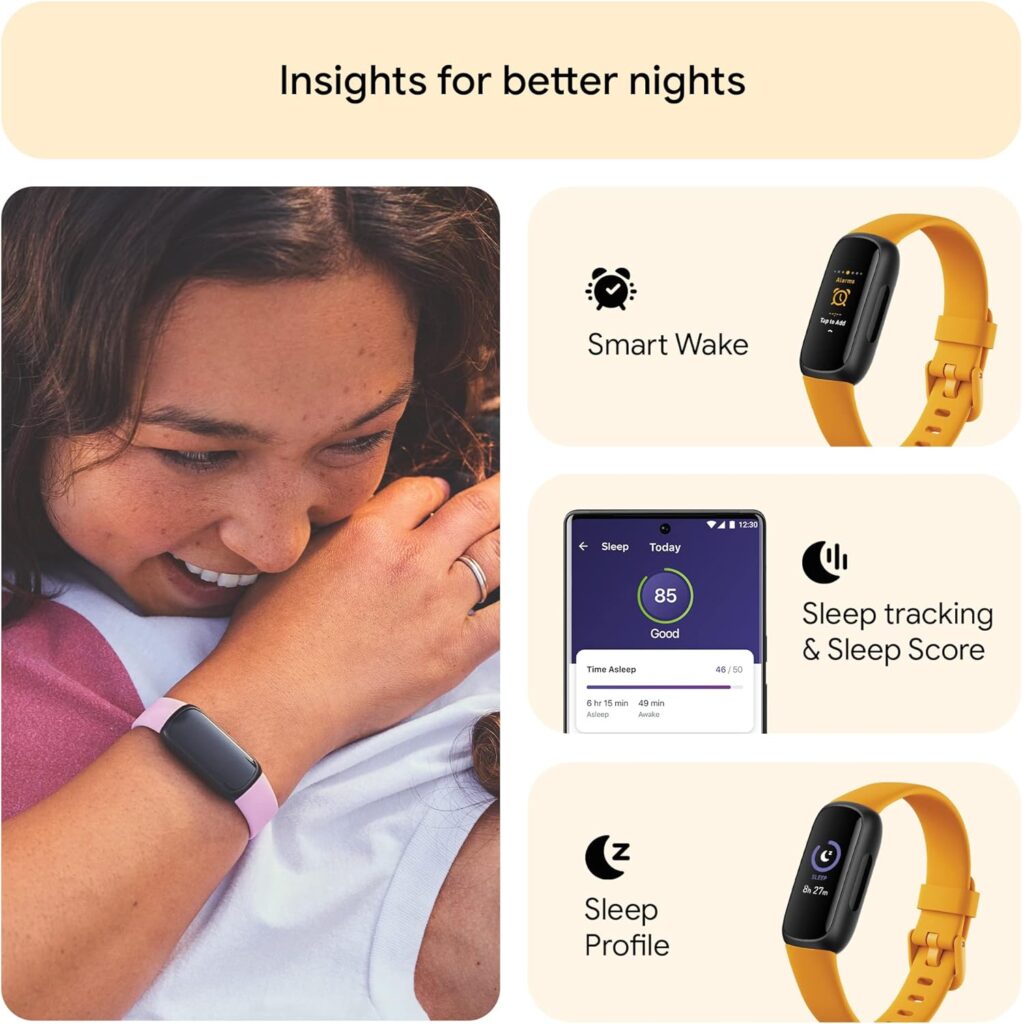
Some links in this article are affiliate links. If you buy through them we may earn a commission at no extra cost to you. We have not lab-tested these products and this does not change the assessment above.
What works better than a machine

If you are reaching for a white noise machine because you cannot fall asleep, the machine is treating a symptom of something else. The interventions with the strongest evidence are behavioural and unglamorous.
Consistent wake time, light exposure in the morning, a cool dark room and limiting alcohol are the foundation — covered in improving sleep and falling back asleep at night.
- Fix the noise source if you can. Earplugs and a door seal beat masking for loud intermittent noise, and cost less.
- Treat insomnia properly. CBT-I outperforms every device in this category — see the CBT-I guide.
- Rule out apnoea. If you snore heavily or wake unrefreshed, a machine will not help and the condition matters — see sleep apnoea warning signs.
- Check magnesium if you are inclined. Modest evidence, reasonable safety — see magnesium types compared and the vitamins guide.
- Consider slow practice. Breathing and gentle movement have better evidence for wind-down than any sound — see the beginner yoga guide.
- Do not overlook mood. Persistent poor sleep and low mood travel together — see the gut-brain connection and chronic inflammation.
- Mind the downstream effects. Poor sleep affects appetite and glucose handling, not just mood — see sleep and weight.
White, pink, brown: the colour question
The colours describe how energy is distributed across frequencies, and they sound genuinely different. Which one is “best” is a preference question, because no trial has shown one outperforms another for sleep.
- White noise has equal energy at every frequency. It sounds hissy, like a fan or static, and masks high-frequency sounds such as speech and clatter most effectively.
- Pink noise drops energy as frequency rises, so it sounds more like steady rain or wind. Many people find it more pleasant over a whole night.
- Brown noise is deeper still, closer to a rumble or a waterfall. It masks low-frequency noise such as traffic better, and is the version people describe as easiest to ignore.
- Nature sounds are not noise at all — they have structure and variation, which some people find relaxing and others find distracting because the brain attends to the pattern.
- Music and podcasts engage language processing and are the worst choice for sleep onset, for exactly that reason.
A practical approach: try pink or brown first if you want to leave it on all night, and white if your problem is specifically voices or television through a wall.
Common mistakes
- Turning it up to cover a loud problem. If you need high volume, the correct fix is earplugs or addressing the noise source, not a louder machine.
- Using it as an insomnia treatment. Masking is not therapy. If you cannot fall asleep because of a racing mind, the machine is the wrong tool — see CBT-I and sleep hygiene.
- Putting it next to the head. A metre of distance reduces exposure substantially and works just as well.
- Running it at a level you would not accept for a child. The standard should be the same for you.
- Adding a second sound source. Phone app plus machine plus a fan is louder, not more effective.
- Not testing a free option first. A fan, an air purifier on low, or a phone app costs nothing and answers the question before you buy anything.
One reassurance worth having: the machine does not need to be expensive, and the sound library does not matter much. What matters is that the sound is steady, the volume is low, and you are not relying on it to fix something it cannot fix.
Common questions about white noise
Does white noise actually help you sleep?
It helps when the problem is environmental noise, by masking sudden sounds that cause arousals. For insomnia it is not a treatment, and the trials showing benefit are mostly in noisy or hospital settings.
Is white noise safe for babies?
Keep the volume low, place the device well away from the cot, and do not run it all night at a level you would not accept for yourself. The long-term evidence in children is thin, so moderation is the reasonable position.
White, pink or brown noise?
They differ in frequency balance: white is equal across frequencies and sounds hissy, pink is weighted toward lower frequencies and sounds more natural, brown is deeper still. Preference matters more than any health claim.
Can it damage my hearing?
Not at sensible volumes. The risk comes from high levels, ear-level playback overnight, or escalating the volume over weeks. Under about 50 dB at a metre away is a reasonable target.
Should I leave it on all night?
If you wake easily to sound, yes — the benefit is in the small hours. If you only struggle at sleep onset, a timer is enough and reduces exposure.
Does it help with tinnitus?
Masking can make tinnitus less intrusive for some people, but a Cochrane review found the evidence for sound therapy was limited and low quality. New or one-sided tinnitus needs assessment.
Sources
- Riedy SM, et al. Noise as a sleep aid: a systematic review. Sleep Med Rev. 2021. PMID 33007706
- Ding Y, et al. Impact of white noise on sleep quality across age groups and in critically ill patients. Sleep Med. 2025. PMID 41151421
- Nien YC, et al. The effectiveness of white noise for sleep quality in patients admitted to intensive care. Intensive Crit Care Nurs. 2026. PMID 41761732
- Fang CS, et al. Effectiveness of sound and darkness interventions for critically ill patients’ sleep. Nurs Crit Care. 2024. PMID 37017370
- De Jong RW, et al. Continuous white noise exposure during sleep and childhood development: a scoping review. Sleep Med. 2024. PMID 38663282
- Düken ME, et al. The effects of massage therapy and white noise application on premature infants’ sleep. Explore (NY). 2024. PMID 37806925
- Hobson J, et al. Sound therapy (masking) in the management of tinnitus in adults. Cochrane Database Syst Rev. 2012. PMID 23152235
- Tonna JE, et al. The effect of a quality improvement intervention on sleep and delirium in critical care. Chest. 2021. PMID 33773988