
8 Hidden Blood Sugar Spikes You’re Probably Overlooking (Including Stress)
Estimated reading time: 7 minutes
- Discover how stress and other non-food factors can spike blood sugar levels.
- Learn practical strategies to manage glucose spikes related to stress and lifestyle.
- Identify signs of hidden blood sugar spikes to improve diabetes management.
- Understand the science behind cortisol’s impact on blood sugar regulation.
Table of Contents
- 1. Stress (Emotional or Mental)
- 2. Lack of Sleep
- 3. Caffeine (Even Black Coffee)
- 4. Illness or Sickness
- 5. Adrenaline Rushes (Anxiety or Public Speaking Events)
- 6. Artificial Sweeteners
- 7. Sunburn or Physical Pain
- 8. Over-Exercising or Heavy Physical Strain
- The Science Behind the Spikes: What Stress Really Does to Your Glucose
- How to Spot and Manage Hidden Blood Sugar Spikes
- Conclusion: Know the Hidden Triggers, Reclaim Control
- FAQs
Ever had a day where you ate healthy, moved your body, and still saw blood sugar spikes? You’re not alone—and you’re definitely not imagining it.
Many people who track their glucose levels feel puzzled when readings soar out of nowhere. You skip dessert, sip black coffee, even hit the gym—yet your numbers say otherwise. The truth? Stress alone can mimic the effects of a carb-loaded meal. Your body, in fight-or-flight mode, releases hormones like cortisol and adrenaline, signaling your liver to dump glucose into the bloodstream—no food required.
According to research published in Frontiers in Endocrinology, chronic stress not only elevates blood sugar but can drastically worsen insulin resistance over time.1 If left unchecked, this internal pressure-cooker can increase the risk of Type 2 diabetes, especially in women.2
And stress is just the beginning.
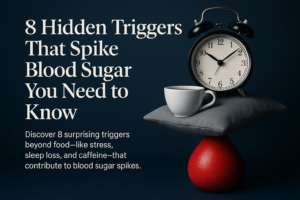
Let’s peel back the curtain. Beyond carbs and sugar, here are 8 surprising triggers that can spike your blood sugar—and tools to help you stay ahead of them.
1. Stress (Emotional or Mental)
Stress is no longer just a mental health buzzword—it’s a metabolic disruptor.
When you’re under pressure, your adrenal glands release cortisol and adrenaline, prompting your liver to release stored glucose for energy. While helpful in a real emergency, in daily life this response can raise blood sugar by 20–50%, especially if it happens often.3
🔍 Example: Running late, juggling deadlines, even doom-scrolling the news—all can lead to unexpected glucose spikes.
✅ What helps: Try 5 minutes of box breathing or guided meditation. These practices lower cortisol within minutes.4 Journaling or walking can also help release internal pressure safely.
2. Lack of Sleep
Yes, one rough night can throw off your blood sugar the next morning.
Sleep deprivation raises nighttime cortisol levels and reduces your body’s ability to use insulin efficiently, even after just six hours or less.5 This creates temporary insulin resistance, which can mimic early signs of prediabetes.
🔍 Example: You stayed up binge-watching a show. The next morning, your fasting glucose is suspiciously high—no food involved.
✅ What helps: Stick to a consistent sleep schedule. Aim for 7 to 9 hours and wind down one hour before bed with calming, screen-free routines.
3. Caffeine (Even Black Coffee)
Surprised? You’re not alone.
In some people, caffeine triggers adrenaline, which leads the liver to release glucose into your bloodstream.6 This doesn’t happen to everyone, but people with diabetes or insulin resistance may be especially sensitive.
🔍 Example: You sip your usual cold brew before breakfast, yet your CGM shows a spike within 30 minutes.
✅ What helps: Switch to decaf or test how your body responds to coffee with and without food. Many find pre-meal caffeine causes stronger spikes.
4. Illness or Sickness
Whether it’s a cold, flu, or infection, physical illness is a stressor too.
Your immune system activates, which releases inflammatory chemicals and stress hormones like cortisol.7 These can quickly elevate glucose—even if you’re barely eating.
🔍 Example: You’re under the weather with a fever. Your appetite is down, yet your blood sugar keeps climbing.
✅ What helps: Stay hydrated, get extra rest, and monitor more frequently. If you take insulin, consult your healthcare provider about temporary adjustments.
5. Adrenaline Rushes (Anxiety or Public Speaking Events)
Fear, panic, excitement—it doesn’t have to be negative stress to cause a spike.
Short-term anxiety triggers epinephrine (adrenaline), which tells your liver to release glucose urgently.8 This is great if you’re running from danger, not so great during a presentation.
🔍 Example: You’re about to speak at a meeting, or got into a heated discussion. Glucose surges, and you haven’t even eaten recently.
✅ What helps: Short walk before stressful events, grounding exercises, or even clenched-fist breathing (inhale while clenching, exhale slowly while releasing).
6. Artificial Sweeteners
Zero calories doesn’t mean zero impact.
Some studies show sweeteners like sucralose and aspartame may alter your gut bacteria or influence insulin signaling, potentially causing glucose spikes in sensitive individuals.9
🔍 Example: You swap your soda for a diet version, proud of the choice—yet your post-meal spike is higher than expected.
✅ What helps: Choose more body-neutral options like stevia or monk fruit. Keep an eye on your unique response using a food and glucose journal.
7. Sunburn or Physical Pain
Pain—yes, even from a sunburn—can temporarily spike blood glucose.
That’s because pain activates stress pathways, triggering a rise in stress hormones and inflammation.10
🔍 Example: You spent too long at the beach, forgot sunscreen. That evening, your glucose won’t come down, despite light meals.
✅ What helps: Treat pain promptly with cooling compresses, hydration, and gentle care. Prevent with SPF 30+ and protective clothing.
8. Over-Exercising or Heavy Physical Strain
Exercise normally lowers blood sugar—except when it doesn’t.
Very intense workouts, especially on an empty tank, can trigger an acute stress response in the body, releasing cortisol and adrenaline. This can result in a post-exercise spike, even without food.11
🔍 Example: You hit a hard HIIT class fasted. Your glucose climbs post-workout, then crashes—a confusing rollercoaster.
✅ What helps: Fuel lightly before exercise if you’ll go hard, and balance intensity with recovery days. Rehydrate and refuel with protein or a light carb/protein mix afterward.
The Science Behind the Spikes: What Stress Really Does to Your Glucose
The link between stress and blood sugar isn’t just anecdotal—it’s well documented.
A 2022 review from Frontiers in Endocrinology12 details how cortisol elevation prompts gluconeogenesis—your liver producing new glucose in response to perceived danger. This process reduces insulin sensitivity, preventing your cells from absorbing glucose efficiently, even without eating.
Over time, this leads to chronic elevation in fasting glucose and can set the stage for metabolic disorders, particularly when paired with physical inactivity or inconsistent sleep. Physical stress, like illness or injury, follows a similar pathway—creating a loop of inflammation, hormone imbalances, and glucose elevation.
Bottom line: Stress isn’t just a feeling—it’s a biochemical wave that affects your entire body.
How to Spot and Manage Hidden Blood Sugar Spikes
Even if you’re tracking food intake, these stealthy triggers may be slipping through the cracks.
Signs Your Blood Sugar Is Spiking From Non-Food Triggers:
- Fasting glucose higher than usual
- Midday crashes or energy dips
- Random cravings, even without hunger
- Fatigue or brain fog after workouts or social events
Strategies to Stay Steady:
- Wear a CGM or track with a glucometer to identify patterns
- Keep a stress and sleep log alongside your food diary
- Prioritize balanced meals that include protein and fiber
- Build a wind-down routine to shorten sleep latency
- Incorporate daily movement—but not always high intensity
Here’s a quick-reference table:
| Trigger | Hormone Involved | Quick Fix |
|---|---|---|
| Stress | Cortisol/Adrenaline | 5-min breathing |
| Sleep Loss | Cortisol | Bedtime consistency |
| Caffeine | Adrenaline | Switch to decaf |
| Illness | Cortisol | Hydrate + monitor |
| Artificial Sweeteners | Insulin/glucose response | Trial different options |
| Pain/Sunburn | Cortisol/Inflammation | Pain relief + cool-down |
Conclusion: Know the Hidden Triggers, Reclaim Control
Your blood sugar isn’t just reacting to food—it’s reacting to your life.
From stress to sleep, sunburn to sweeteners, hidden triggers can create glucose swings that leave you confused, frustrated, or even burnt out. But with awareness, tools, and gentle routine adjustments, you can take control without obsessing over every crumb.
Start by tackling stress, the most underrated hormone driver of them all. Breathe, track, reflect. Your body is giving you signals—it’s time to listen.
Using a continuous glucose monitor (CGM)? Spot a hidden spike recently? Share your story in the comments and help others decode the invisible triggers. Download and share our “8 Hidden Spike Triggers” infographic to keep on your fridge or phone!
FAQs
Does stress raise blood sugar even if I haven’t eaten?
Yes. Stress causes your body to release cortisol and adrenaline, which signal your liver to release stored glucose—raising blood sugar without any food.3
Can lack of sleep cause a blood sugar spike?
Absolutely. Just one poor night’s sleep can impair insulin sensitivity by 25–30%, especially overnight and in the morning.5
Does coffee spike my blood sugar?
It can. Caffeine stimulates adrenaline, which can increase blood glucose, especially in people with blood sugar sensitivity or Type 2 diabetes.6
Why is my blood sugar high in the morning if I didn’t eat?
This may be due to the “Dawn Phenomenon,” where cortisol naturally rises early in the morning, triggering a spike in glucose production.
Can artificial sweeteners raise blood sugar?
Some can. Sucralose and aspartame may affect gut microbiota and insulin response in certain people. Stevia or monk fruit tend to be better tolerated.9
Sources:
1. PMC9561544 — Stress, cortisol, and glucose regulation
2. BSW Health — Chronic stress and A1C in women
3. Glucosense.ai — How stress mimics carb intake
4. Franciscan Health — Real-world spike situations
5. CDC Diabetes Sleep Guide — Sleep and glucose links
6. CDC Diabetes Guide — Caffeine and spikes
7. Glucerna — Sickness impact
8. Type1Strong.org — Adrenaline events
9. CDC Artificial Sweetener Effects
11. Glucosense.ai — Exercise stress spikes
12. Front Endocrinol. 2022 — Cortisol-induced glucose regulation